Bathroom Tiles: Safe Floors and Easy-Clean Walls for Bengaluru
Choosing bathroom tiles in Bengaluru: anti-skid floors, wall tiles that wipe clean, sizes, slopes for drainage, and common mistakes to avoid.
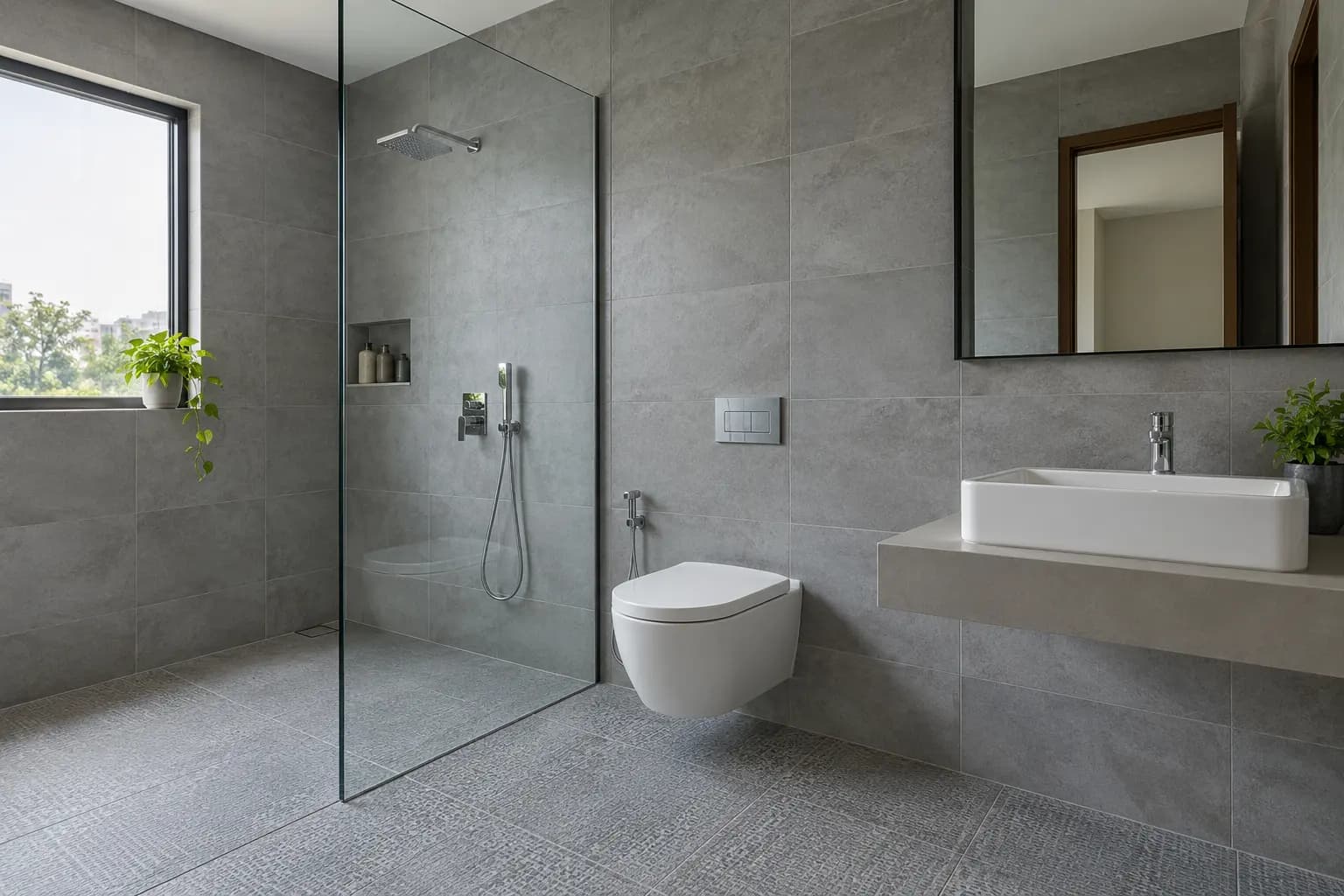
The bathroom is the hardest-working wet area in the house. Floors stay wet several times a day, walls get splashed with soap and hard water, and everything must be easy to scrub. The right tiles here are about safety first and looks second.
What a bathroom demands
- Constant water. Tiles need low water absorption, and the floor must slope toward the drain so water does not stand.
- Slip safety. Wet, soapy floors cause falls. The floor tile must give grip even when wet, especially for children and elderly family members.
- Hard water stains. Many Bengaluru homes use borewell or tanker water, which leaves white scale marks. Some surfaces show this more than others.
- Ventilation. Small apartment bathrooms often have limited airflow, so grout joints can attract mould if not sealed and cleaned.
Floor tiles
Anti-skid tiles are the standard choice for bathroom floors. They have a textured or matt surface that gives grip when wet. Our guide on anti-skid tiles explained covers what slip ratings mean in practice.
- Material: vitrified or porcelain tiles with low water absorption are a good choice for the floor.
- Size: 300x300 mm is the most common bathroom floor size. It makes it easier to give the floor a slope to the drain. 400x400 mm also works in larger bathrooms.
- Finish: matt or rustic. Avoid glossy and high gloss on the floor.
Wall tiles
Wall tiles are usually ceramic, lighter and easier to cut and fix on vertical surfaces. Glossy or satin wall tiles wipe clean easily, while matt wall tiles hide water marks better.
| Size | Typical use |
|---|---|
| 300x450 mm | Common for walls in compact bathrooms |
| 300x600 mm | Popular modern choice, fewer joints |
| 600x1200 mm | Premium look on walls, needs adhesive and skilled fixing |
Wall tile ranges often come as a set: a light base tile, a darker tile for the lower part of the wall and a decorative highlighter. You can also add a mosaic or highlighter strip in the shower niche.
Layout and colour tips
- Keep dry and wet zones in mind. If you have a glass partition, the shower area floor can be slightly lower with its own drain.
- Light walls, mid-tone floor. Light walls make small bathrooms feel bigger, while a mid-grey or beige floor hides marks.
- Align wall and floor joints where possible. It looks neat and professional.
- Use epoxy grout in the shower area if your budget allows. It resists stains and mould better than regular cement grout. See the grout and spacers guide.
Mistakes to avoid
- Using glossy wall tiles on the floor because they match. They are slippery and not designed for walking.
- Large floor tiles with no planned slope. Water will stand in corners.
- Very dark tiles with hard water. White scale marks show clearly on black and navy surfaces.
- Forgetting waterproofing before tiling. Tiles and grout are not a waterproof layer on their own.
For a step-by-step approach, read how to choose bathroom tiles.
Plan your bathroom with us
Bring your bathroom dimensions, including door and window positions, and visit the shop to see floor and wall combinations together. You can also call to ask which bathroom sets are in stock right now.
Common questions
Which tiles are best for a bathroom floor?
Use anti-skid or matt textured tiles with low water absorption, such as vitrified or porcelain anti-skid tiles. Avoid polished or glossy tiles on the floor because they get slippery when wet.
Can I use the same tile on the bathroom wall and floor?
You can if the tile is suitable for floors, like a matt or anti-skid vitrified tile. Glossy ceramic wall tiles should not be used on the floor because they are slippery and not made for foot traffic.
Up to what height should bathroom walls be tiled?
Many homes now tile the full wall up to the ceiling or false ceiling for easier cleaning. At minimum, tile the shower area up to around 7 feet.
Why do small tiles work well on bathroom floors?
Smaller tiles make it easier to create a slope toward the drain, and the extra grout lines add grip underfoot.
Keep reading
How to Choose Bathroom Tiles: Floor, Wall and Size Guide
A practical guide to bathroom tiles: anti-skid floors, easy-clean walls, the right sizes for small bathrooms, grout choice and mistakes to avoid.
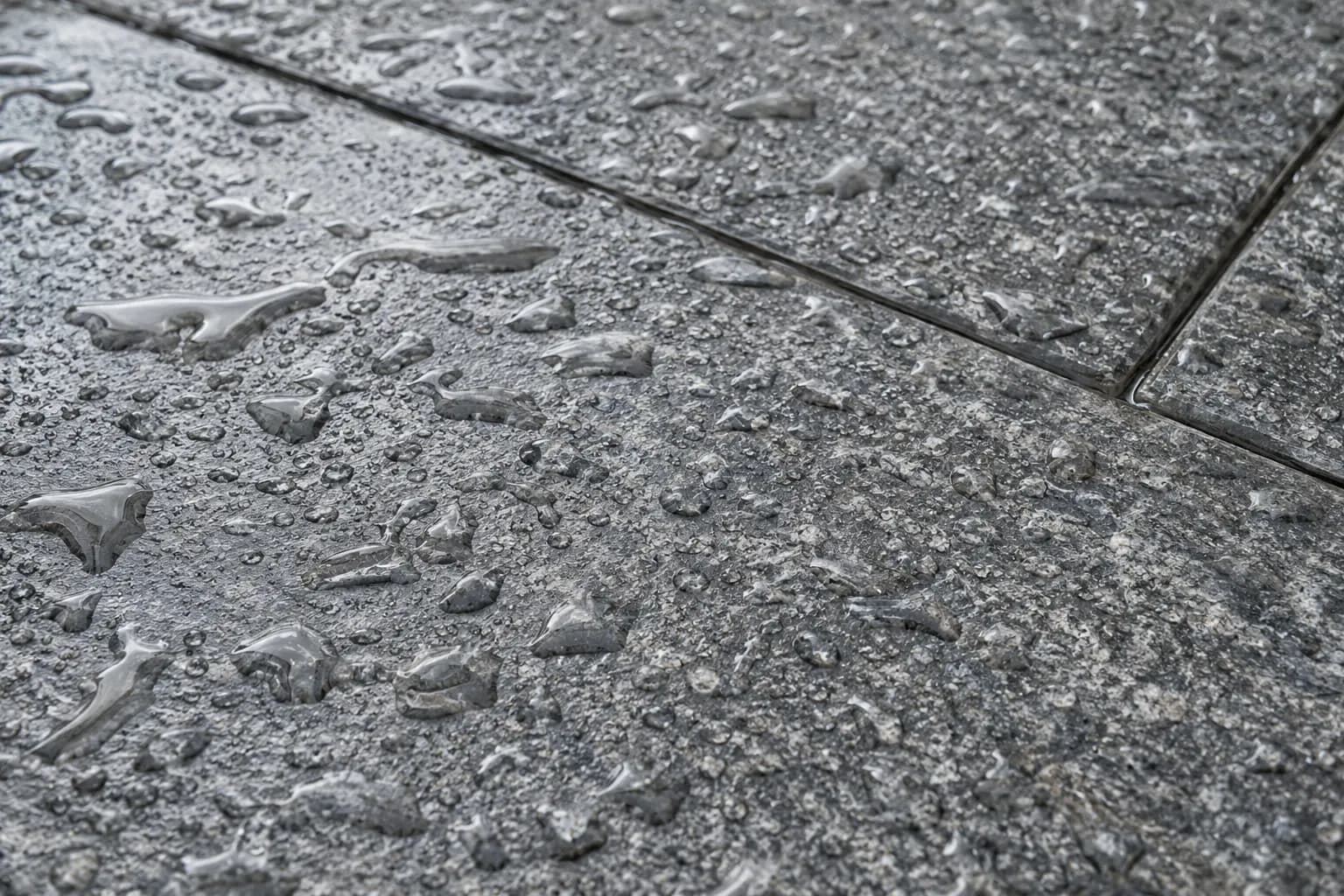
Anti-skid tiles
Anti-skid tiles give better grip on bathroom, balcony and outdoor floors. Learn how slip ratings work, common sizes and how to pick the right one.
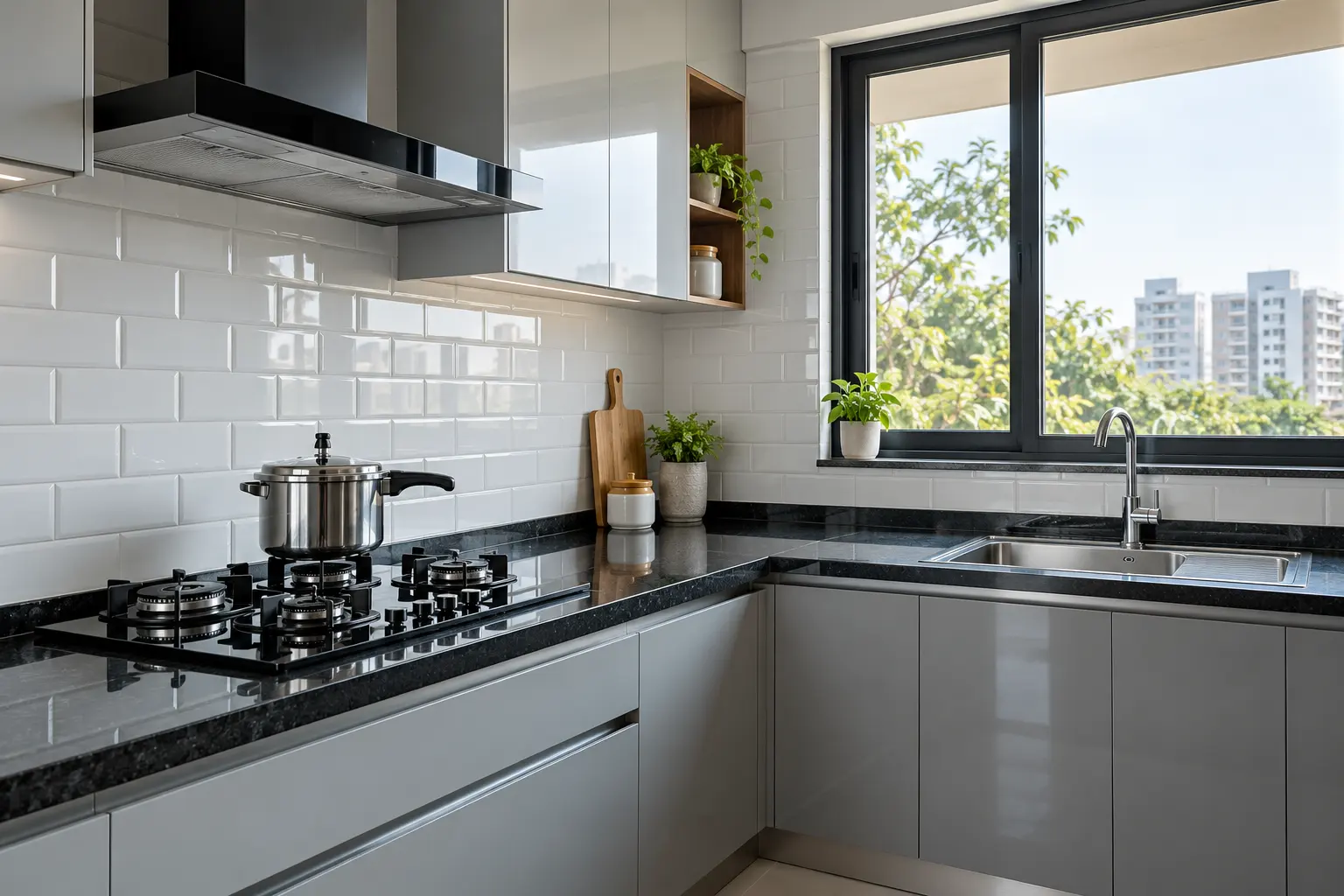
Wall tiles
Wall tiles for bathrooms, kitchens and feature walls: ceramic vs vitrified, common sizes like 300x450 and 300x600 mm, and tips for choosing a set.
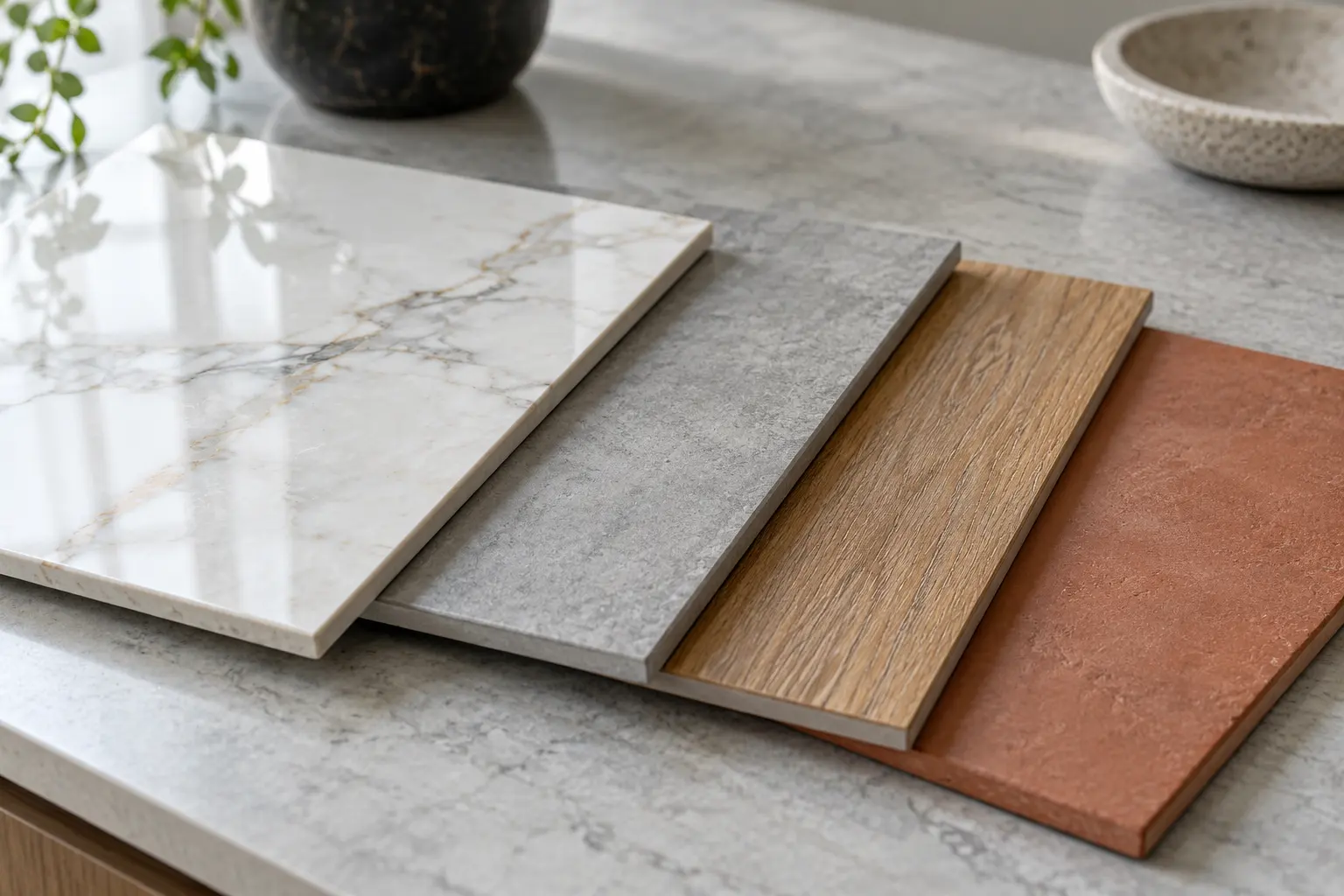
See the tiles in person before you decide
Photos never show a tile's true shade or texture. Get in touch to check what is in stock, then walk in and compare.