Anti-Skid Tiles in Bengaluru: Safe Floors for Wet Areas
Anti-skid tiles give better grip on bathroom, balcony and outdoor floors. Learn how slip ratings work, common sizes and how to pick the right one.
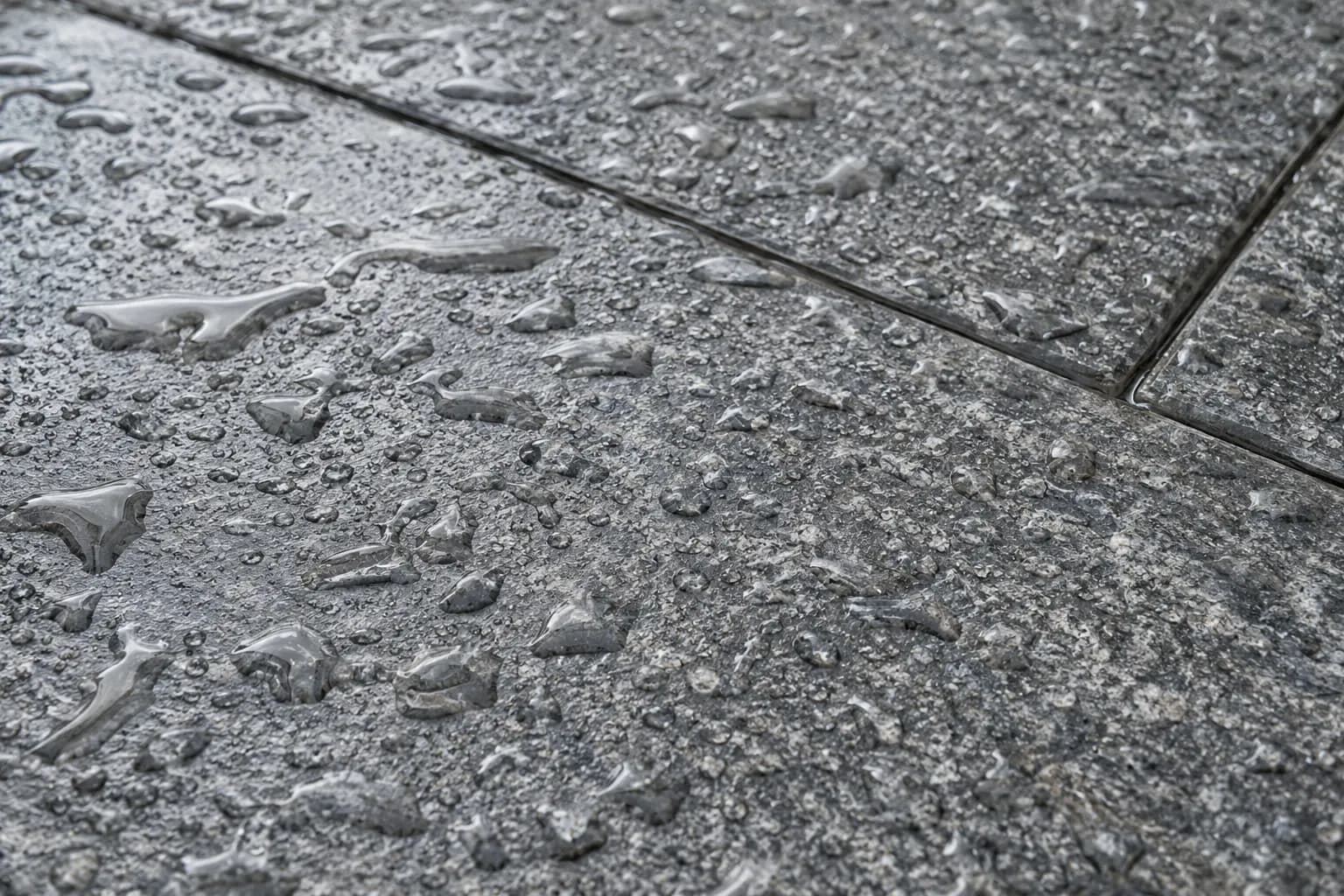
A slip in the bathroom or on a rain-soaked balcony is one of the most common accidents at home, especially for elders and children. Anti-skid tiles have a textured surface that gives your feet more grip when the floor is wet. In Bengaluru, with heavy monsoon showers and open balconies in most apartments, they are worth getting right.
What anti-skid tiles are
Anti-skid (or anti-slip) tiles are ceramic or vitrified tiles with a deliberately rough or textured face. The texture can be a fine sandy grit in the glaze, raised patterns, grooves, or a stone-like rustic surface. Water spreads into the texture instead of forming a slick film, so your foot stays in contact with the tile.
Slip resistance is often shown with an R rating from R9 (lowest) to R13 (highest), based on a standard ramp test. Some boxes show a coefficient of friction instead. Not every box carries a rating, so ask if it matters for your project. For more detail, read anti-skid tiles explained.
Where they work, and where they don't
Use anti-skid tiles in:
- Bathroom floors and shower areas
- Open and covered balconies
- Utility and wash areas
- Terraces, sit-outs and garden paths
- Ramps, entrances and steps outside
- Areas around pools and water features
Not needed in:
- Bedrooms and living rooms, where a heavy texture only collects dust
- Walls, unless you want the look
For vehicle areas, an anti-skid surface helps, but the tile also needs strength. Choose dedicated parking tiles for driveways.
Sizes and finishes commonly available
Common anti-skid sizes are 300x300 mm, 400x400 mm, 300x600 mm and 600x600 mm. Finishes include matt with fine grit, rustic, stone texture, wooden-look textured and patterned. Bathroom ranges often come as a floor tile matched to a wall tile set.
| Area | Typical texture | Common size |
|---|---|---|
| Bathroom floor | Fine grit, light texture | 300x300 mm |
| Balcony | Matt textured or rustic | 300x300 or 600x600 mm |
| Outdoor ramp or slope | Deep texture, higher R rating | 300x300 or 400x400 mm |
How to choose
- Match grip to the risk. A covered bathroom needs moderate grip. An open sloped entrance needs more.
- Feel it with a wet hand. At the shop, wet your palm and press it on the tile. You will feel the difference between textures.
- Balance grip and cleaning. Deeper textures hold more dirt. For homes, a medium texture is usually enough.
- Choose a forgiving colour. Mid greys, beiges and stone tones hide water marks and dirt in the texture.
- Ask for matching walls. Many bathroom series pair anti-skid floors with matching wall tiles.
Ask us for the right grip
Tell us where the tile is going, whether the area is covered or open, and who uses it. Call the shop or visit us and we will show you anti-skid options from current stock.
Common questions
What is R rating in anti-skid tiles?
R ratings (R9 to R13) come from a German ramp test of slip resistance. Higher numbers mean more grip. Indoor wet areas usually use around R10 to R11, outdoor ramps and slopes higher.
Are anti-skid tiles hard to clean?
The texture that gives grip also holds some dirt, so they need a brush scrub now and then instead of just a mop. A light texture is a good balance for home bathrooms.
Do matt tiles count as anti-skid?
Not always. Matt only means not shiny. An anti-skid tile has a textured surface designed for grip, so check the box or ask for the slip rating.
Which anti-skid tile size is best for a bathroom?
300x300 mm is common because it follows the slope to the drain easily. 300x600 mm and 600x600 mm also work if the tiler plans the slope well.
Keep reading
Anti-Skid Tiles Explained: Ratings, Finishes and Where to Use
What makes a tile anti-skid, what R ratings mean, and where you need grip at home: bathrooms, balconies, ramps, stairs, parking and pool sides.
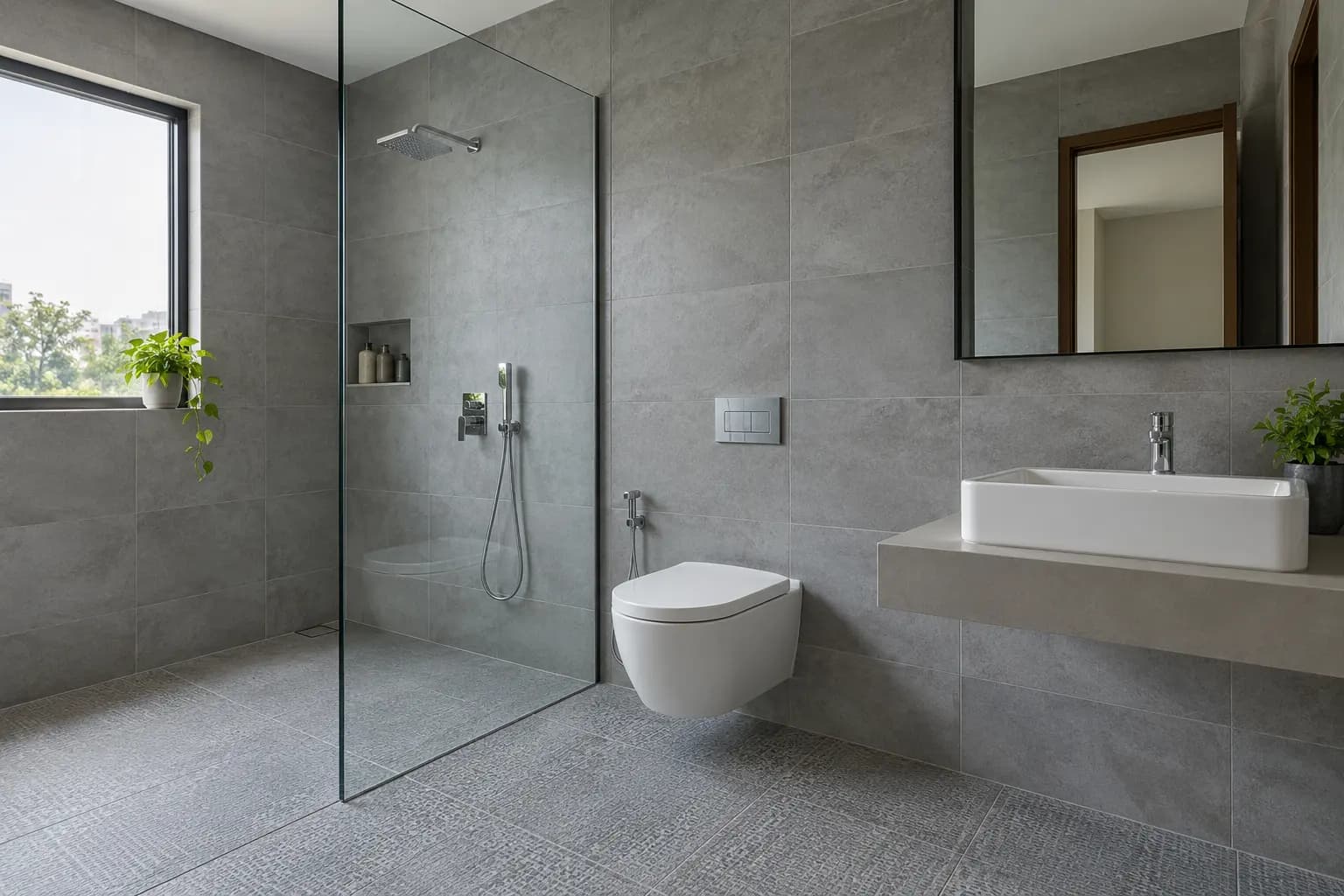
Bathroom
Choosing bathroom tiles in Bengaluru: anti-skid floors, wall tiles that wipe clean, sizes, slopes for drainage, and common mistakes to avoid.
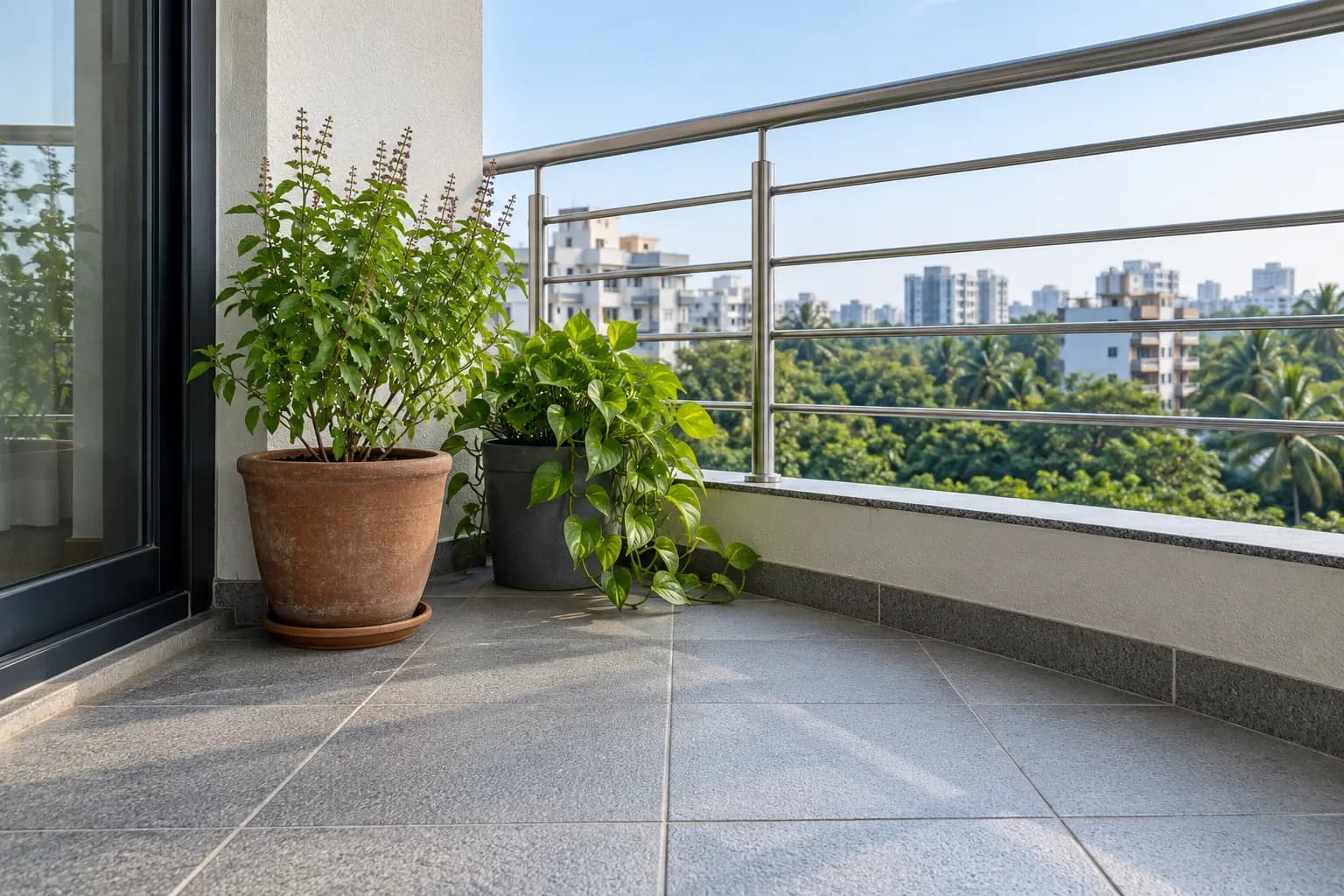
Balcony
Balcony tile guide for Bengaluru apartments: anti-skid outdoor surfaces, drainage slopes, and colours that stay cool in afternoon sun.
See the tiles in person before you decide
Photos never show a tile's true shade or texture. Get in touch to check what is in stock, then walk in and compare.