Buying guide · 4 min read
Vitrified vs Ceramic Tiles: Differences, Uses and Which to Buy
Vitrified or ceramic? Compare strength, water absorption, finishes and best uses room by room, so you pick the right tile for floors and walls.
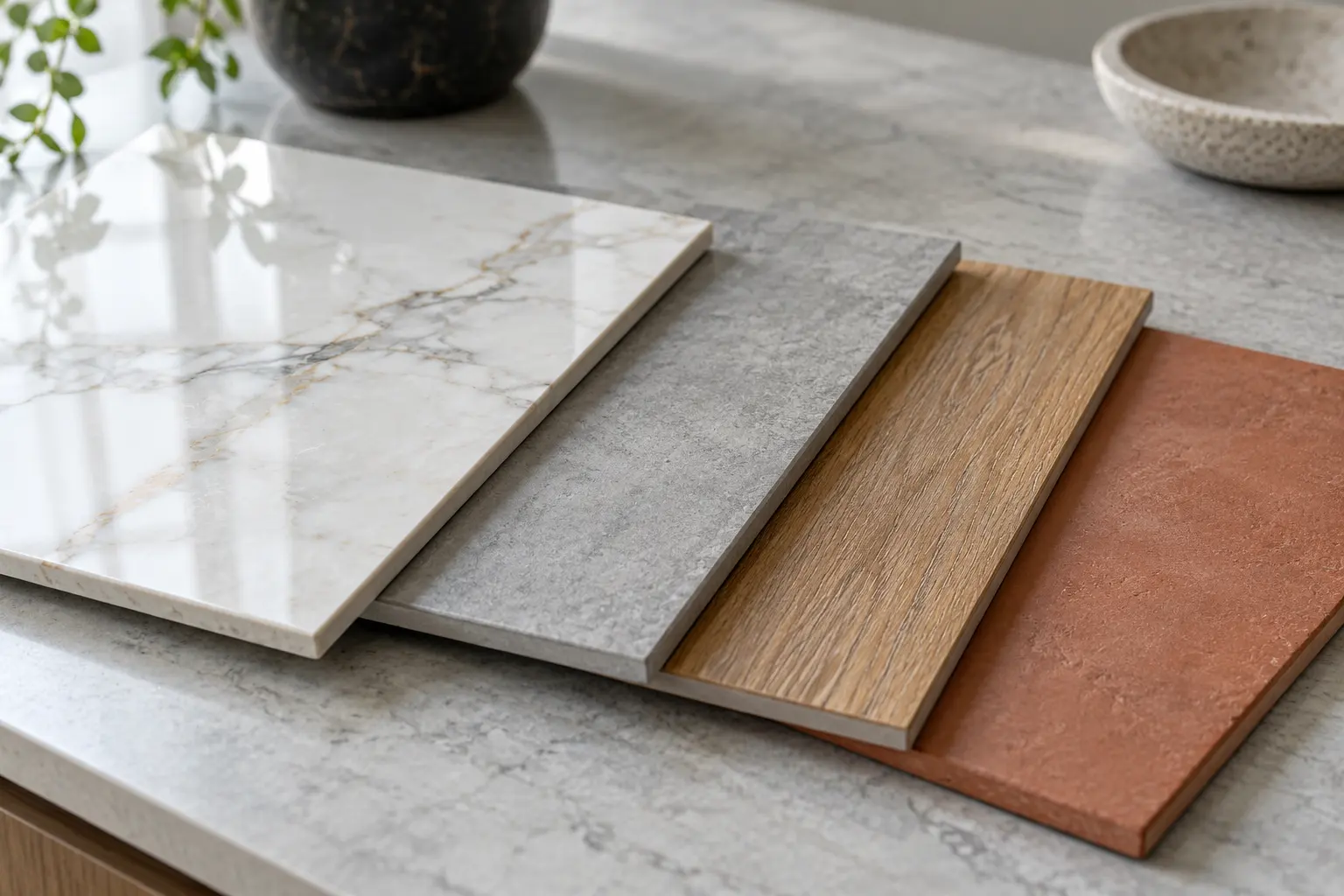
This is the first question most customers ask at the counter: should I buy vitrified or ceramic? Both are good tiles. They are made differently, behave differently, and suit different parts of the house. Once you understand the difference, the choice for each room becomes fairly obvious.
How they are made
Ceramic tiles are made from clay and natural minerals, pressed and fired. The body is more porous, and the colour and design sit in a glaze on top.
Vitrified tiles use a mix with more silica and feldspar, fired at higher temperatures. The materials partly melt and fuse into a glass-like (vitreous) body. The result is a denser tile that absorbs very little water.
Within vitrified, there are several types: GVT and PGVT (a printed glaze on a vitrified body), double charge (a thick pigment layer pressed into the tile) and full body (colour through the full thickness). Our guide on GVT vs PGVT vs double charge explains them.
Side-by-side comparison
| Point | Vitrified tiles | Ceramic tiles |
|---|---|---|
| Water absorption | Very low, typically under 0.5% | Higher, typically around 3% and above, wall tiles often more |
| Strength | Higher, good for heavy foot traffic | Lower, fine for walls and light-use floors |
| Common sizes | 600x600, 800x800, 600x1200 mm and larger | 300x300, 300x450, 300x600 mm |
| Typical use | Floors in all rooms, some walls | Walls, bathroom and kitchen dado, small floors |
| Weight | Heavier | Lighter, easier on walls |
| Cutting | Harder, needs a good cutter | Easier to cut and shape |
| Finishes | Glossy, high gloss, matt, satin, wooden, marble look | Glossy, matt, textured, decorative prints |
| Fixing | Tile adhesive recommended | Adhesive or cement mortar |
| Outdoor use | Good if the finish is anti-skid | Usually not suited to open outdoor floors |
These are typical values. Every manufacturer and product line differs a little, so check the box details.
Where vitrified tiles make sense
- Living rooms, dining areas and bedrooms: large vitrified tiles give fewer joints and a clean look. See our living room and bedroom pages.
- Kitchen floors: they handle spills and frequent mopping well.
- Balconies and terraces: with a matt or anti-skid finish, vitrified tiles cope with Bengaluru monsoon rain better than porous tiles.
- Shops and offices: dense tiles take foot traffic without wearing quickly.
Where ceramic tiles make sense
- Bathroom walls: ceramic is the usual choice for wall tiling up to dado or full height.
- Kitchen walls and backsplash: light, easy to cut around switches and fittings.
- Small bathroom floors: floor-grade ceramic with a matt or anti-skid surface works fine in a low-traffic bathroom.
- Feature walls: many decorative and highlighter tiles are ceramic.
Things that are often misunderstood
"Vitrified is always better." Not for walls. A heavy vitrified tile on a bathroom wall is harder to fix and cut, and offers no real benefit over a good ceramic wall tile.
"Ceramic tiles crack easily." Good ceramic tiles, fixed properly on a level bed, last for decades on walls. Most cracking comes from poor fixing, hollow spots under the tile, or using a wall tile on the floor.
"Glossy vitrified is slippery." Polished surfaces are more slippery when wet. That is a finish choice, not a material issue. For wet areas, choose a matt or anti-skid finish.
What drives the cost
We do not quote prices online, but you should know what affects them:
- Type of vitrified (GVT, PGVT, double charge, full body).
- Size (large formats usually cost more per sq ft and need more care in fixing).
- Thickness, grade and finish.
- Design complexity and current market supply.
Ceramic wall tiles are generally the more economical option per sq ft, but compare the full job, including adhesive and labour, not just the tile.
A simple rule of thumb
- Floors: vitrified.
- Walls: ceramic.
- Wet floors and outdoors: vitrified or ceramic with a matt or anti-skid surface.
Most homes end up using both. A typical flat might have vitrified floors throughout, ceramic wall tiles in bathrooms and kitchen, and anti-skid tiles on the balcony.
See them side by side
The difference is easiest to understand when you hold the tiles in your hand. Visit Patidar Ceramic with your room sizes and we will show you vitrified and ceramic options that are currently in stock, or call us to check before you come.
Common questions
Which is stronger, vitrified or ceramic tile?
Vitrified tiles are usually denser and stronger because they are fired at higher temperatures and absorb very little water. That makes them the common choice for floors.
Can I use ceramic tiles on the floor?
Yes, floor-grade ceramic tiles exist and work in low-traffic areas like bathrooms. For living rooms and other busy floors, vitrified tiles are usually the safer choice.
Why are most wall tiles ceramic?
Ceramic wall tiles are lighter, easier to cut and stick well to walls. Walls do not take foot traffic, so the extra hardness of vitrified is not needed there.
Are porcelain and vitrified tiles the same?
They are closely related. Both are dense, low-absorption tiles, and in India the word vitrified is commonly used for what other markets call porcelain.
Keep reading
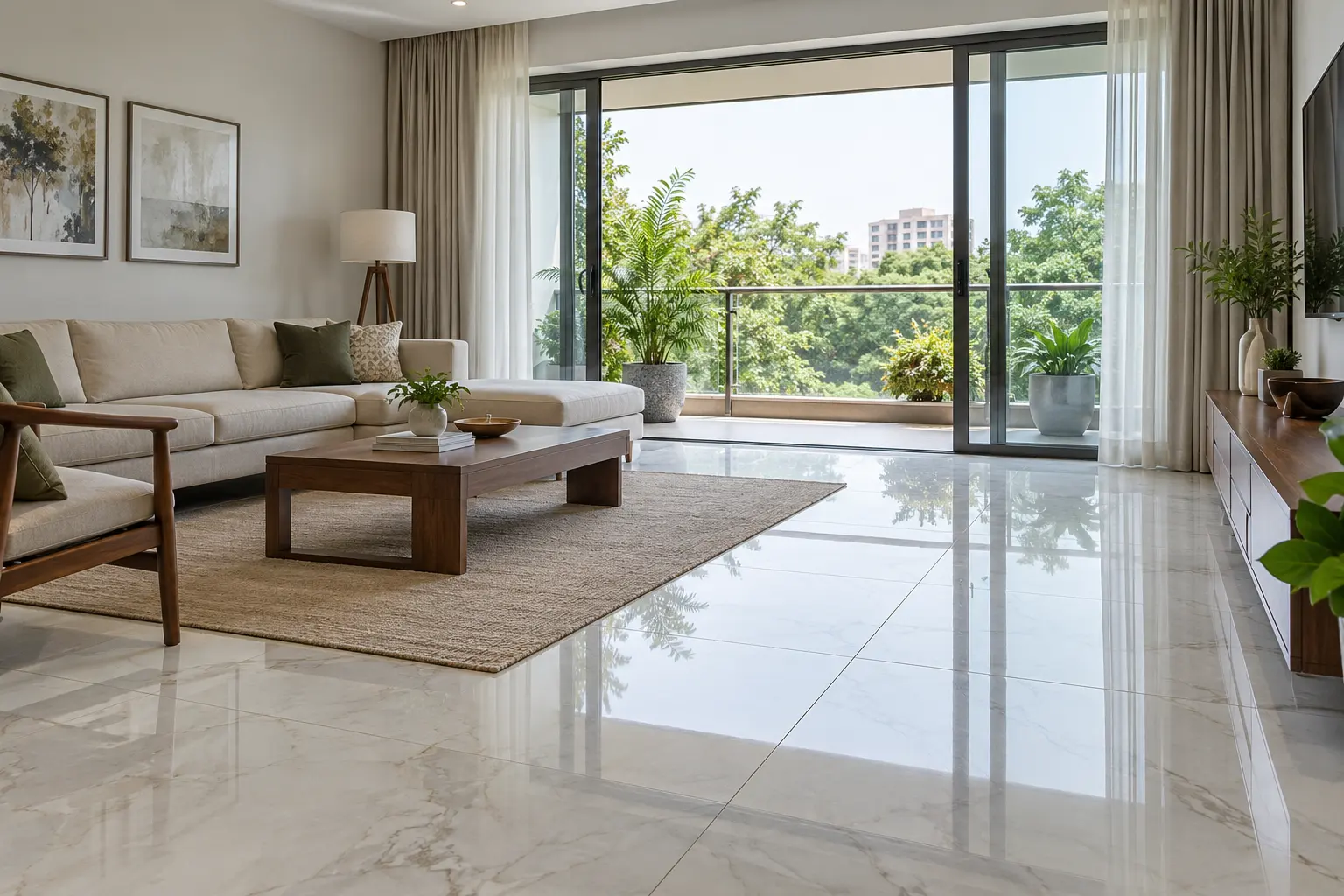
Vitrified tiles
What vitrified tiles are, the four main types, common sizes like 600x600 and 600x1200 mm, and how to pick the right one for your Bengaluru home.
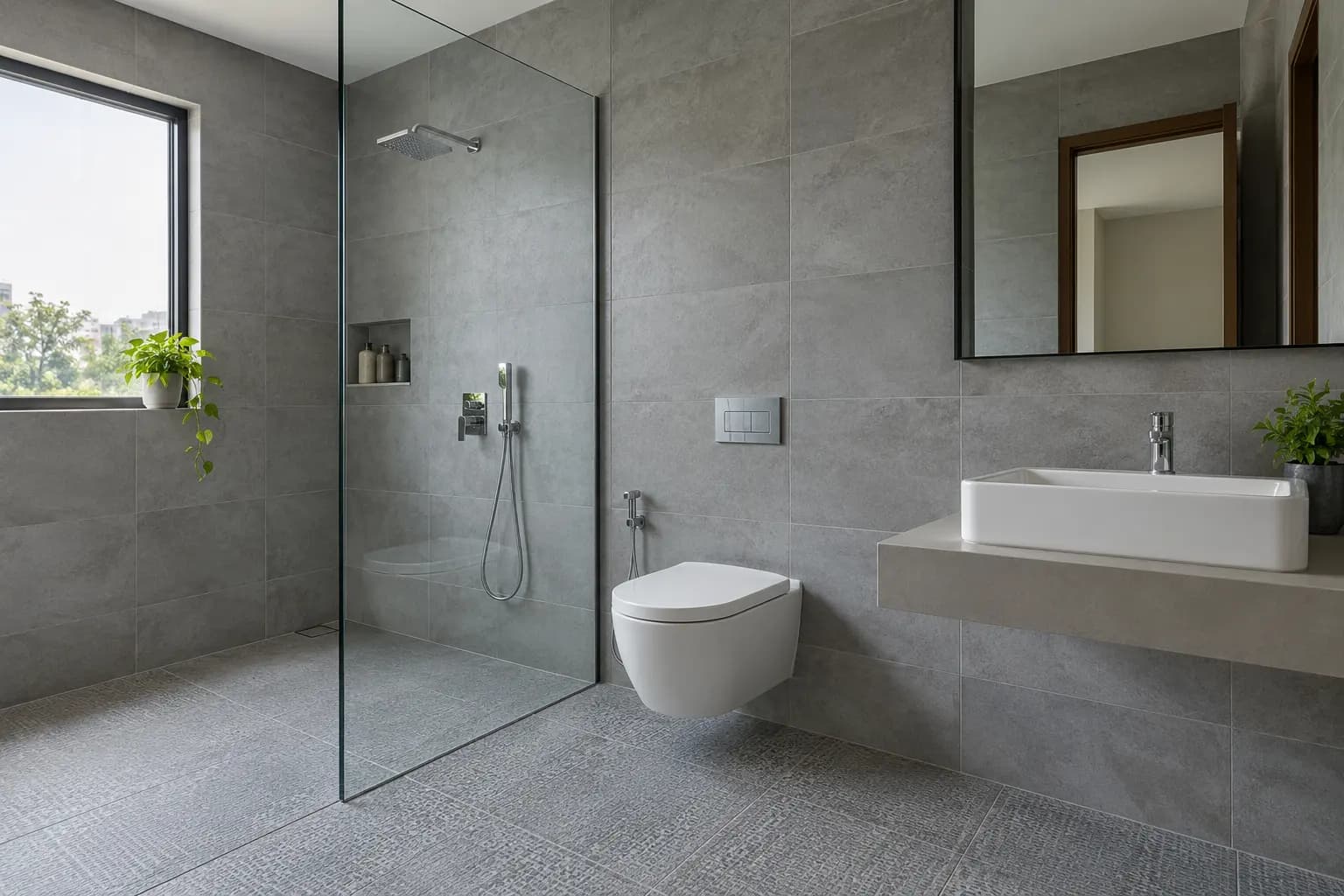
Ceramic tiles
Ceramic tiles explained: how they differ from vitrified, why they suit bathroom and kitchen walls, common sizes and what to check before you buy.
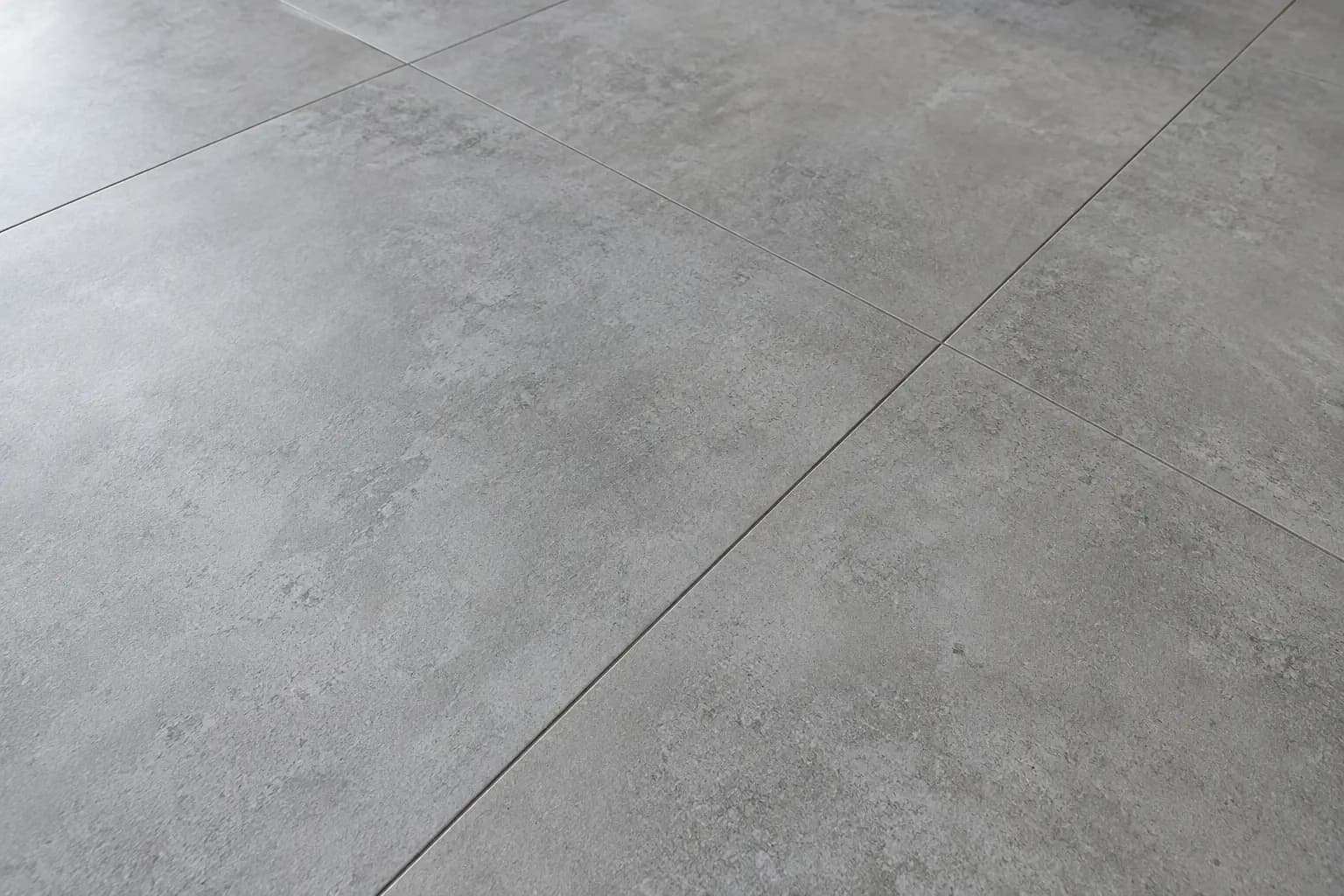
Porcelain tiles
Porcelain vs vitrified tiles in plain words: what the label means, how dense they are, where they work best and what to check before you buy.
See the tiles in person before you decide
Photos never show a tile's true shade or texture. Get in touch to check what is in stock, then walk in and compare.