Vitrified Tiles in Bengaluru: Types, Uses and How to Choose
What vitrified tiles are, the four main types, common sizes like 600x600 and 600x1200 mm, and how to pick the right one for your Bengaluru home.
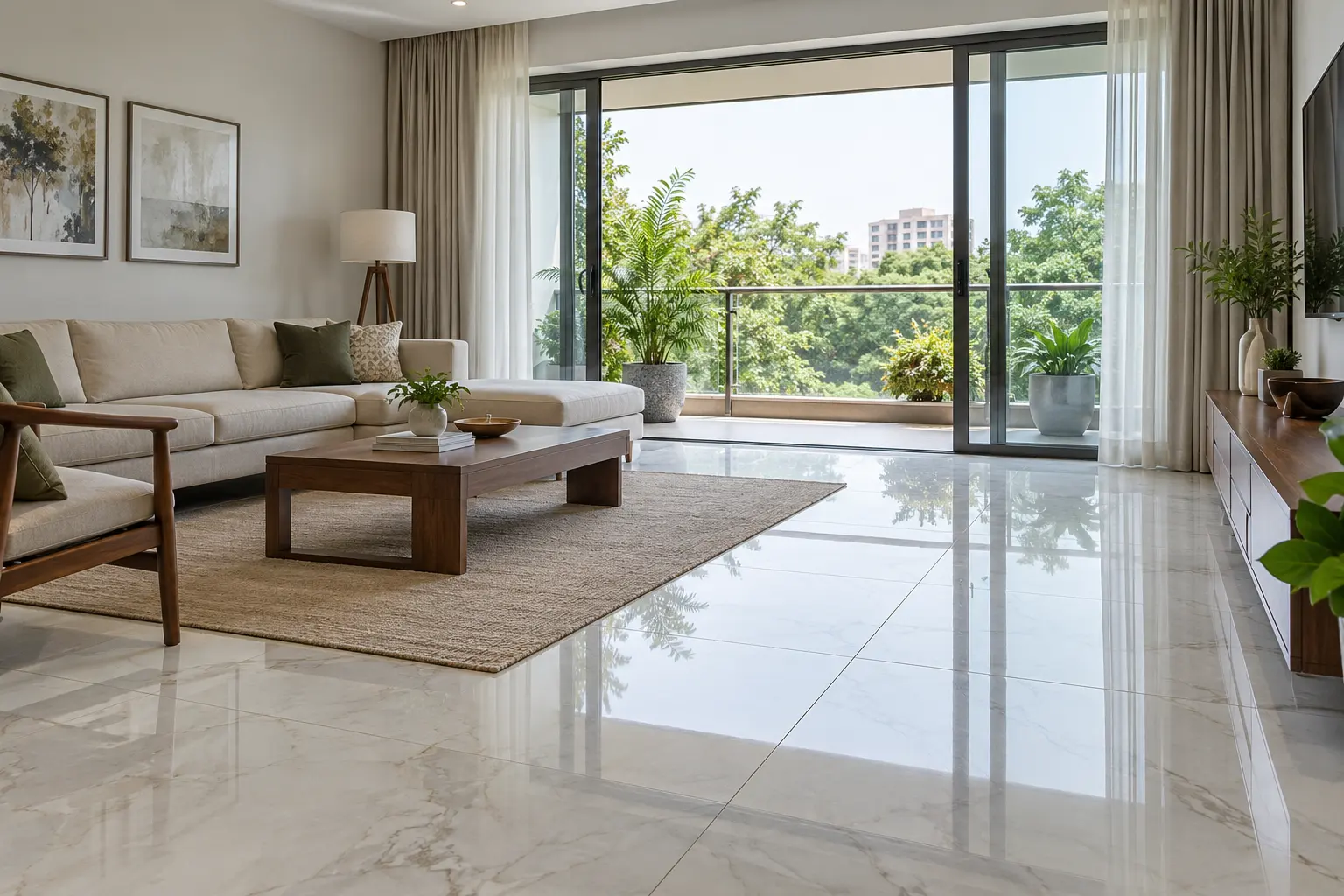
Vitrified tiles are the default floor tile in most new Bengaluru homes, and for good reason. They are hard, dense, easy to clean and come in almost every look you can think of, from plain beige to bold marble prints. This page explains what makes a tile "vitrified", the main types you will see in the shop, and how to choose between them.
What vitrified tiles are
A vitrified tile is made from a mix of clay, silica, feldspar and other minerals, pressed under high pressure and fired at a very high temperature. During firing the silica partly melts and fuses the body into a glass-like (vitreous) mass. The result is a tile with very low porosity. Water absorption is usually under 0.5%, compared to several percent for ordinary ceramic tiles.
Low absorption means the tile resists stains, does not swell or crack from moisture, and stays strong over time. That is why vitrified tiles are used on floors that see daily mopping, foot traffic and the odd spilled sambar.
The main types
| Type | How the design is made | Good for |
|---|---|---|
| Soluble salt | Colour salts absorbed into the top surface, then polished | Budget floors, low traffic rooms |
| Double charge | Two layers of coloured powder pressed together, top layer is a few mm thick | Halls, shops, busy homes |
| GVT and PGVT | Digital print on a glaze layer, PGVT is then polished | Marble, wood and stone looks |
| Full body | Colour runs through the whole body | Commercial floors, outdoor and heavy use |
Most homes today use PGVT or GVT because the printed designs look close to natural stone. Double charge and full body tiles are chosen when durability matters more than variety.
Where vitrified tiles work, and where they don't
They work well in living rooms, bedrooms, dining areas, kitchens, offices and shops. Matt and textured vitrified tiles also work on bathroom floors, balconies and covered sit-outs.
Be careful with polished or high gloss vitrified tiles in wet areas. They look lovely in a hall, but on a bathroom floor or an open balcony during the monsoon they become slippery. For those spots, use a matt or anti-skid tile. For open car parks and driveways, a proper parking tile is a better choice than a regular floor tile.
Sizes and finishes commonly available
Vitrified tiles typically come in 600x600 mm, 800x800 mm, 600x1200 mm and 800x1600 mm, with some ranges in 1200x2400 mm slabs. Wooden-look planks in 200x1200 mm are also usually vitrified or GVT. Finishes include glossy, high gloss, satin, matt, carving and rustic.
As a rough rule, bigger tiles mean fewer grout lines and a cleaner look, but they need a flatter floor and a more careful tiler. See our 600x1200 mm and 800x800 mm pages for more.
How to choose
- Decide the room first. Living room and bedrooms can take gloss. Kitchen, bathroom and balcony floors should be matt or textured.
- Think about traffic. A home with kids, pets or a home office with chairs rolling around benefits from double charge or a matt GVT that hides scratches.
- Check the batch. Buy all tiles for one room from the same batch and shade number. Shade varies between production runs.
- Look at the edges. Rectified tiles have machine cut edges that allow thin 2 to 3 mm joints. Non-rectified tiles need slightly wider joints.
- Lay out a few tiles. Look at them on the floor under normal light, not just on a display rack.
If you are still deciding between vitrified and ceramic, our vitrified vs ceramic guide goes into more detail.
See them at the shop
The easiest way to choose is to see a few designs side by side. Bring your room measurements and a photo of the space, and visit the shop or call us to check what is currently in stock.
Common questions
Are vitrified tiles good for bathrooms?
Yes. Their low water absorption suits bathroom walls and floors, but pick a matt or anti-skid vitrified tile for the floor, not a polished glossy one.
What is the difference between vitrified and ceramic tiles?
Vitrified tiles are pressed and fired at higher temperatures with more silica, so they absorb much less water (usually under 0.5%) and are harder. Ceramic tiles are more porous and are mostly used on walls.
Which vitrified tile is best for a living room?
Most families choose PGVT or double charge in 600x1200 mm or 800x800 mm. PGVT gives more design choice, double charge holds up better to heavy foot traffic and scratches.
What thickness should vitrified floor tiles be?
Regular vitrified floor tiles are typically around 8 to 10 mm thick. Large slabs and heavy duty tiles can be thicker, so check the box label when you compare.
Keep reading
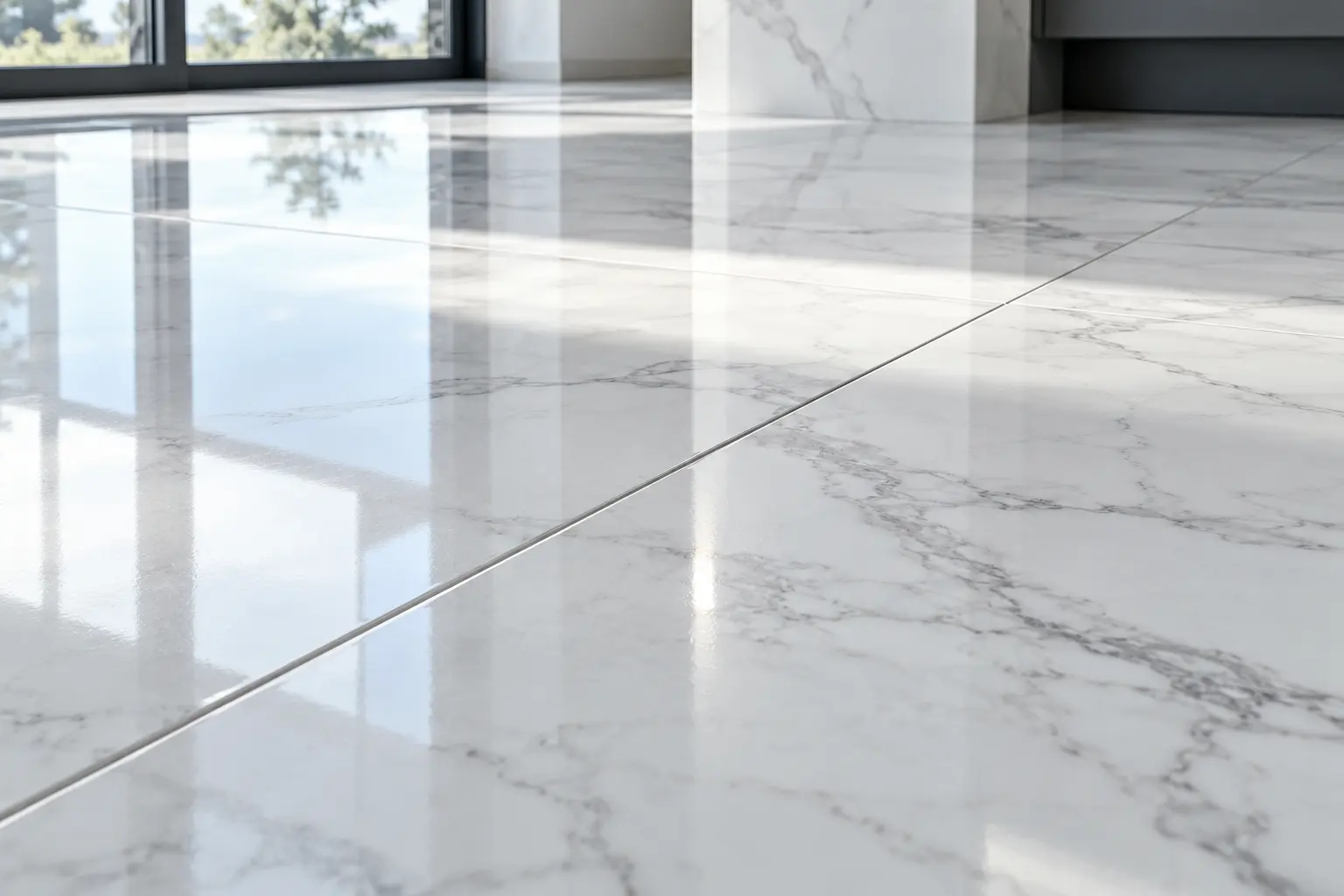
GVT and PGVT tiles
GVT and PGVT tiles give realistic marble, wood and stone looks on a vitrified body. Learn the difference, where each works and how to pick one.
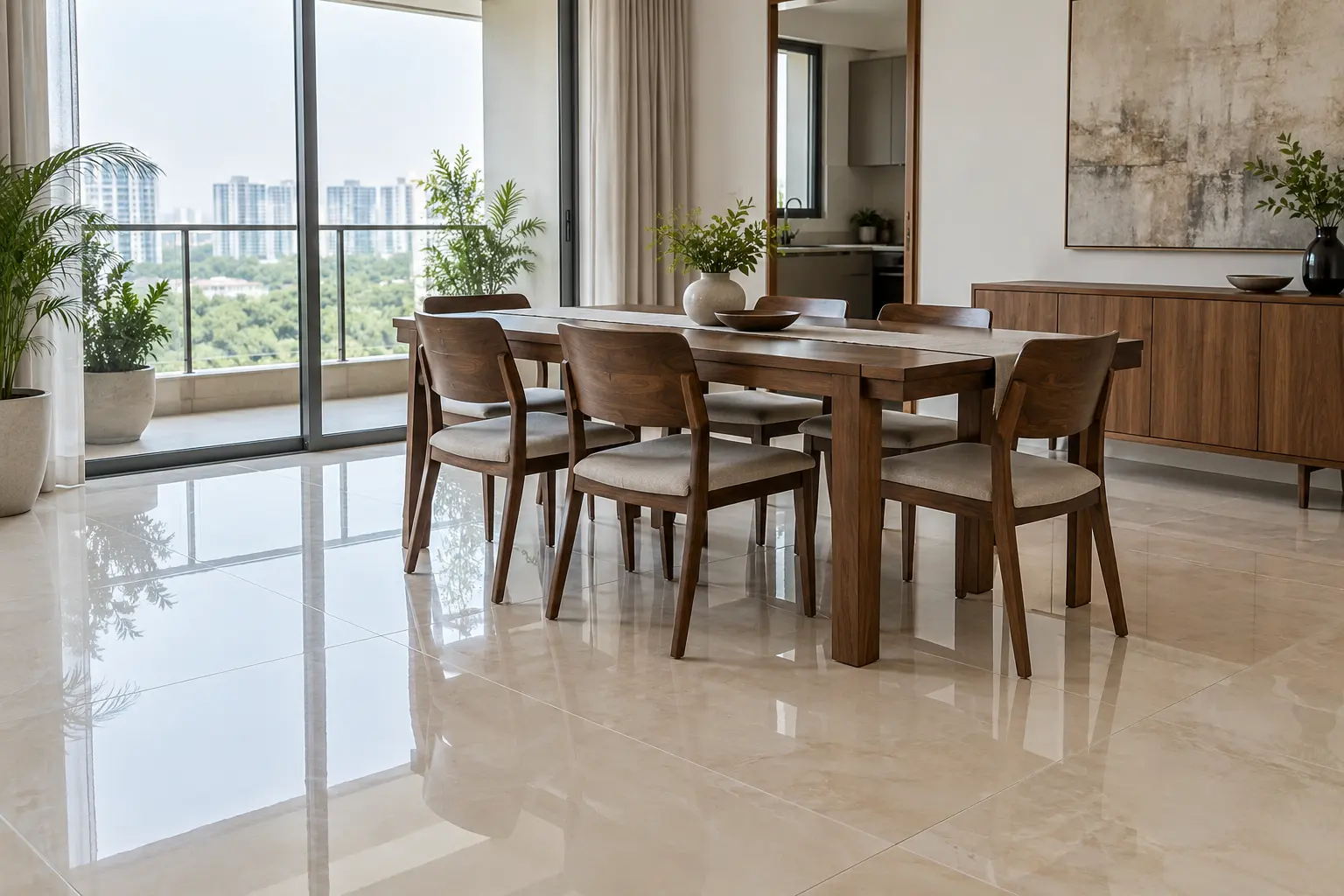
Double charge tiles
Double charge vitrified tiles have a thick coloured top layer that lasts under heavy foot traffic. Learn where they fit, sizes and how to choose.
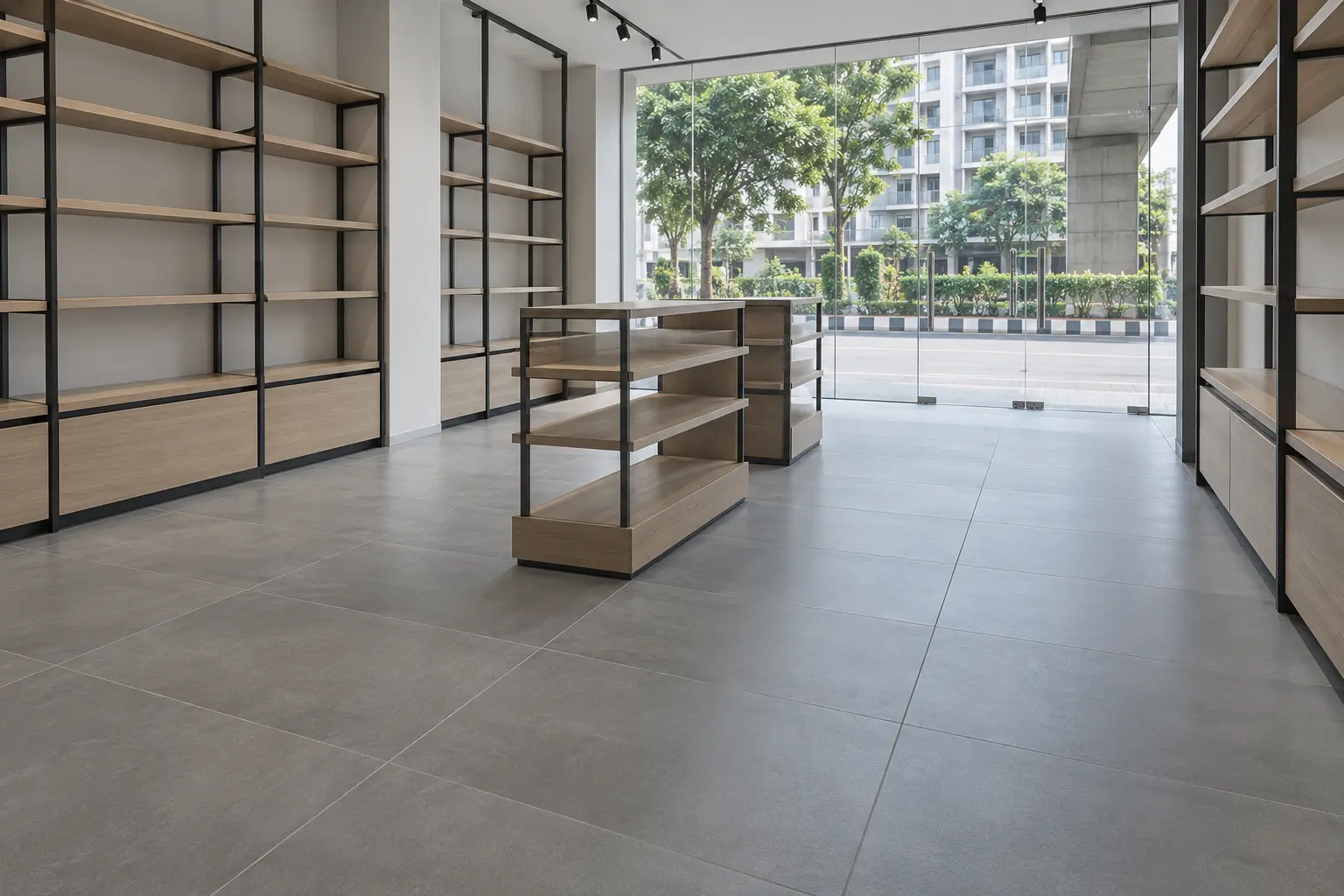
Full body tiles
Full body vitrified tiles carry colour through the whole tile, so chips and wear barely show. See where they suit, common sizes and how to choose.
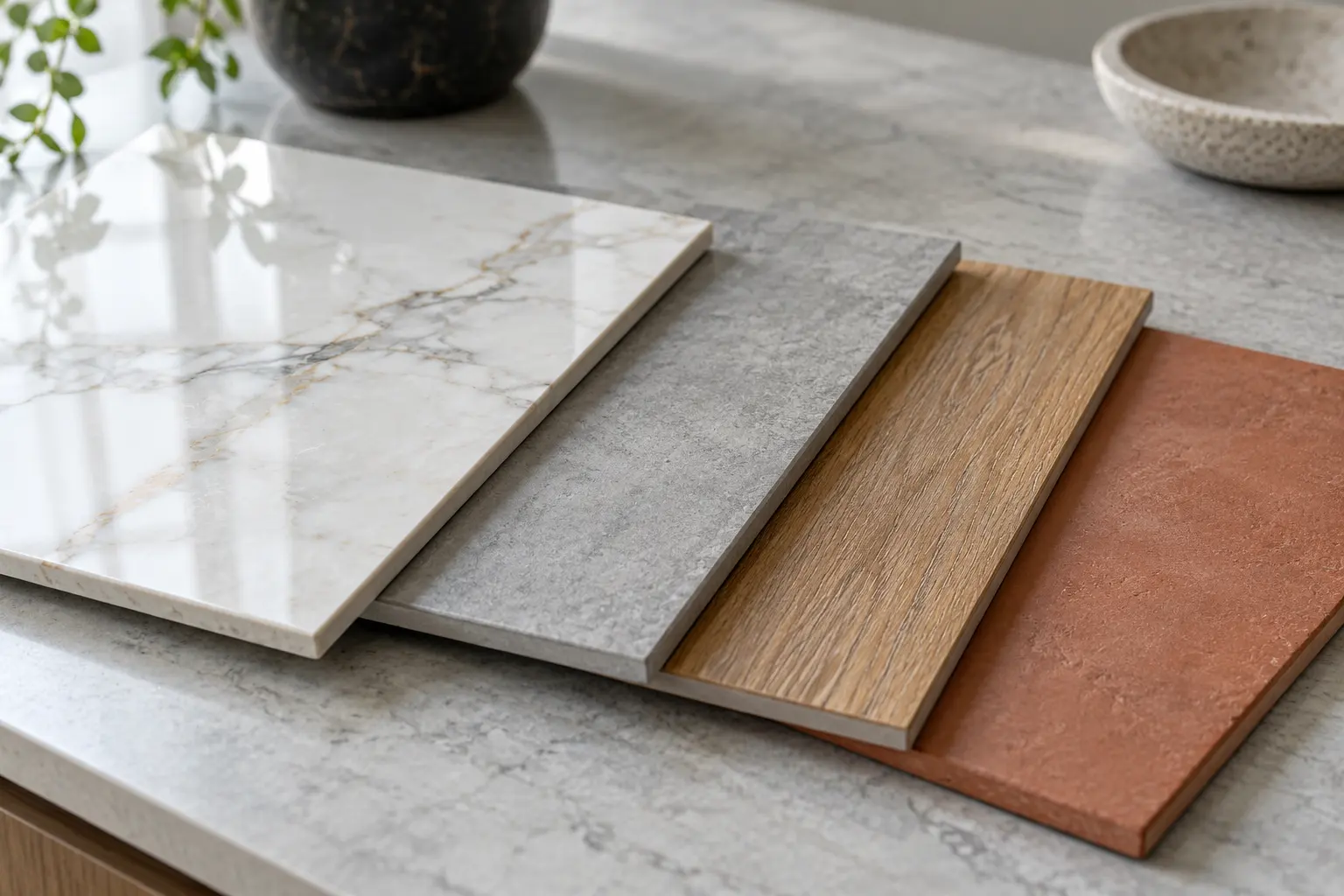
See the tiles in person before you decide
Photos never show a tile's true shade or texture. Get in touch to check what is in stock, then walk in and compare.