Full Body Vitrified Tiles in Bengaluru: Built for Heavy Use
Full body vitrified tiles carry colour through the whole tile, so chips and wear barely show. See where they suit, common sizes and how to choose.
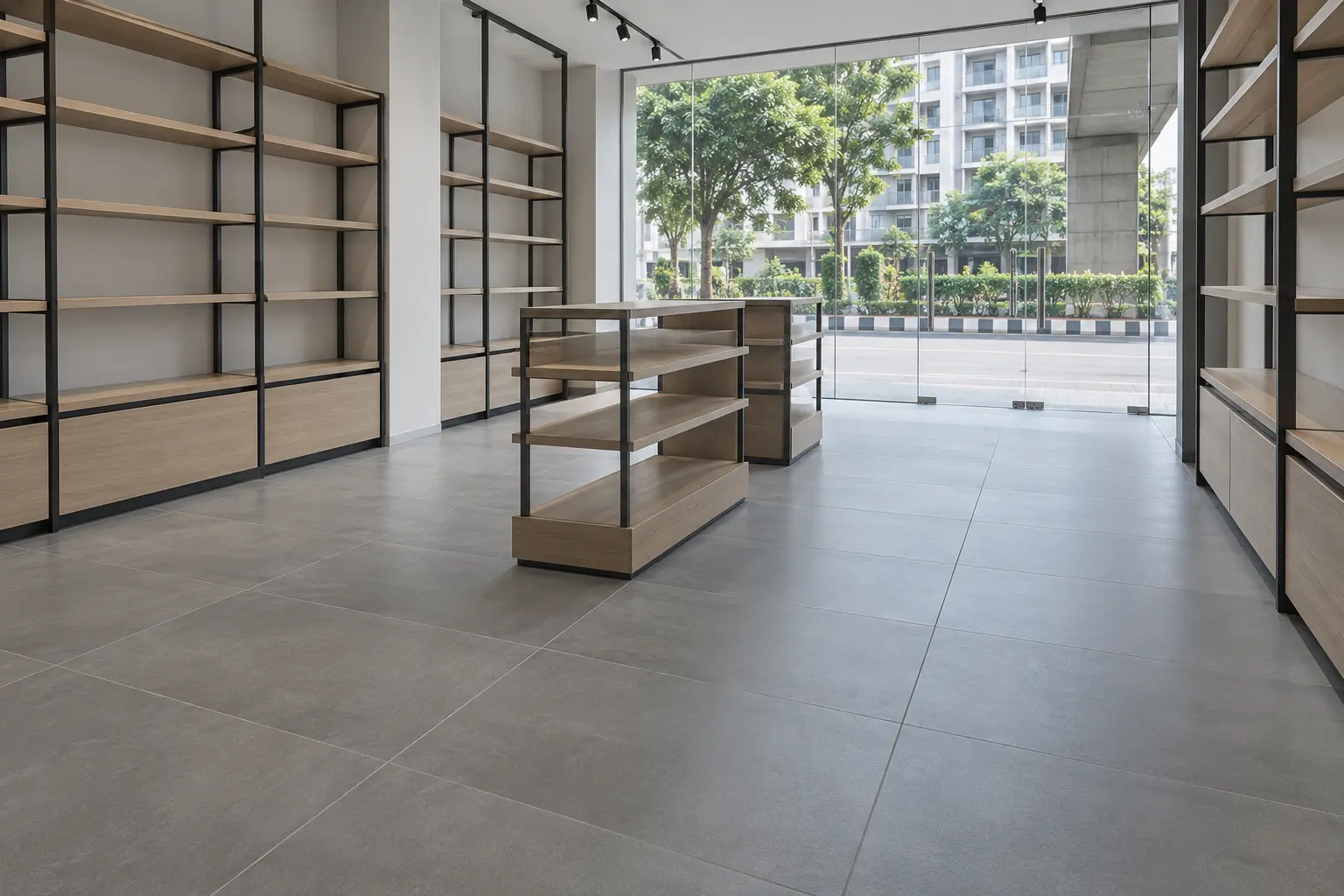
Full body vitrified tiles are the workhorses of the tile world. The colour runs right through the tile from top to bottom, so even when the surface wears or an edge chips, it does not show a different coloured body underneath. That makes them a sensible choice for floors that take heavy, everyday punishment.
What full body tiles are
Most tiles have a design only on the top. A GVT or PGVT tile has a thin printed glaze, and a double charge tile has a coloured top layer a few millimetres deep. In a full body tile, the coloured mix is used for the entire body, so a cross-section looks the same as the face.
Like other vitrified tiles, they are pressed and fired at high temperatures and usually absorb under 0.5% water. Some newer ranges combine a digital print on top with a body coloured to match it. These are sometimes sold as "colour body" or "through body" tiles, and they hide chips well while offering a bit more design.
Where they work, and where they don't
Strong fit:
- Shops, restaurants, clinics, schools and offices
- Apartment corridors, lobbies and lift areas
- Kitchens and utility areas in homes
- Covered sit-outs, porches and verandas
- Staircases, where edges take knocks
Less suited:
- Rooms where you want a detailed, glossy marble look. Full body designs are usually plainer
- Open car parks with heavy vehicle loads. A thicker parking tile is designed for that job
- Projects on a very tight budget, since full body tiles can cost more than basic glazed tiles of the same size
Sizes and finishes commonly available
Full body tiles typically come in 600x600 mm, 300x600 mm and 600x1200 mm, sometimes in 800x800 mm. Thickness is often around 9 to 12 mm depending on the range. Common finishes are matt, rustic, textured and sometimes lightly polished.
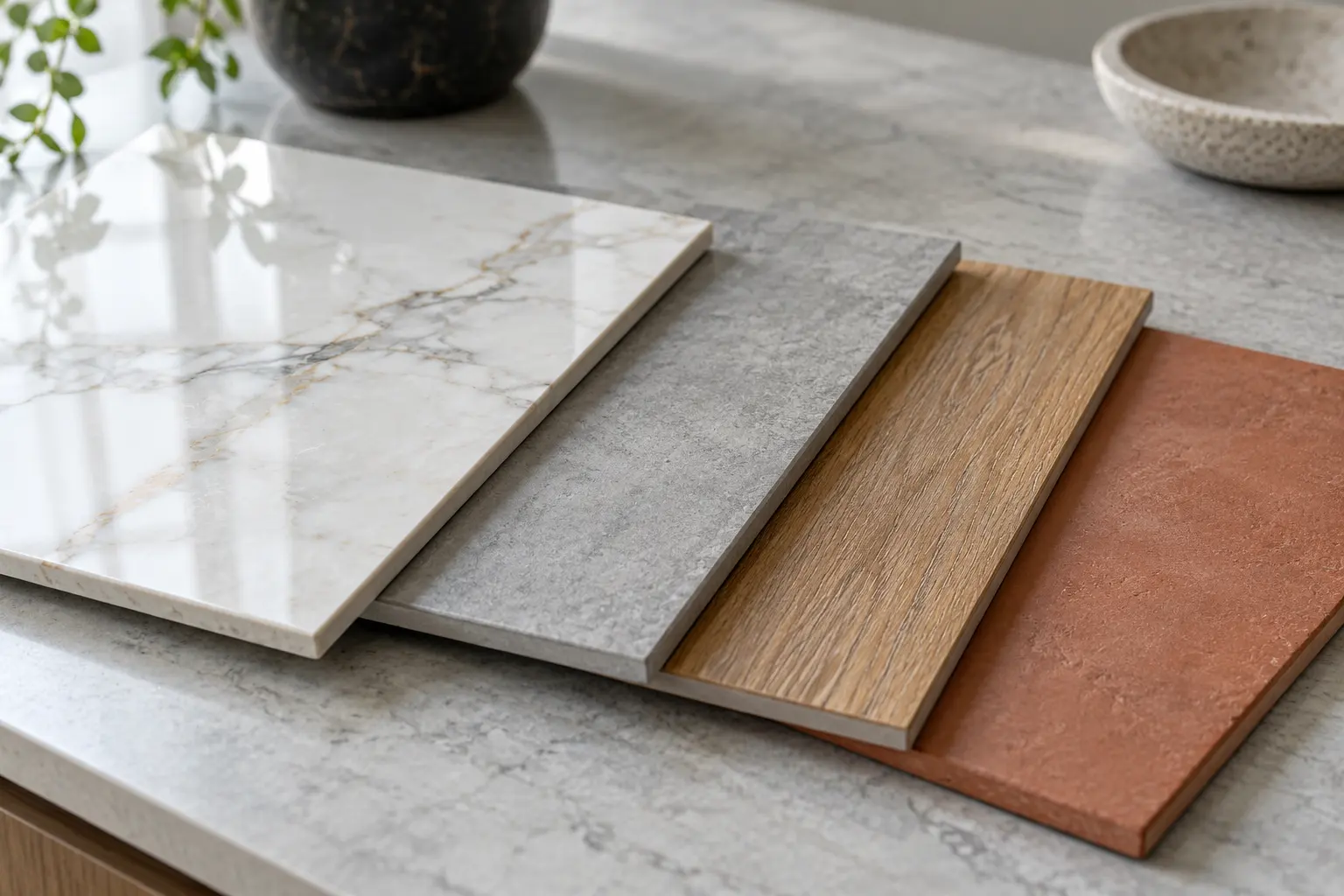
Colours lean towards greys, beiges, earthy browns, terracotta tones and concrete looks, with salt-and-pepper speckles in many designs.
How to choose
- Check the edge. Look at the side of the tile. In a true full body tile, the edge colour matches the face.
- Pick the finish for the location. Matt is fine indoors. Covered outdoor areas and entrances benefit from a textured or anti-skid surface.
- Choose a forgiving colour. Mid greys and beiges hide dust and footprints better than very light or very dark tones, which helps on Bengaluru's dusty roads.
- Think about cleaning. Rough textured surfaces grip better but hold more dirt. A light texture is a good balance for most homes.
- Buy one batch. As with any tile, buy all your boxes from the same batch and shade.
Ask about current stock
Full body ranges vary from batch to batch. Call the shop to check what is available, or visit us and we will show you tiles suited to your shop floor, corridor or sit-out.
Common questions
What does full body mean in tiles?
It means the colour and pattern go through the full thickness of the tile, not just a printed top layer. If the tile chips, the exposed part looks almost the same as the surface.
Are full body tiles good for homes?
Yes, especially for kitchens, utility areas, staircases and sit-outs where wear shows quickly. Designs are usually plainer than PGVT, so they suit a simple, practical look.
Are full body tiles slippery?
Most full body tiles are matt or textured, so they are less slippery than polished tiles. For wet outdoor areas, ask for a version with an anti-skid surface.
Keep reading
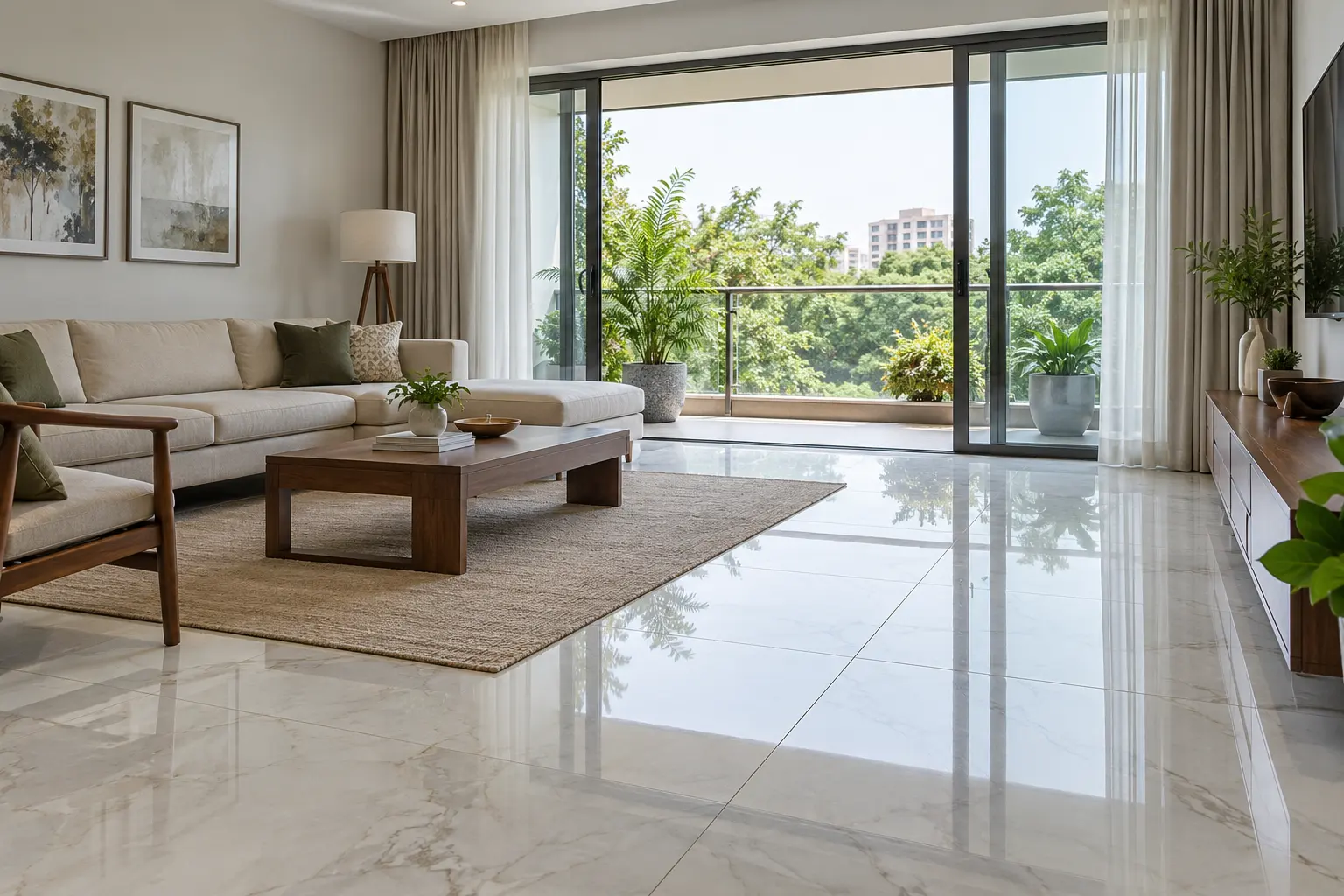
Vitrified tiles
What vitrified tiles are, the four main types, common sizes like 600x600 and 600x1200 mm, and how to pick the right one for your Bengaluru home.
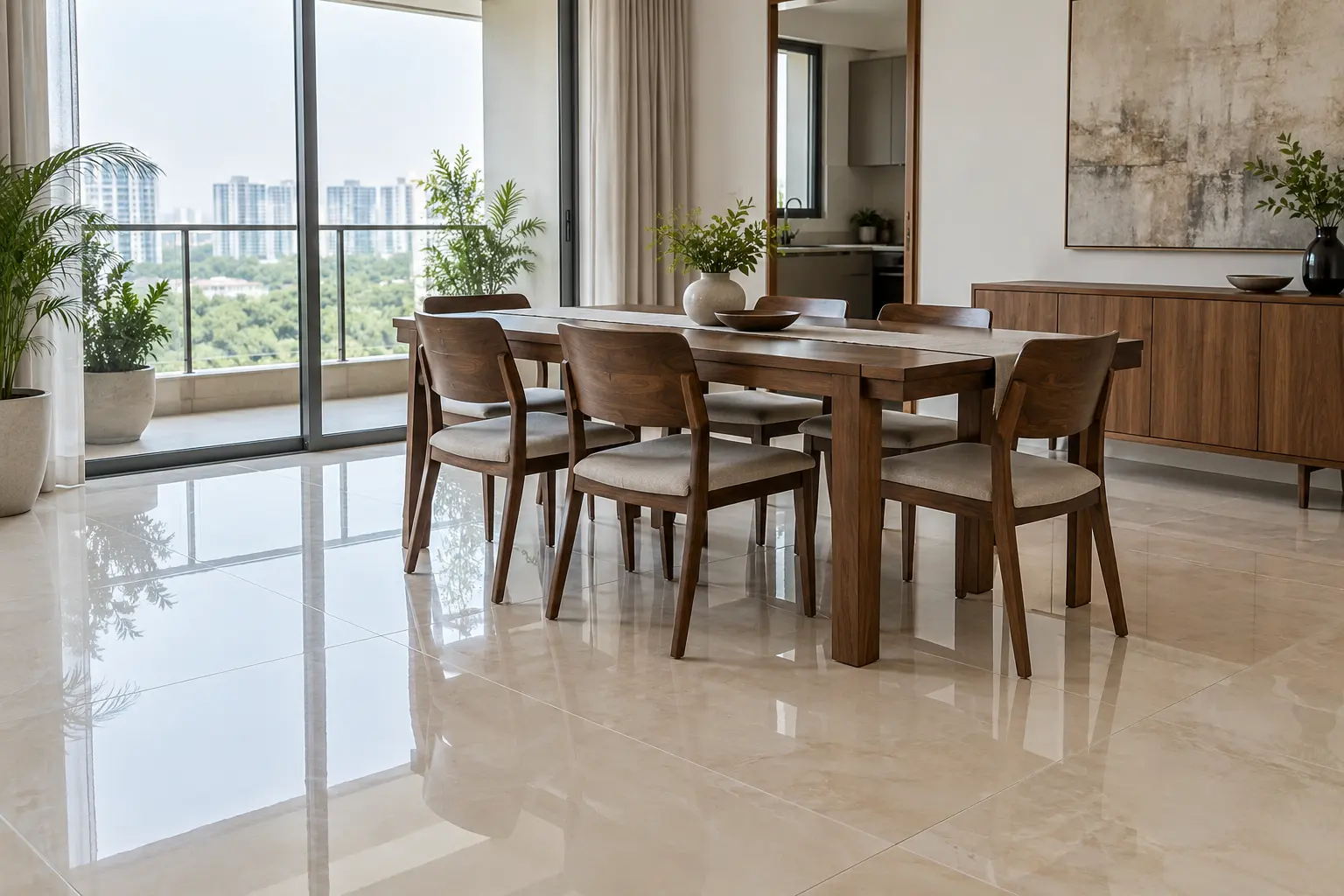
Double charge tiles
Double charge vitrified tiles have a thick coloured top layer that lasts under heavy foot traffic. Learn where they fit, sizes and how to choose.
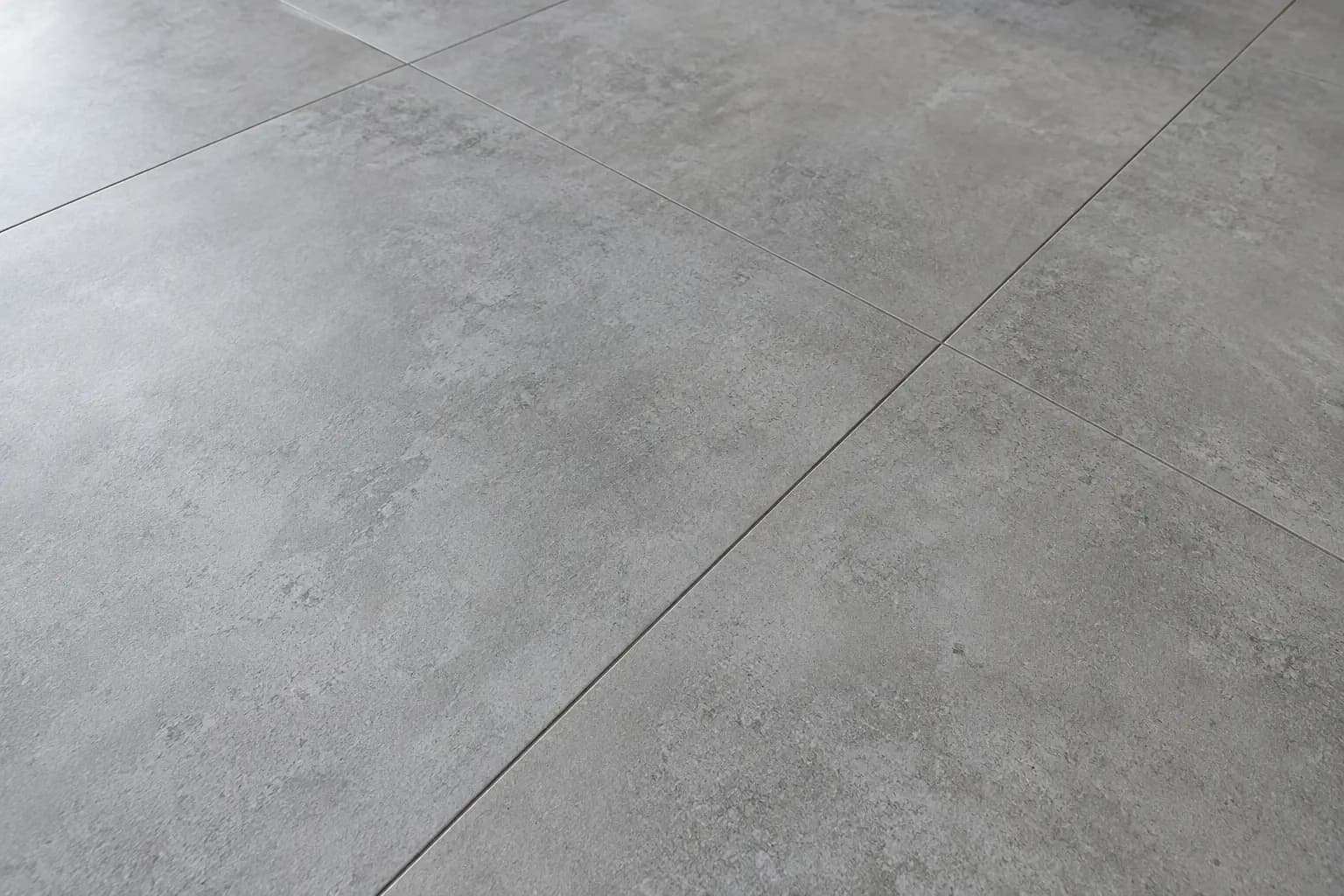
Porcelain tiles
Porcelain vs vitrified tiles in plain words: what the label means, how dense they are, where they work best and what to check before you buy.
See the tiles in person before you decide
Photos never show a tile's true shade or texture. Get in touch to check what is in stock, then walk in and compare.