Buying guide · 4 min read
What to Bring When Buying Tiles: A Checklist for Your Shop Visit
Measurements, room photos, an old tile, your budget and your tile layer's input. Bring these when you visit a tile shop and you will decide faster.
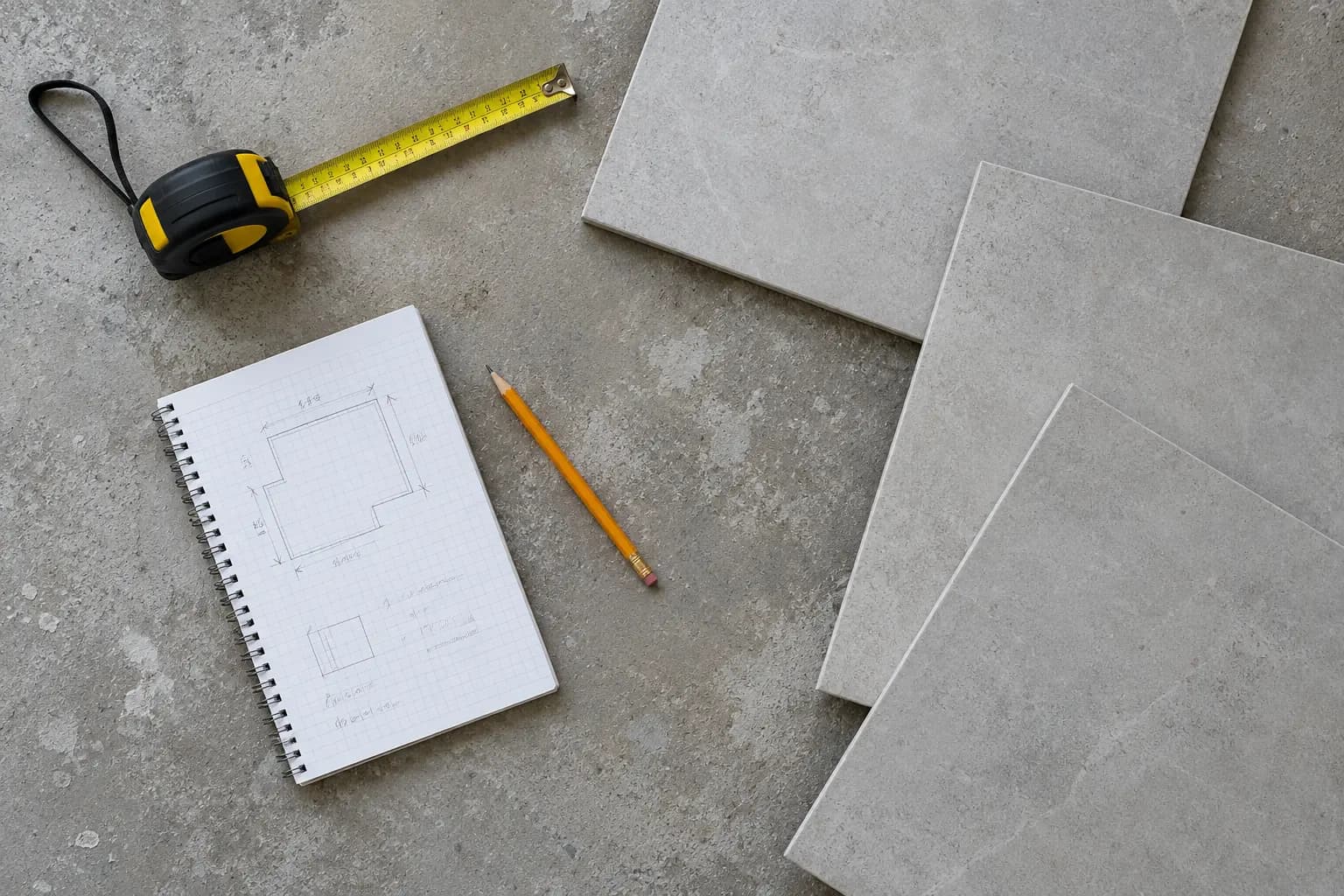
A tile shop visit goes much faster when you walk in prepared. Without measurements or photos, you can end up liking a design that does not suit the room, or buying the wrong quantity. This checklist covers what to bring so you can choose confidently and avoid a second trip.
1. Room measurements
This is the single most useful thing to bring. For each area you plan to tile, note:
- Length and width of the floor in feet. For L-shaped rooms, split them into rectangles.
- Wall height and the width of each wall, if you are tiling walls (bathroom, kitchen backsplash, feature wall).
- Doors, windows and openings you will subtract from wall areas.
- Skirting length if you want tile skirting.
- Steps and risers: number of steps, tread width and depth, riser height.
You can get a rough tile count beforehand with our tile calculator. Our guide on how to calculate tiles for a room walks through it step by step.
2. Photos of the room
Photos help us understand light, existing colours and the overall feel. Take:
- A wide photo of each room from the doorway, in daylight
- Close ups of anything that will stay: wall paint, kitchen counter, cabinets, doors, sanitaryware
- Any problem areas: uneven floors, cracks, dampness, existing tile that must match
- For outdoor areas, photos showing slope, drainage and sun exposure
A short video walking around the room is even better.
3. Existing tiles or a sample
If you are repairing, extending or matching, bring an actual tile or a broken piece. Note the size printed on the back if visible. Photos can mislead on colour and finish, but a real piece lets us compare size, thickness, shade and texture directly.
Also bring anything that the new tiles must go with, like a cabinet shutter sample, a granite piece, or a paint shade card.
4. Your budget
You do not have to share an exact number, but having a rough idea per sq ft, or for the whole job, helps us show you suitable options quickly. Remember the total cost includes more than just tiles:
- Tiles, plus extra for cutting and spares
- Adhesive, grout, spacers and levelling clips
- Skirting, step tiles or borders if needed
- Labour and any floor preparation
- Transport to your site
5. Who is laying the tiles
Tell us who will do the work: your own mason, a contractor, or a builder. It matters because:
- Some tiles, especially large format sizes, need experienced layers and proper adhesive.
- Your layer may have preferences on sizes, thickness and wastage allowance.
- They can confirm the exact quantity based on the room layout and laying pattern.
If you can, bring your tile layer along, or call them from the shop. Five minutes of their input can save a lot of trouble.
6. Timeline and site details
- When does the work start? This helps plan whether to buy everything at once.
- Is it a new construction, renovation or repair?
- Which floor is the site on? Is there a lift? Large tiles may not fit in small lifts or narrow staircases.
- Any access issues at the site for unloading?
Quick checklist
| Bring | Why it helps |
|---|---|
| Room measurements (L x W, wall heights) | Accurate quantity and size suggestions |
| Daylight photos of each room | Matching colours, light and style |
| Existing tile or broken piece | Exact matching of size, shade and finish |
| Samples of counter, cabinets, paint | Coordinating colours |
| Rough budget | Faster shortlisting |
| Tile layer's input or phone number | Correct size, adhesive and wastage |
| Timeline and site access details | Planning purchase and transport |
At the shop: what to ask
Once you have shortlisted designs, ask about:
- Batch and shade. Make sure all boxes come from the same batch. Read our guide on tile batch, shade and grade.
- Extra quantity. Buy enough spares for cuts and future repairs. See how much extra tile to buy.
- Quality checks. Check flatness, edges and finish. Our guide on how to check tile quality explains how.
- Room suitability. Confirm the tile is right for the use, like anti-skid for bathrooms and outdoor areas.
Ready to visit?
With these things in hand, most people can finalise designs in one visit. Get directions or call the shop to check current stock before you come, and bring your measurements so we can help work out quantities with you.
Common questions
Do I need exact measurements before visiting a tile shop?
Rough measurements are enough to start choosing designs. For the final quantity, measure each room carefully or have your tile layer measure, since they also account for cuts and wastage.
Should I bring my tile layer with me?
If possible, yes, or at least talk to them before you buy. They can confirm the size, quantity and adhesive they need, and spot problems with the floor or walls early.
Why should I bring an old tile?
If you are matching or replacing tiles, an actual piece helps compare size, thickness, colour and finish far better than a photo. Even a broken piece helps.
Can I take a sample tile home?
Ask at the shop. Seeing a tile in your own light is useful, and we can discuss what is possible for the design you like.
Keep reading
How to Calculate Tiles for a Room: Simple Steps with Examples
Work out how many tiles and boxes you need for any floor or wall, with a worked 12 x 14 ft example, a tile size table and sensible wastage figures.
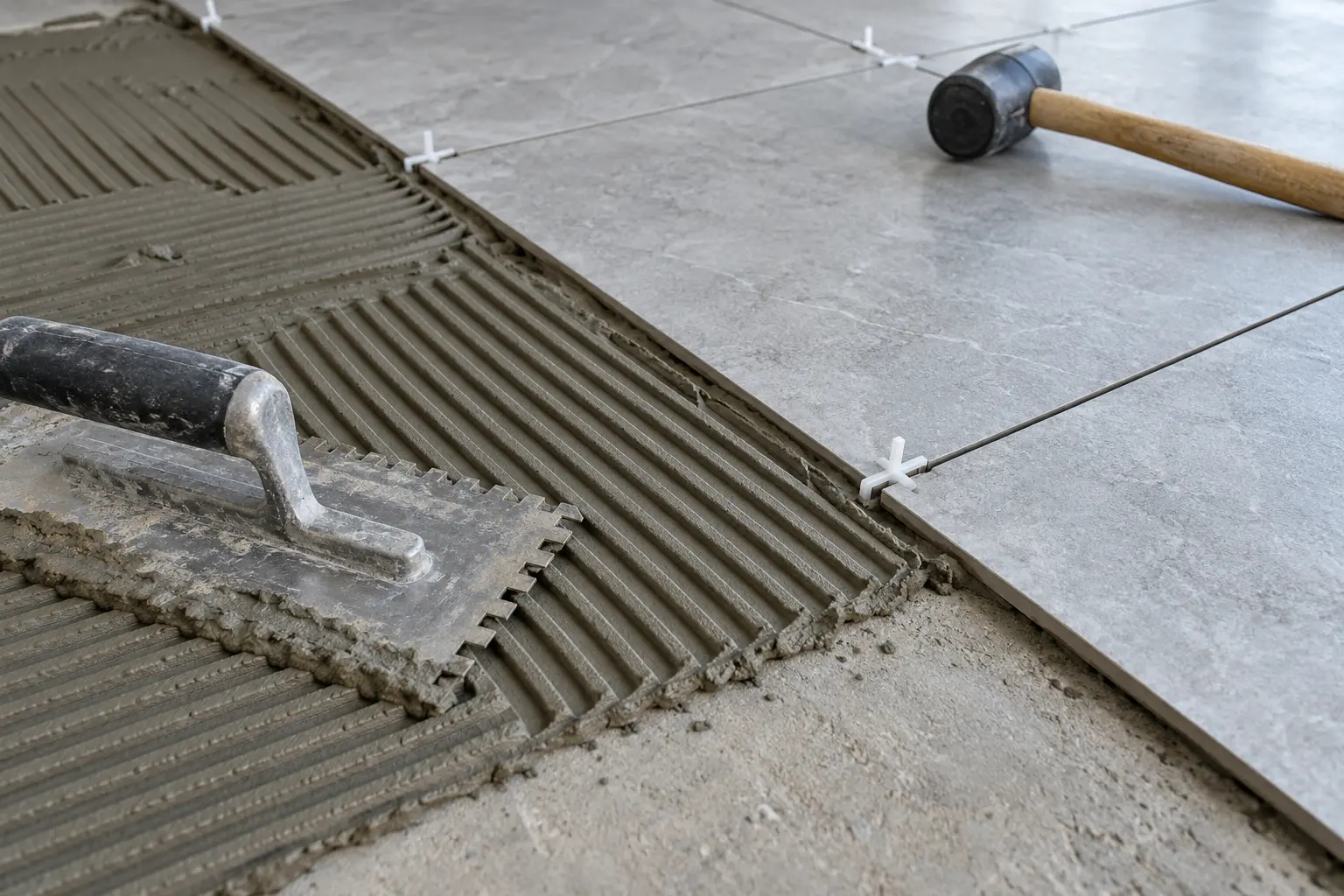
How Much Extra Tile to Buy: Wastage Percentages Explained
How much wastage to add when buying tiles: typical percentages for straight, diagonal and large format layouts, with worked examples and spare tips.
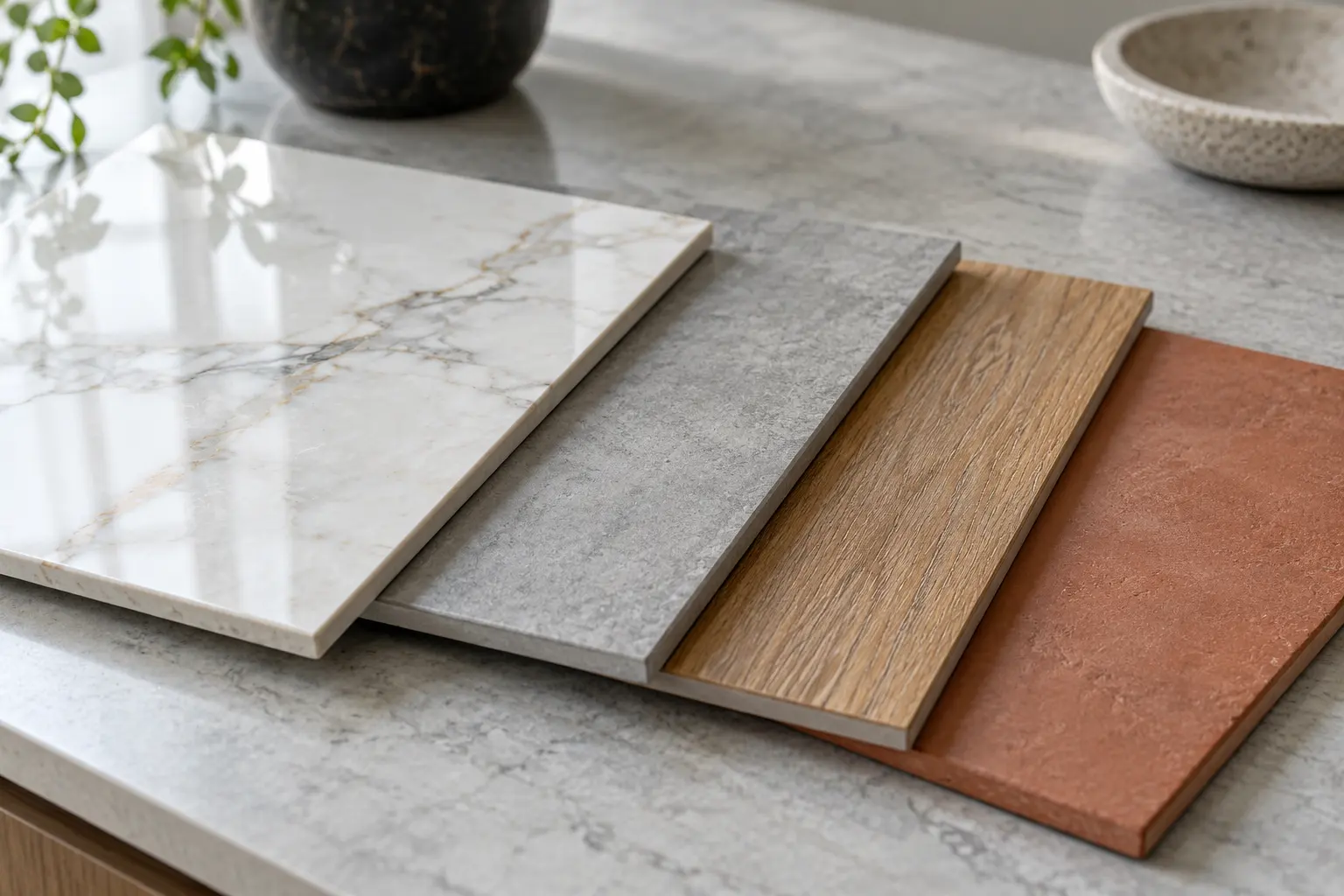
How to Check Tile Quality Before You Buy: 9 Simple Tests
Simple checks you can do in the shop to judge tile quality: flatness, size, shade, edges, water absorption, surface strength and box labels.
See the tiles in person before you decide
Photos never show a tile's true shade or texture. Get in touch to check what is in stock, then walk in and compare.