Basics · 4 min read
Large Format Tiles: Pros, Cons and When They Make Sense
Big tiles like 800x1600 mm and 1200x2400 mm look clean and modern, but need a flat base and skilled laying. Here is what to weigh before you buy.
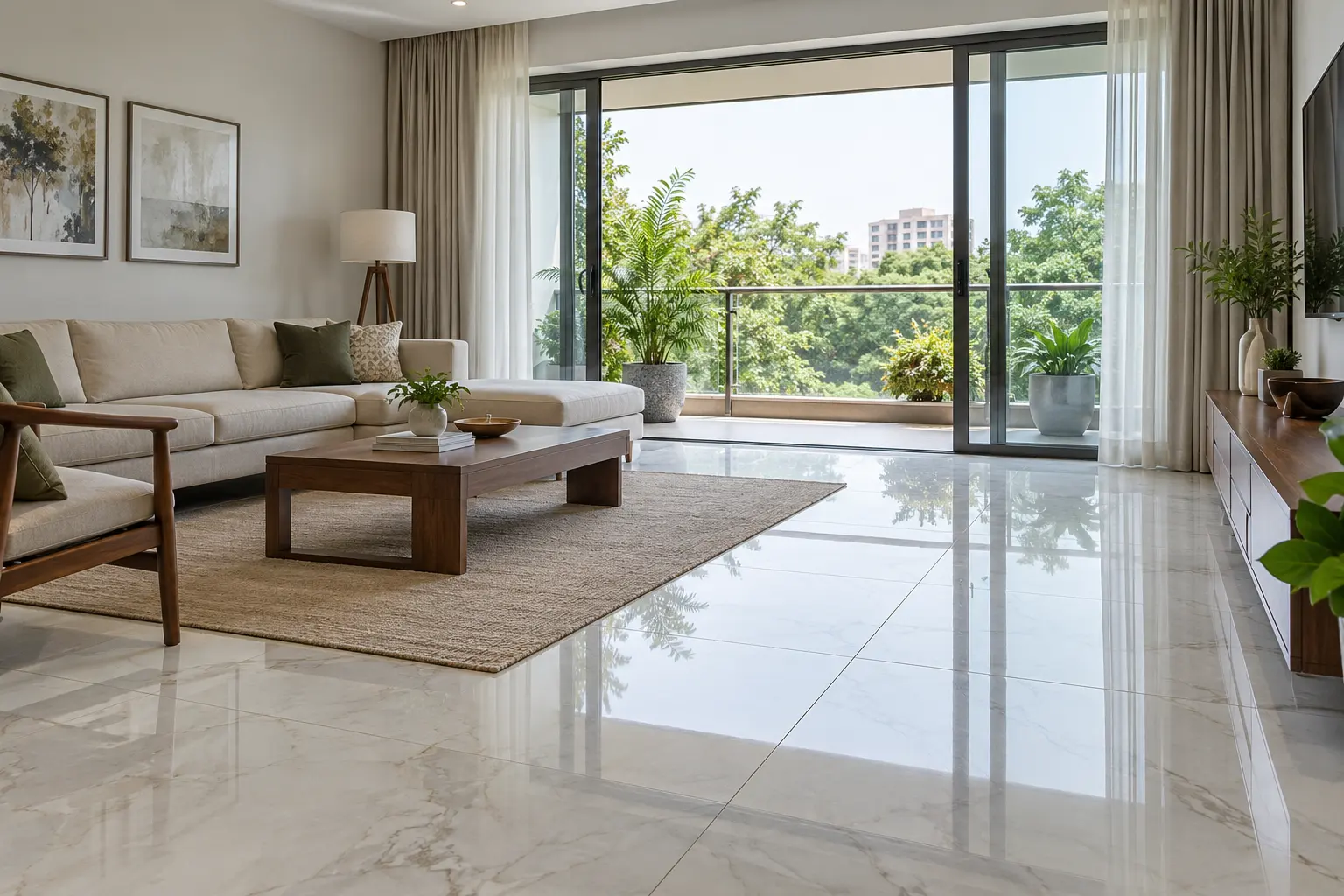
Large format tiles have become very popular in Bengaluru apartments and villas. A floor laid with 800x1600 mm or 1200x2400 mm tiles looks calm and expensive, with very few joints. But big tiles bring their own challenges, from transport to laying. This guide covers the honest pros and cons so you can decide if they suit your home.
What we mean by large format
In everyday shop talk, anything from 600x1200 mm upwards is called large format. Above that you have 800x1600 mm and slab sizes like 1200x2400 mm. Most are vitrified or porcelain, often in marble, stone or concrete looks. See our page on large format slab tiles for more on the material itself.
The advantages
- Fewer grout lines. Less grout means a cleaner look and less grout to clean. A living room floor in large tiles reads as one continuous surface.
- Rooms look bigger. With fewer lines breaking up the floor, the eye sees one plane. This works in both large halls and compact apartments.
- Marble look without marble problems. Big marble-finish tiles copy the veining of natural stone across a wide area, without the polishing, staining and porosity issues of real marble.
- Walls and counters too. Slab tiles are used on feature walls, behind TV units, and sometimes even for kitchen counters and tabletops, depending on the product.
- Easier daily cleaning. A mop glides over the floor with fewer joints to catch dirt.
The disadvantages
- The base must be very flat. Any dip or hump under a big tile shows up as lippage (one edge higher than the next) or hollow spots. Floor levelling may be needed first.
- Skilled laying needed. Big tiles need experienced layers, proper adhesive, notched trowels, back buttering and often levelling clips. Not every mason is comfortable with slab sizes.
- Handling and transport. Large tiles are heavy and can crack if carried flat or bent. Narrow staircases and small lifts in older apartment buildings can be a real problem for 1200x2400 mm pieces. Measure your lift and stair turns before you buy.
- More wastage in small or odd rooms. Cutting a big tile for a small corner can waste a lot of material. Rooms with many corners, pillars or angled walls suit smaller sizes better.
- Higher labour and material cost per sq ft. Adhesive, levelling systems and skilled labour usually push the total cost up compared to standard sizes.
- Replacement is harder. If one tile cracks, replacing it neatly is more work, and matching the shade later can be difficult.
Quick comparison by size
| Size | Typical use | Laying difficulty | Notes |
|---|---|---|---|
| 600x600 mm | Most rooms | Easy | Safe, flexible choice |
| 600x1200 mm | Living, dining, bedrooms | Moderate | Good balance of look and practicality |
| 800x1600 mm | Large halls, villas, feature walls | High | Needs very flat base and skilled layer |
| 1200x2400 mm | Feature walls, big open floors | Very high | Check lift, stairs and handling first |
Where large format works well
- Open living and dining areas in apartments and villas
- Living rooms where you want a marble-look floor
- Feature walls behind TV units or beds
- Shop floors and showrooms with simple rectangular layouts
Where to think twice
- Small bathrooms where the floor needs a slope to the drain. Big tiles do not follow a slope well, so smaller floor tiles are usually better there.
- Rooms with lots of corners, pillars or curved walls
- Older buildings with uneven floors where levelling would be costly
- Upper floors where getting slabs up the stairs is not practical
Tips if you go large
- Plan the layout on paper first. Decide where full tiles go and where cuts fall, so you do not end up with thin slivers at doorways.
- Use proper adhesive. Large tiles need full coverage. Read our guide on tile adhesive vs cement mortar.
- Use levelling clips. They help keep edges flush while the adhesive sets.
- Order extra. Buy enough spares from the same batch for future repairs. Our guide on how much extra tile to buy helps here.
- Store and carry upright. Large tiles should be carried on edge, not flat, to avoid bending and cracking.
Want to see the sizes?
Large tiles look very different in person compared to a photo. Visit the shop with your room measurements and we can show you what large format designs are in stock and talk through whether they suit your space.
Common questions
What size counts as a large format tile?
There is no strict rule, but tiles of 600x1200 mm and above are usually called large format. Sizes like 800x1600 mm and 1200x2400 mm are often called slab tiles.
Can large format tiles be used in a small room?
Yes, and they can make a small room look bigger because there are fewer grout lines. The catch is more cutting and wastage, so check the layout with your tile layer first.
Do large tiles need adhesive instead of cement?
Yes. Large tiles should be laid with a suitable tile adhesive and full coverage at the back. Traditional thick cement mortar beds often leave hollow spots under big tiles.
Are large format tiles harder to replace if one breaks?
They are. Removing one big tile without damaging neighbours takes care, and you need a spare from the same batch. Always keep a few extra pieces.
Keep reading
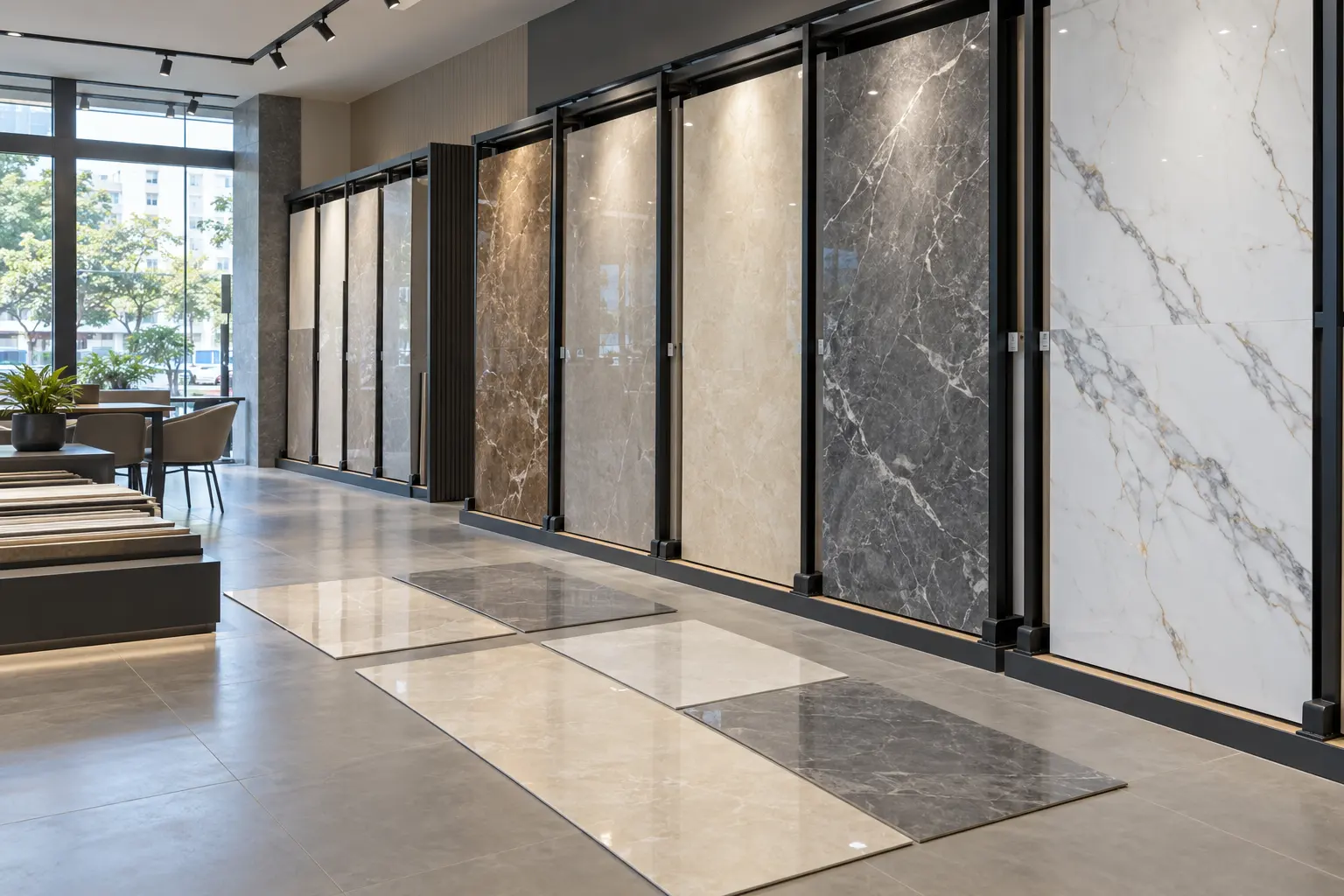
Large format slabs
Large format slab tiles like 800x1600 and 1200x2400 mm give a clean, near jointless look. Learn where they suit, handling needs and how to choose.
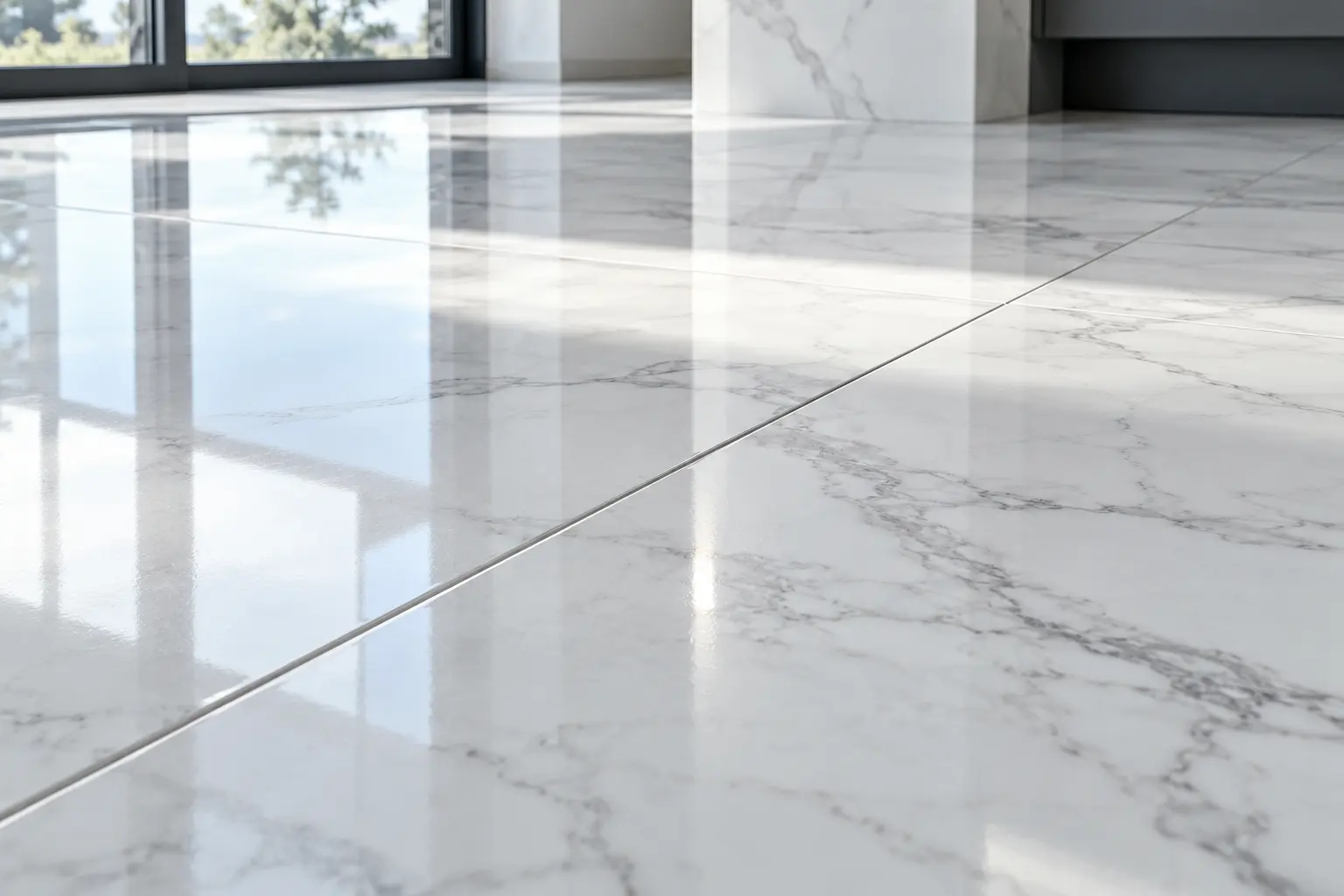
800x1600 mm tiles
800x1600 mm tiles cover big floors and feature walls with very few joints. See coverage per tile, tiles per 100 sq ft and handling advice.
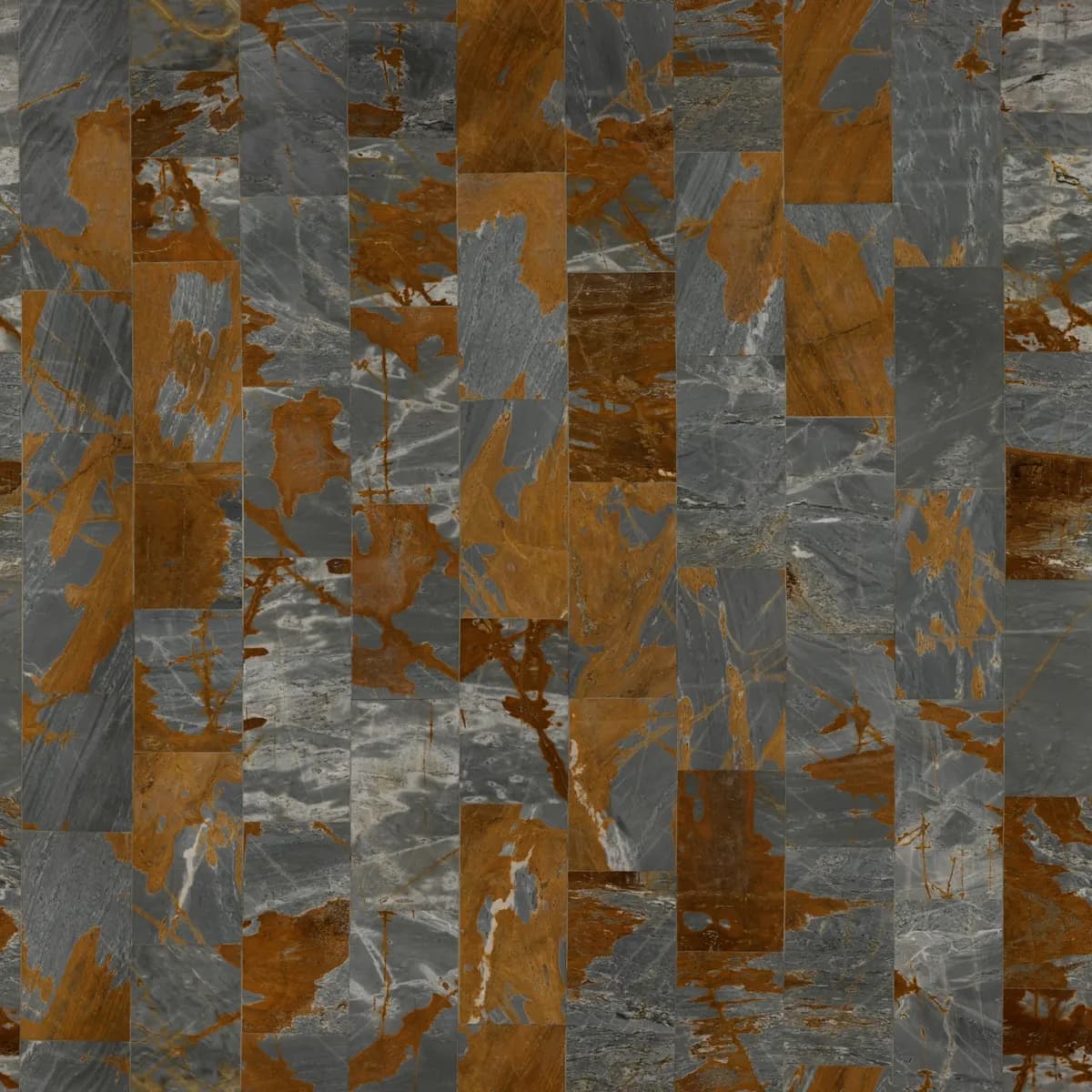
1200x2400 mm tiles
1200x2400 mm (4x8 ft) slab tiles cover walls, floors and counters with almost no joints. Coverage per slab, tiles per 100 sq ft and handling tips.
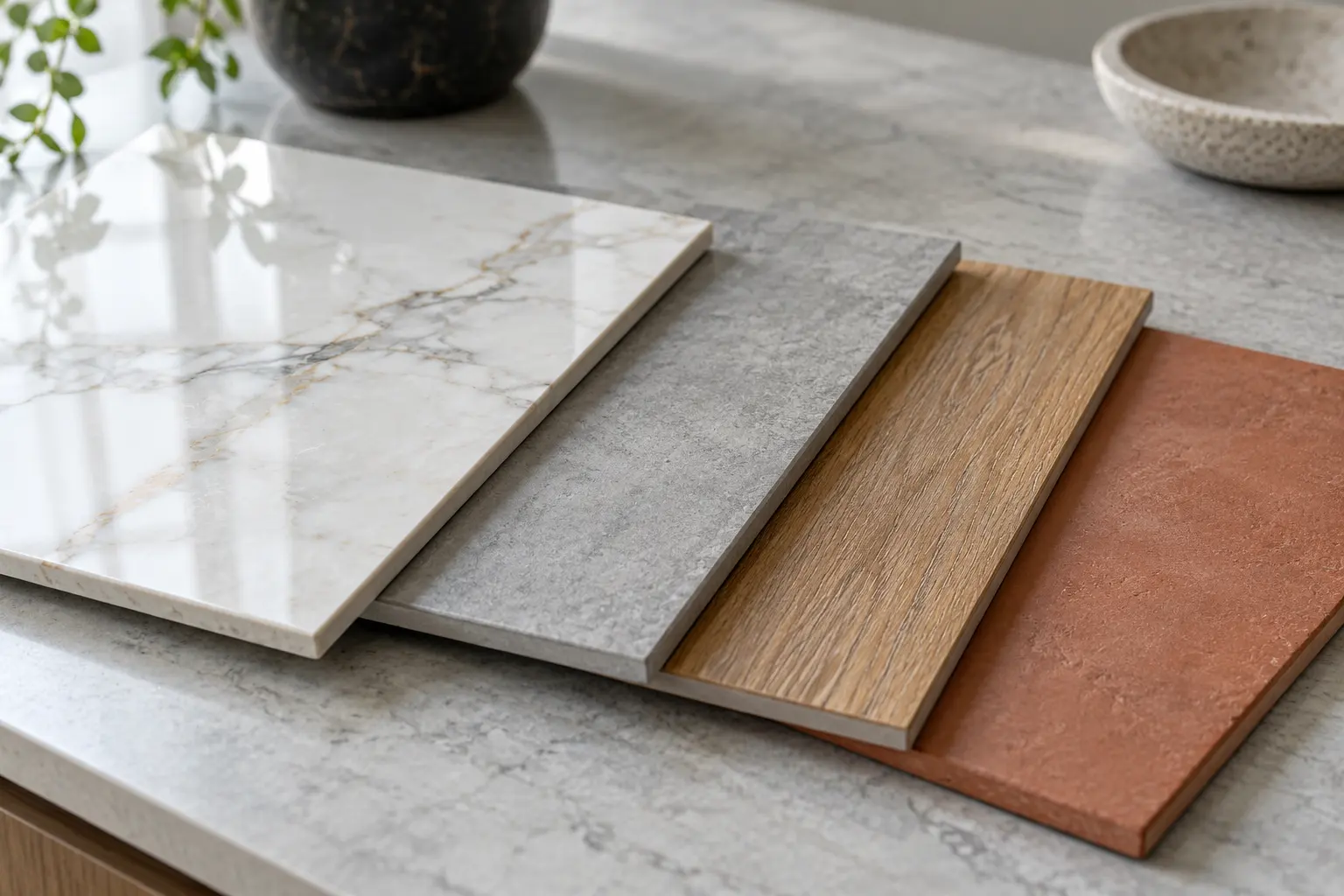
See the tiles in person before you decide
Photos never show a tile's true shade or texture. Get in touch to check what is in stock, then walk in and compare.