Installation · 5 min read
Tile Adhesive vs Cement Mortar: Which Is Better for Your Tiles?
Tile adhesive or traditional cement mortar? Compare bond strength, bed thickness, suitable tiles and surfaces, and when each method makes sense.
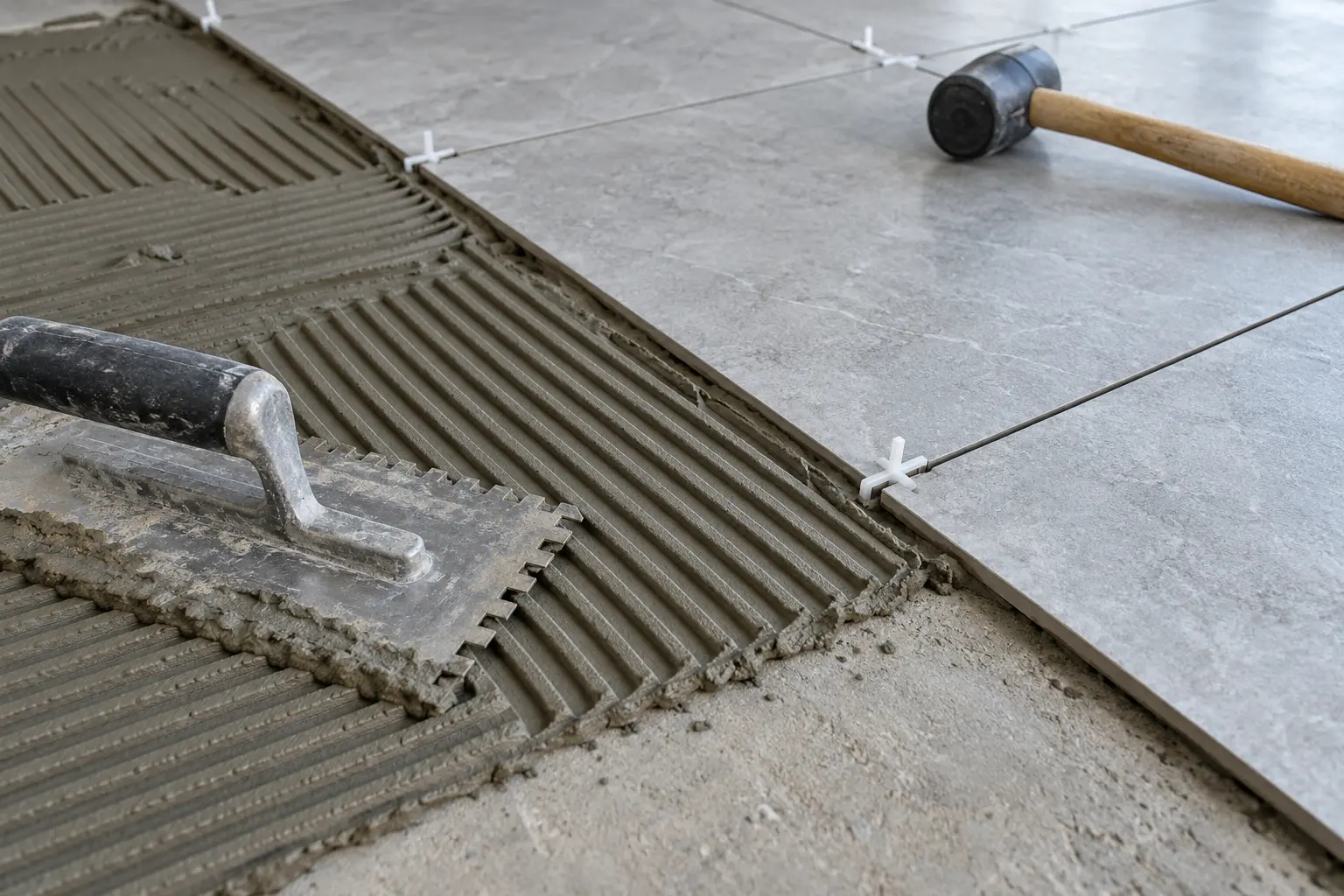
How a tile is fixed matters as much as the tile itself. A beautiful tile on a poor bed will sound hollow, crack or come loose. In Bengaluru, you will see two methods in use: the traditional cement and sand mortar bed, and ready-mixed tile adhesive. Here is how they compare and when to use each.
We sell tiles, not installation, so treat this as background to discuss with your contractor or mason.
Traditional cement mortar
The mason spreads a thick bed of cement and sand mortar on the floor, usually around 20 to 40 mm, sets the tile on it and taps it into level. Often a cement slurry is poured or brushed on the back of the tile for better grip.
Advantages:
- Familiar to every mason.
- The thick bed can correct uneven floors and create slopes towards drains.
- Materials are easy to find.
Drawbacks:
- Grips poorly on low-absorption tiles like vitrified, because the cement has little to hold on to.
- Hollow pockets form easily, leading to tiles that sound hollow and crack under load.
- Adds weight and height to the floor.
- Mixing quality varies from batch to batch on site.
- Takes longer to cure before the floor can be used fully.
Tile adhesive
Tile adhesive is a factory-made powder of cement, fine sand and polymers. It is mixed with water and spread in a thin bed, usually around 3 to 6 mm, with a notched trowel. The polymers improve grip and some flexibility.
Advantages:
- Strong bond on vitrified, porcelain and large format tiles.
- Thin bed means less weight and less height added.
- Consistent quality, since it is pre-mixed in the factory.
- Better coverage under the tile when applied correctly, with fewer hollow spots.
- Suitable for walls, floors, exteriors and some tile-on-tile work, depending on type.
Drawbacks:
- Needs a reasonably flat and level surface. It does not fix large dips.
- Costs more per sq ft than plain cement and sand, though the gap narrows once you count less material and fewer failures.
- The mason needs to use the right trowel and follow the mixing instructions.
Side-by-side comparison
| Point | Cement mortar | Tile adhesive |
|---|---|---|
| Bed thickness | Thick, around 20 to 40 mm | Thin, around 3 to 6 mm |
| Bond on vitrified tiles | Weaker | Strong |
| Bond on ceramic tiles | Good | Good |
| Large format tiles | Not recommended | Recommended (often C2 class) |
| Uneven floors | Can level the floor | Needs a levelled base first |
| Hollow spots risk | Higher | Lower if applied properly |
| Weight added | More | Less |
| Exterior and wet areas | Possible, risk of loosening | Better with suitable grade |
| Quality control | Depends on site mixing | Factory consistent |
Adhesive types in simple words
Tile adhesive bags usually follow standards like IS 15477 or EN 12004. You may see codes like these:
| Code | Meaning | Typical use |
|---|---|---|
| C1 | Normal cement-based adhesive | Ceramic tiles on walls and floors indoors |
| C2 | Improved adhesive, higher bond | Vitrified, porcelain, larger tiles |
| T | Reduced slip on walls | Wall tiles, so they do not slide down |
| E | Extended open time | More working time in warm conditions |
| S1, S2 | Deformable (flexible) | Large format, exteriors, heated or moving surfaces |
So a bag marked C2TE S1, for example, is an improved, non-slip, extended-time, flexible adhesive. Always follow the manufacturer's instructions for mixing and coverage.
Which method for which job
| Job | Suitable method |
|---|---|
| Ceramic wall tiles in bathroom or kitchen | Adhesive (C1 or C2), or cement mortar if done well |
| Vitrified floor tiles, 600x600 mm | Adhesive recommended |
| Large format, 800x1600 mm or bigger | Adhesive (C2, often S1), with back-buttering |
| Very uneven old floor | Level with mortar or screed first, then adhesive |
| Exterior elevation tiles | Adhesive suited to exterior use |
| Parking tiles on a sand-cement base | Usually mortar bed, as per contractor |
For large format slab tiles, many installers spread adhesive on the floor and on the back of the tile (back-buttering) for full coverage.
Signs of a poor fixing job
- Tiles sound hollow when tapped with a coin.
- Edges of neighbouring tiles are at different heights.
- Cracks appear across tiles within months.
- Grout keeps cracking along the same lines.
These are almost always caused by fixing, not by the tile. Our guide on how to check tile quality helps you rule out tile problems before work starts.
Talk to us about your tiles
Tell us the tile and the surface you are working with, and we can explain what usually works well. Visit Patidar Ceramic or call to ask what adhesives and related materials are currently in stock.
Common questions
Is tile adhesive better than cement?
For vitrified and large format tiles, adhesive usually gives a stronger, more even bond than a cement and sand bed. Cement mortar still works for many ceramic tiles and for floors that need levelling.
Can I fix vitrified tiles with cement?
It is done often, but vitrified tiles absorb very little water, so plain cement does not grip them as well. Many tiles fixed this way sound hollow or come loose over time. Adhesive is the safer choice.
What do C1 and C2 mean on tile adhesive bags?
They are adhesive classes. C1 is a normal cement-based adhesive and C2 is an improved one with higher bond strength, usually recommended for vitrified, large format and exterior work.
Can tile adhesive be used over old tiles?
Some adhesives are made for tile-on-tile fixing if the old tiles are firmly stuck and cleaned. Check the bag and ask your contractor to test the old floor for hollow spots first.
Keep reading
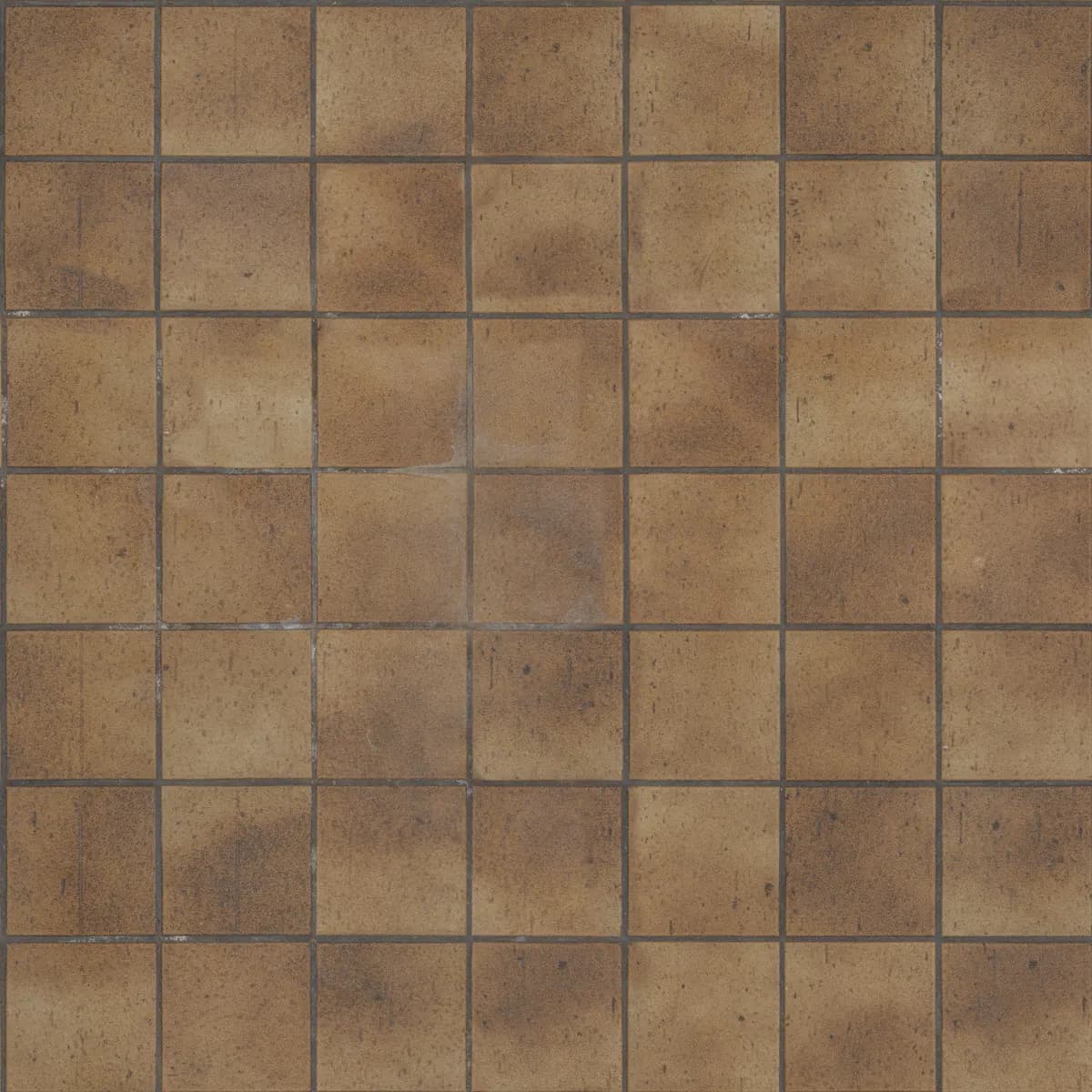
Grout and Tile Spacers Guide: Joint Sizes, Types and Tips
Cement or epoxy grout? What spacer size to use? A clear guide to tile joints, grout types, colours, levelling clips and keeping grout clean.

Large Format Tiles: Pros, Cons and When They Make Sense
Big tiles like 800x1600 mm and 1200x2400 mm look clean and modern, but need a flat base and skilled laying. Here is what to weigh before you buy.
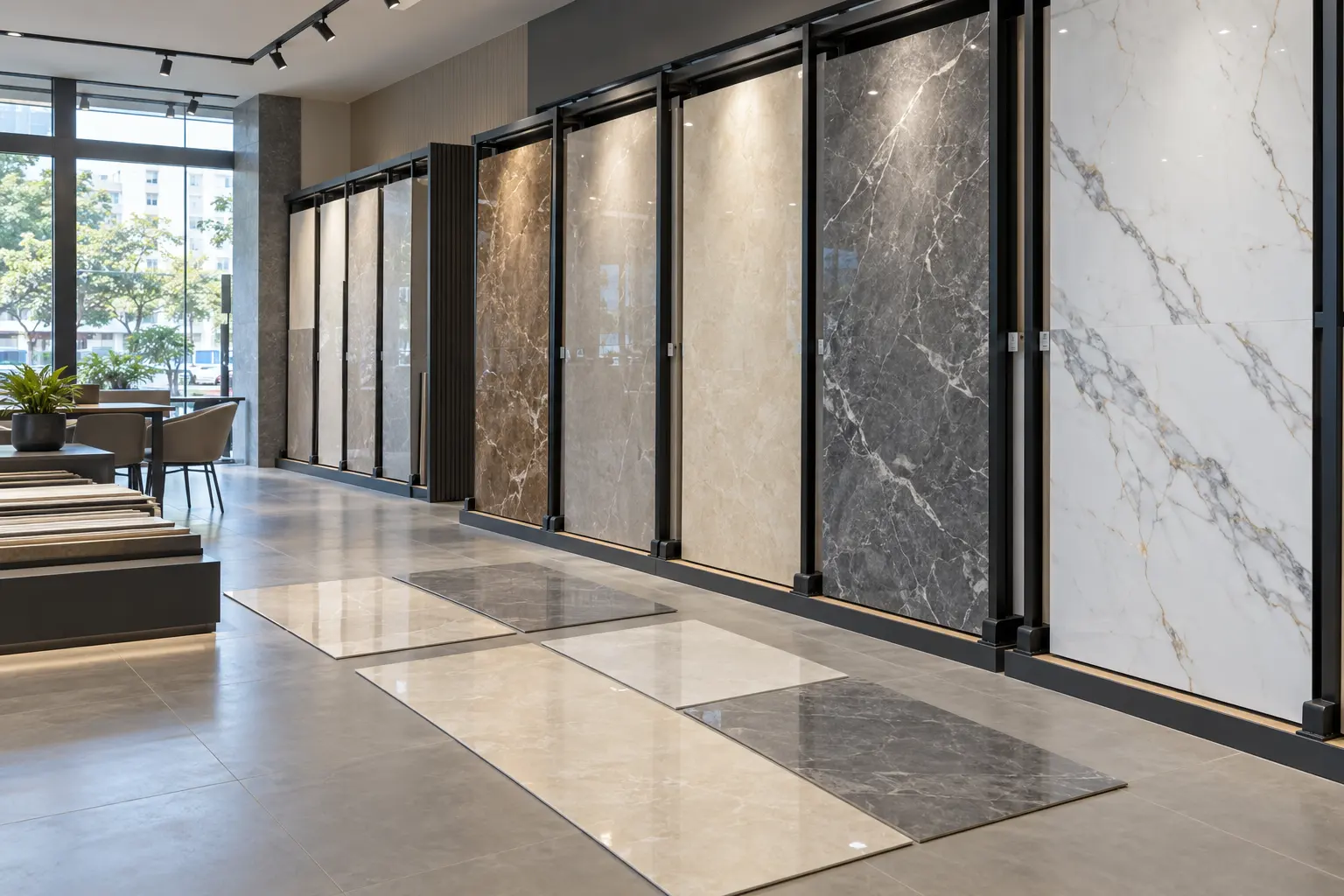
Large format slabs
Large format slab tiles like 800x1600 and 1200x2400 mm give a clean, near jointless look. Learn where they suit, handling needs and how to choose.
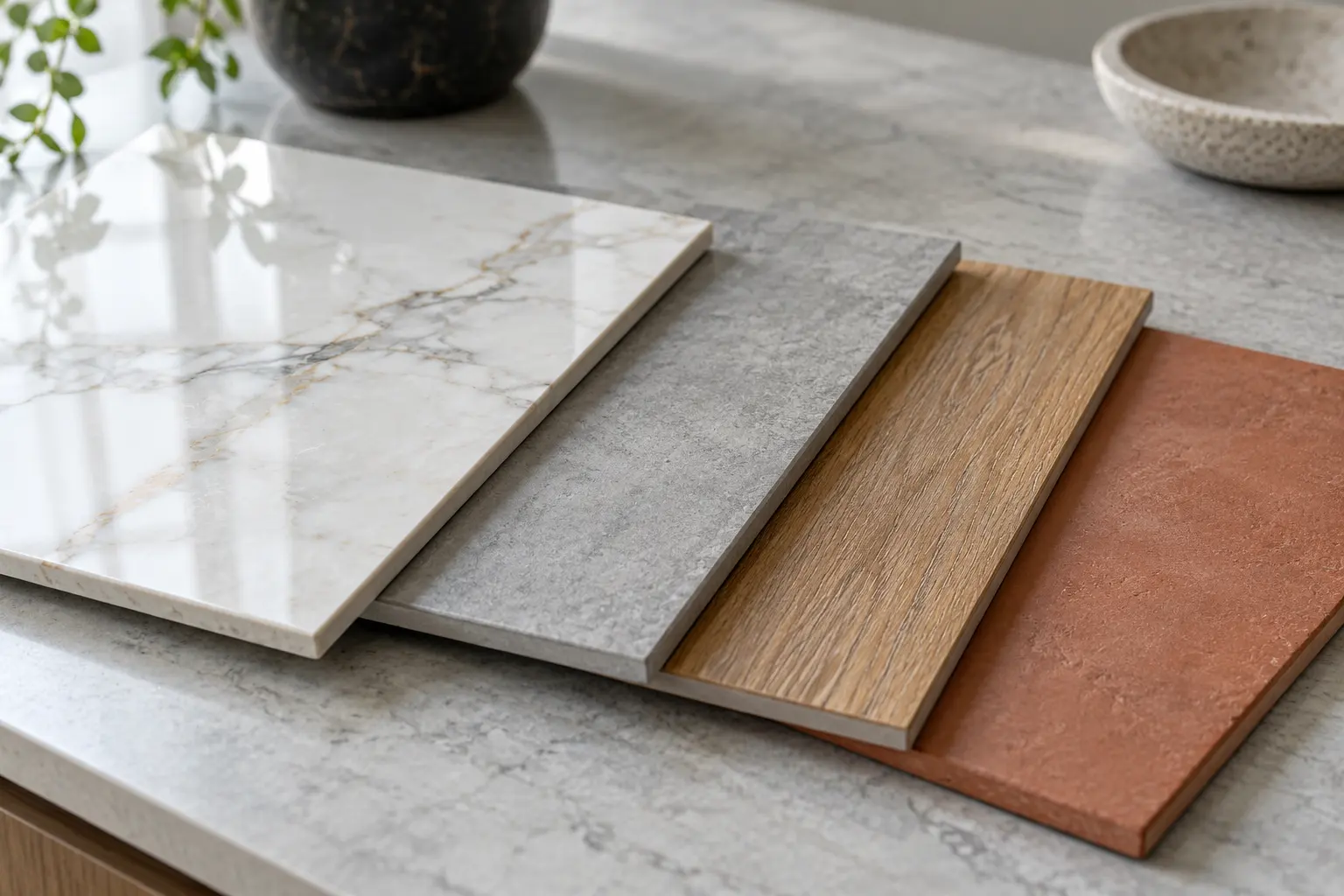
See the tiles in person before you decide
Photos never show a tile's true shade or texture. Get in touch to check what is in stock, then walk in and compare.