Basics · 4 min read
Tile Batch, Shade and Grade Explained: Avoid Mismatched Floors
Why tiles from different batches can look different, what shade and grade codes on the box mean, and how to make sure your whole floor matches.
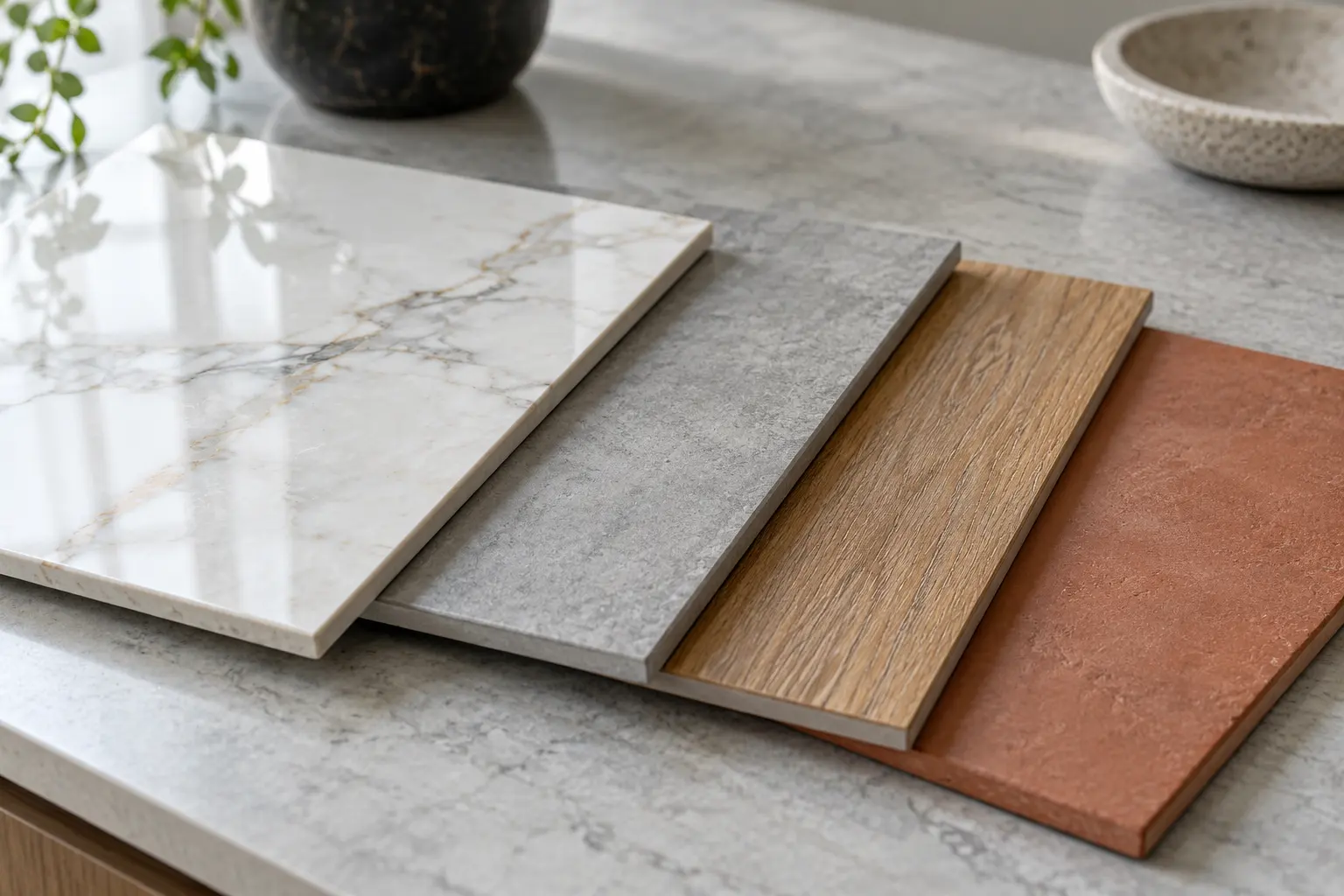
You pick a tile at the shop, the boxes arrive, and half the floor looks slightly different from the other half. This is one of the most common tile complaints, and it nearly always comes down to batch, shade or grade. Understanding these three terms before you buy can save you a lot of frustration.
Why tiles vary at all
Tiles are fired in kilns at very high temperatures. Small changes in raw materials, glaze, printing and kiln temperature from one production run to the next can shift the colour slightly, or change the final size by a fraction of a millimetre. Manufacturers group tiles made together so buyers can get matching pieces. That is where the codes on the box come in.
What the codes on the box mean
Most tile boxes carry some combination of these:
| Code | What it tells you | Why it matters |
|---|---|---|
| Batch / lot number | Which production run the tiles came from | Same batch usually means a close colour match |
| Shade / tone code | The colour group within production | Different shade codes can look visibly different side by side |
| Calibre / size code | Small size variation group | Mixing calibres makes grout lines uneven |
| Grade | Quality level after sorting | Affects number of visible defects |
Not every manufacturer prints all of these, and the format varies. Ask at the shop if you are unsure what a code means.
Shade variation
Shade is the colour tone. Two boxes of the same design with different shade codes can be slightly warmer, cooler, lighter or darker. On a large floor, this shows up as patches.
Some tiles also have intentional variation, especially stone, rustic and wooden designs. Manufacturers sometimes rate this from low variation (very uniform) to high variation (each piece quite different). A high variation design is meant to look natural, so do not confuse it with a batch mismatch. Ask what to expect before you buy.
Calibre or size variation
Even rectified tiles can differ very slightly in size between batches. If you mix tiles from two size groups, the grout lines drift and corners stop lining up. Your tile layer will notice this immediately. Buying all your tiles from one batch avoids the problem.
Grades explained
After firing, tiles are sorted by visible quality. The names differ between manufacturers, but the general idea is:
- Premium or first grade. Very few visible defects. Best for main living areas.
- Standard or commercial grade. May have small flaws like minor pinholes, tiny chips on edges, or slight colour spots.
- Lower grades. More visible defects. Sometimes used where looks matter less, like storerooms, or for cutting into small pieces.
Lower grade tiles are not always a bad choice, but you should know what you are buying. Our guide on how to check tile quality explains how to inspect tiles yourself.
How to avoid mismatched floors
- Buy the full quantity at once. Calculate carefully with our tile calculator and buy everything, including spares, in one go. Coming back later for a few boxes often means a different batch.
- Check the codes on every box. Before the tiles go to site, make sure batch, shade and calibre codes match across all boxes.
- Buy extra. Keep enough spare tiles for cuts and future repairs from the same batch. See how much extra tile to buy.
- Dry lay a few boxes. Ask your tile layer to open several boxes and lay tiles out loose before fixing. Shade differences are easier to spot this way.
- Mix boxes while laying. Even within a batch, pulling tiles from different boxes spreads out any tiny variation.
- Store spares properly. Keep leftover tiles, labelled with the room name, in a dry place.
If you do end up with two batches
Sometimes it is unavoidable, like when you need a few more boxes months later. In that case:
- Use the new batch in a separate room, or behind furniture and in wardrobes.
- Put a threshold, border or doorway between batches so the change looks deliberate.
- If both must go in one room, blend tiles from both batches evenly rather than in blocks.
When you visit the shop
Ask us to confirm the batch and shade of what is available for your design. Our shop visit checklist explains what to bring so we can work out the right quantity in one go. Call or visit the shop to check current stock.
Common questions
What is a tile batch number?
It is a code printed on the box that identifies tiles made in the same production run. Tiles from one batch usually match closely in colour and size.
Can I mix tiles from two batches?
It is best to avoid it. If you must, blend boxes from both batches across the room or keep each batch to a separate room, so any difference is less noticeable.
What is the difference between premium and standard grade tiles?
Premium or first grade tiles have the fewest visible defects. Lower grades may have small flaws like minor chips, spots or slight warping, and are usually priced lower. Grade names vary between manufacturers.
Why are my new tiles slightly different in size?
Tiles can vary slightly in size between batches, which manufacturers sometimes mark as a calibre or size code. Mixing calibres makes grout lines uneven.
Keep reading
How to Check Tile Quality Before You Buy: 9 Simple Tests
Simple checks you can do in the shop to judge tile quality: flatness, size, shade, edges, water absorption, surface strength and box labels.
How Much Extra Tile to Buy: Wastage Percentages Explained
How much wastage to add when buying tiles: typical percentages for straight, diagonal and large format layouts, with worked examples and spare tips.
What to Bring When Buying Tiles: A Checklist for Your Shop Visit
Measurements, room photos, an old tile, your budget and your tile layer's input. Bring these when you visit a tile shop and you will decide faster.
See the tiles in person before you decide
Photos never show a tile's true shade or texture. Get in touch to check what is in stock, then walk in and compare.