Urinals for Homes, Shops and Offices: Types, Height and Spacing
Wall-mounted ceramic urinals for homes and commercial spaces: flat-back and half-stall types, flush options, mounting height, spacing and wall tiles.
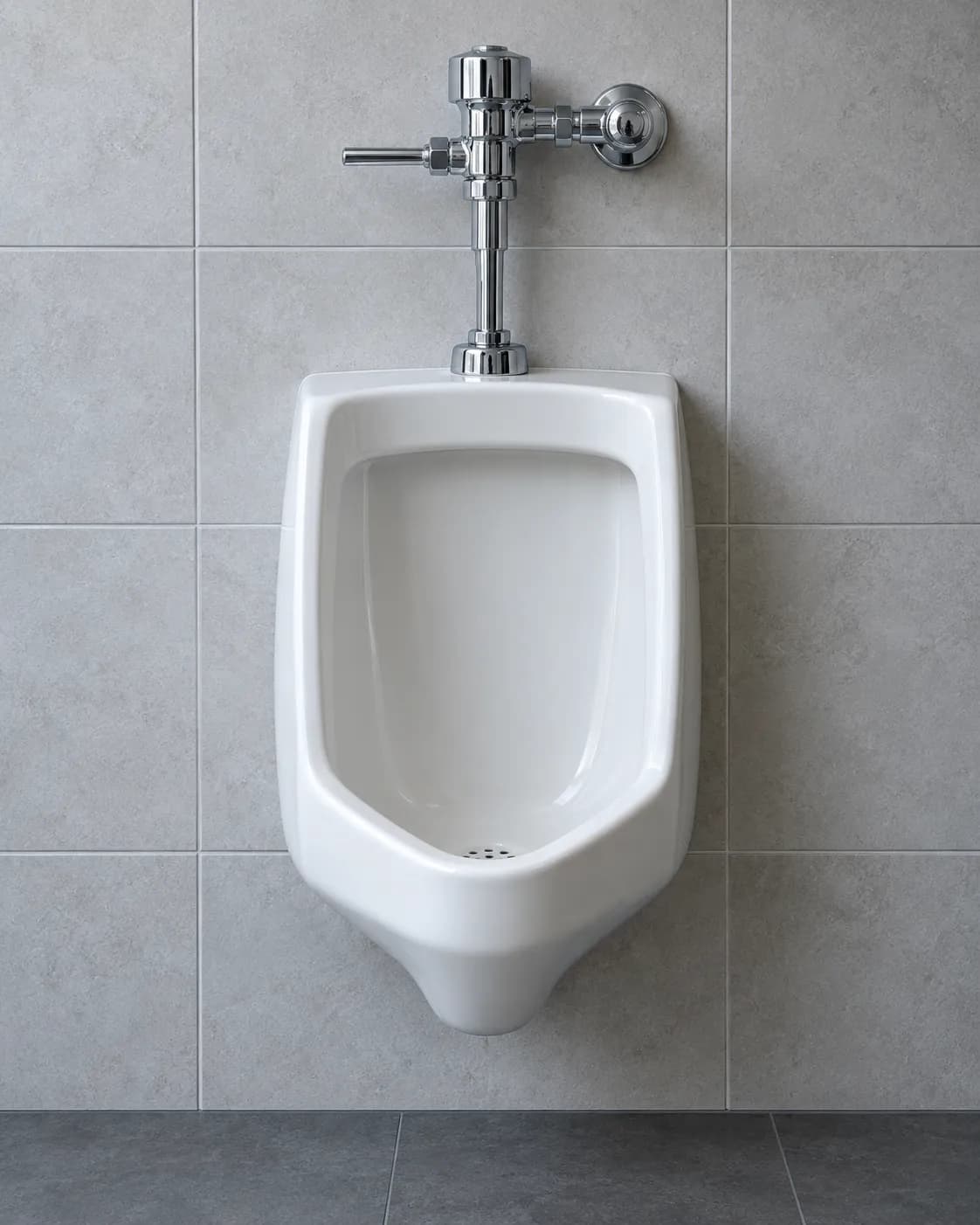
A wall-mounted urinal saves water and time in any washroom used by many men. Shops, offices, schools and restaurants usually need at least one, and some independent houses in Bengaluru add one in the ground-floor or outdoor toilet. This page covers the main types, how high to fix them and how to plan the space.
Types of urinals
Flat-back urinals are the most common. The back sits flush against the tiled wall, and the bowl projects out. They suit homes, small shops and offices where space is limited.
Half-stall urinals are larger and deeper, with side wings that give a little more privacy and catch splashes better. They suit busier commercial washrooms, schools and public spaces.
Sizes vary by manufacturer, so bring your wall width and check the actual piece before planning the layout.
Flushing options
- Manual flush valve. A push button or lever on a valve above the urinal. Simple, easy to repair and fine for homes and small offices.
- Sensor flush. An infrared sensor flushes automatically after use. It keeps the urinal cleaner in busy places because no one forgets to flush, and no one has to touch the valve.
- Waterless urinals. These use a trap or cartridge that seals off smells without any flush water. They exist, but they need correct upkeep. Ask the shop whether any are available.
Plan the water inlet (for flushed models) and the waste outlet before the wall is tiled. Most urinals have their outlet at the back into the wall, so the plumber must leave the pipe at the right height.
Mounting height and spacing
These are general guidelines. Local building rules or your architect's drawing take priority.
| Point | Usual guidance |
|---|---|
| Lip height for adults | around 600 to 650 mm from finished floor |
| Lip height for children | lower, often around 400 to 500 mm |
| Centre to centre between urinals | roughly 600 to 750 mm |
| Side wall to centre of first urinal | at least about 350 to 400 mm |
In a school or a shared washroom, consider fixing one urinal lower than the rest. It helps children and shorter users.
Partitions
Privacy partitions between urinals are common in offices, malls and restaurants. They are usually fixed to the wall between units at a height that blocks side views. If you plan partitions, allow a little more spacing so the area does not feel cramped, and keep enough room for cleaning around each unit.
Wall and floor tiles
The wall behind and around a urinal gets splashed constantly, so it must be easy to wash.
- Tile the wall behind the urinal fully, at least to above head height. Wall tiles in glossy or satin finish wipe down quickly.
- Use epoxy grout here if possible, since it resists stains and smells better than cement grout.
- On the floor in front, use anti-skid tiles with a slight slope to a floor drain so the area can be washed down.
For more on fitting out shop and office washrooms, see commercial spaces. A compact wall-hung basin next to the urinal completes a small washroom.
Saving water
A urinal uses far less water per use than flushing a full western toilet. To save more:
- Choose a flush valve that lets you set a short flush.
- Use sensor flushing in busy places so flushes are not repeated unnecessarily.
- Fix leaking valves quickly. A dripping urinal valve wastes water all day.
Planning a washroom
Bring the washroom size and the number of users you expect, and contact the shop to ask which urinal models are in stock.
Common questions
At what height should a urinal be fixed?
For adults, the front lip is usually fixed somewhere around 600 to 650 mm from the finished floor. For schools or young children it is fixed lower, so check who will use it most.
How much space is needed between two urinals?
A centre-to-centre distance of roughly 600 to 750 mm is usually comfortable. If you add privacy partitions, allow a little more so the space does not feel cramped.
Is a sensor flush worth it?
In busy washrooms, a sensor flush means no one touches the valve and every use is flushed. In a home, a manual push valve is usually enough.
Do you have waterless urinals?
Waterless urinals exist and use a special trap or cartridge instead of a flush. Ask the shop whether any are in stock and what upkeep they need.
Keep reading
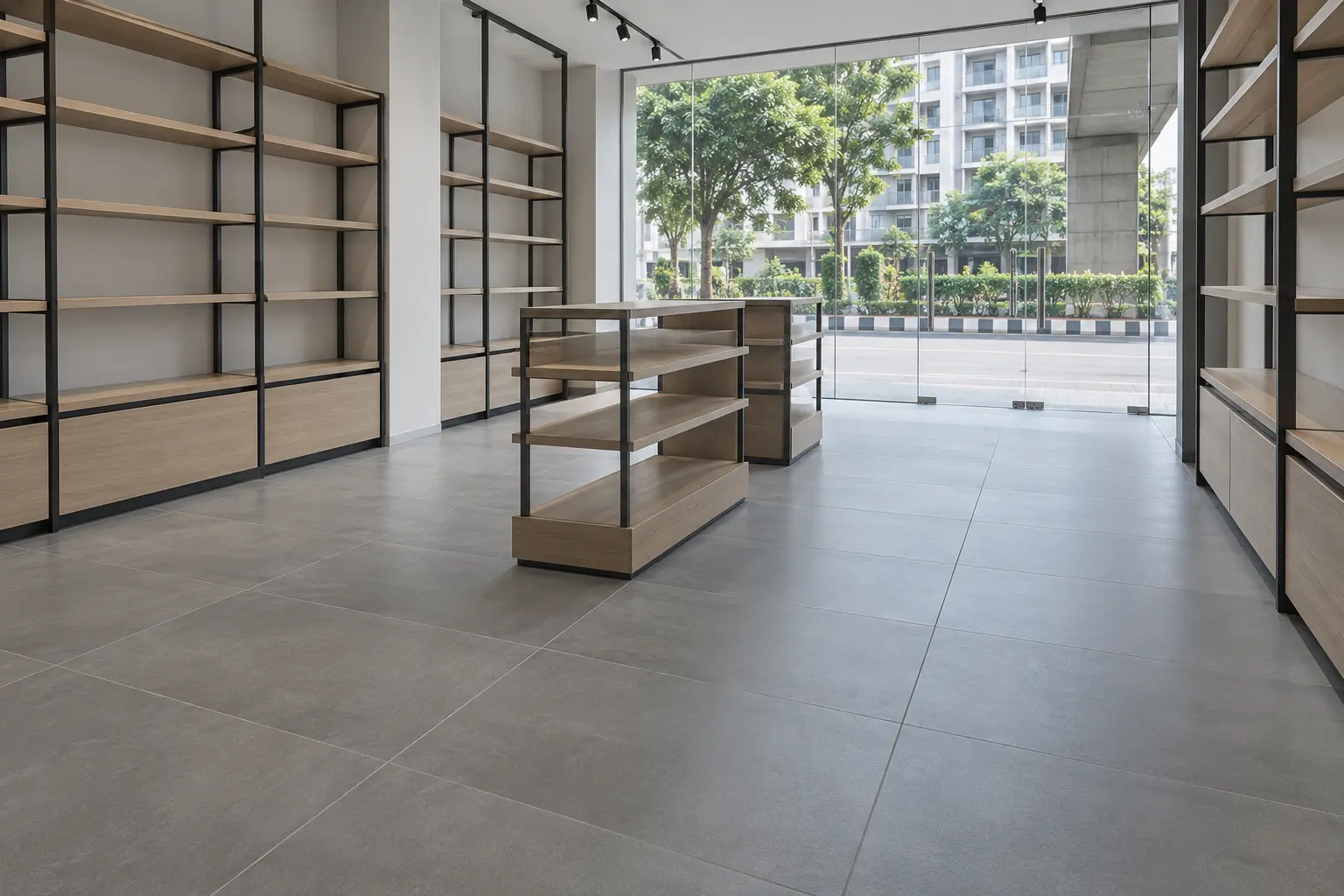
Commercial spaces
Choosing tiles for shops, offices, clinics and restaurants: hard-wearing vitrified floors, safe finishes, large formats and easy daily maintenance.
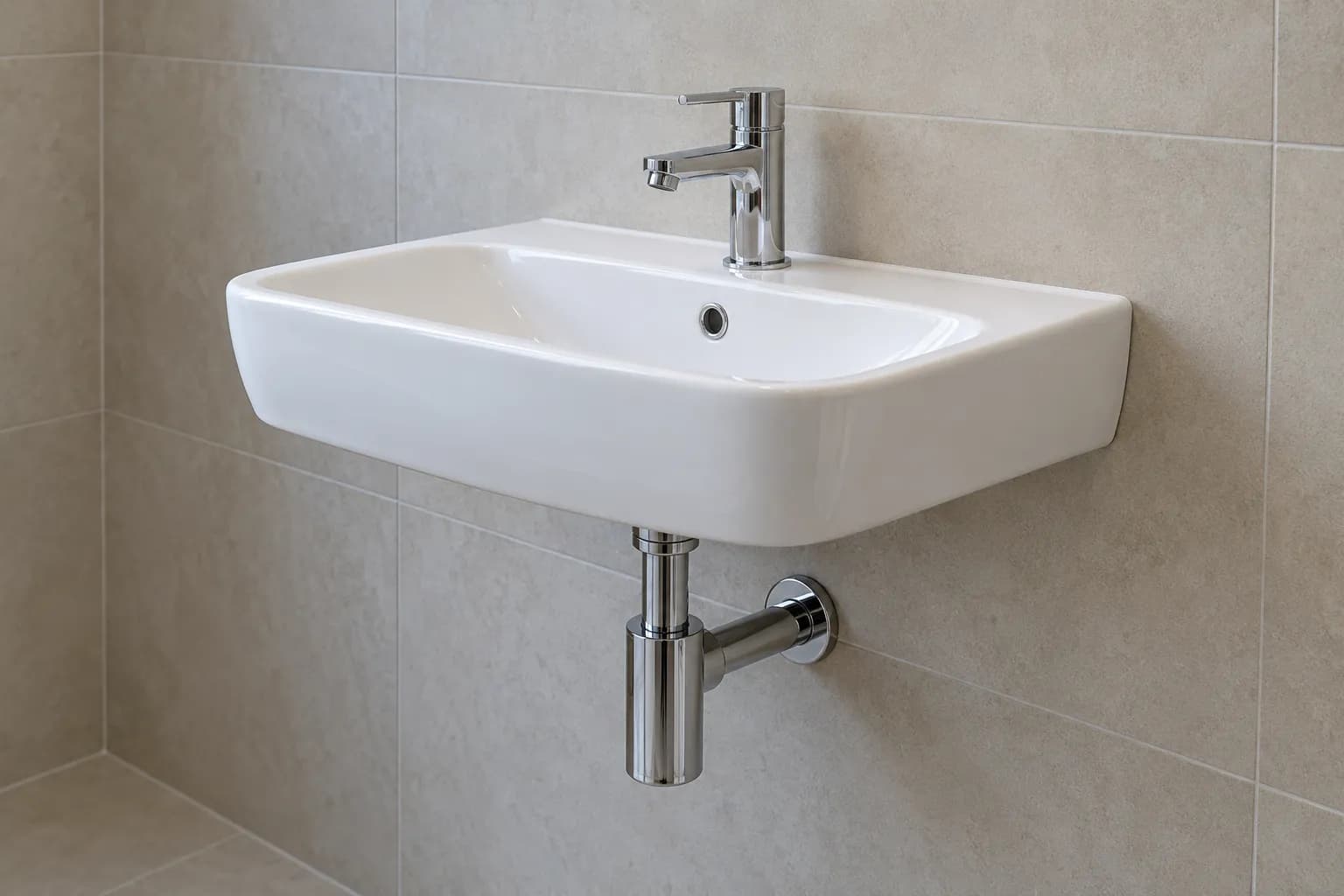
Wall-hung basins
Wall-hung wash basins explained: common inch sizes, fixing height, wall strength, bottle traps and tiling tips for small Bengaluru bathrooms.
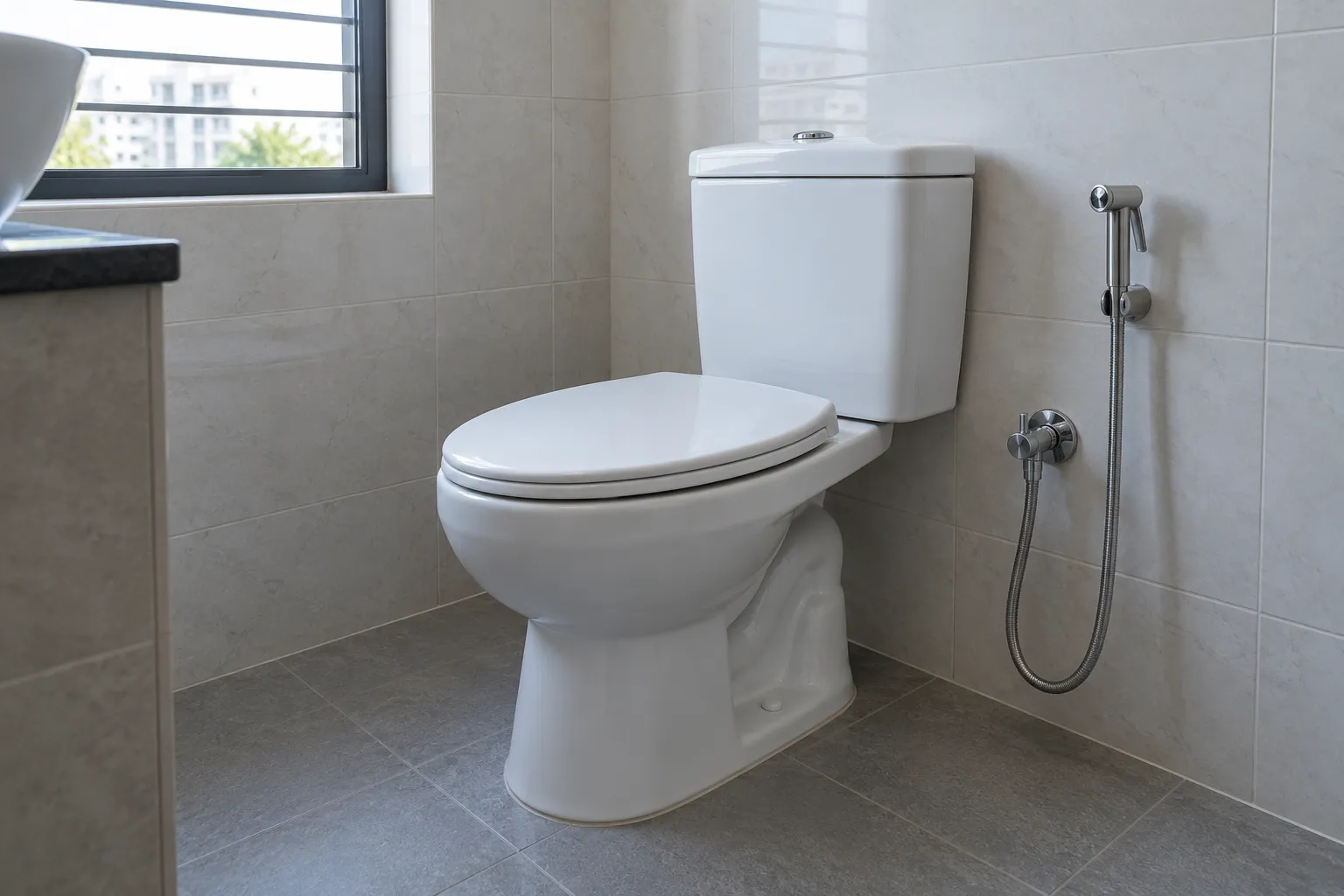
Western toilets (EWC)
A practical guide to EWC western toilets: S trap vs P trap, how to check yours, couple closets, concealed cisterns, seat height and health faucets.
See the tiles in person before you decide
Photos never show a tile's true shade or texture. Get in touch to check what is in stock, then walk in and compare.