Room ideas · 5 min read
Best Tile Colours for Small Rooms: Make Compact Spaces Feel Bigger
Light shades, fewer grout lines and the right finish can make a small bedroom, bathroom or kitchen feel more open. Practical colour tips that work.
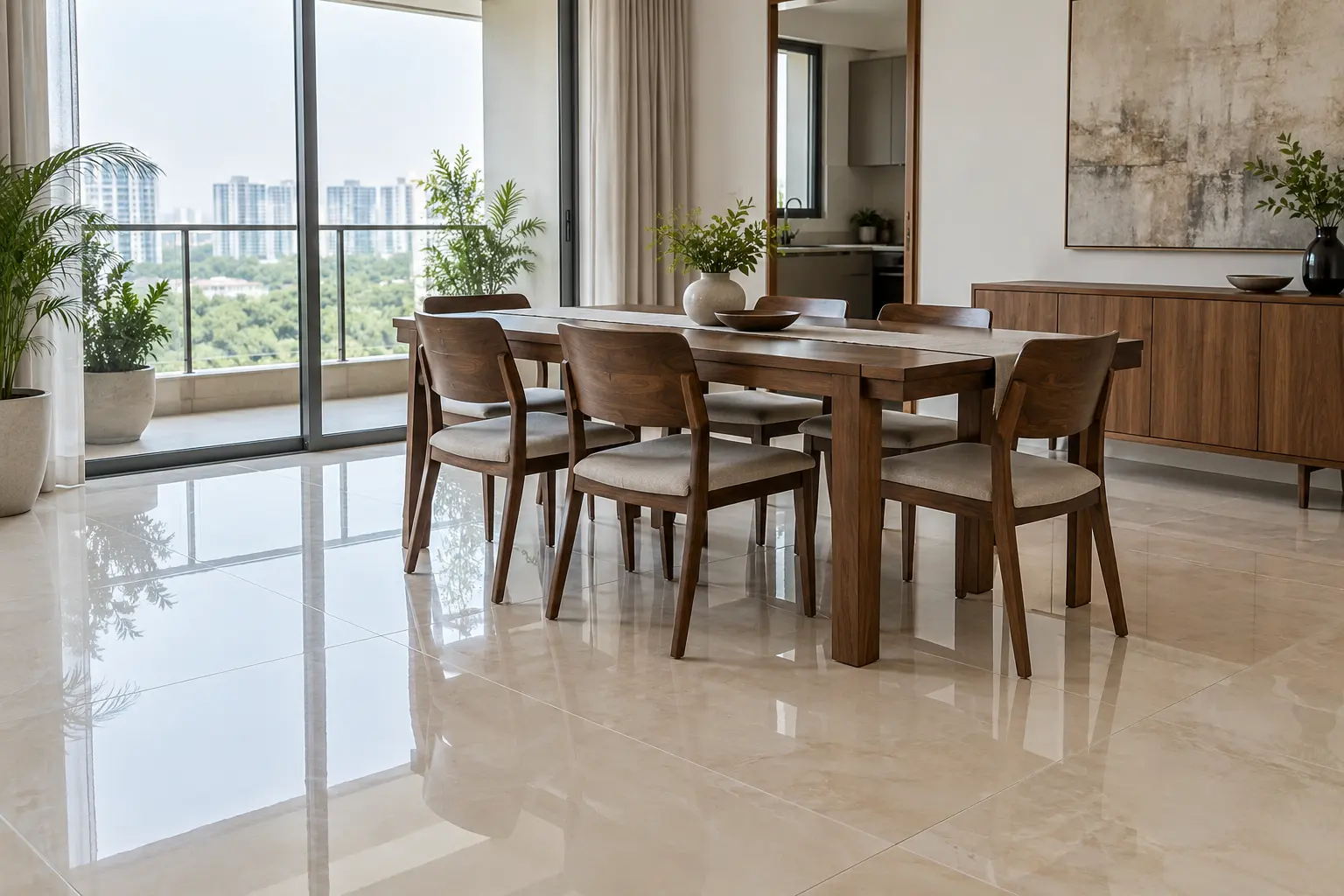
Most Bengaluru apartments have at least one room that feels tight, whether it is a second bedroom, a compact bathroom or a narrow kitchen. You cannot move the walls, but the right tile colours can make a small room feel noticeably bigger and brighter. Here is what actually works.
Start with light, warm shades
Light colours reflect more light, so the room feels more open. Good choices for small rooms are:
- Off-white and ivory. Bright without being harsh.
- Light beige and cream. Warm, forgiving with dust, and they suit both modern and traditional homes.
- Pale grey. Clean and modern, works well with white walls.
- Light marble looks. Soft veining adds interest without making the floor busy.
Pure bright white can work too, but it shows every footprint and can feel clinical under cool white LED lights. In Bengaluru, where floors pick up dust quickly, a light beige or warm grey is often more practical.
Keep contrast low
Strong contrast breaks a room into pieces. In a small space, you want the eye to travel smoothly. Try these:
- Choose a floor tile close in tone to the wall paint or wall tiles.
- Use grout that matches the tile, not a contrasting colour. Our grout and spacers guide covers this.
- Avoid busy patterns, heavy veining or mixed colours across the whole floor.
Colour guide by room
| Room | Floor colours that help | Walls | Avoid |
|---|---|---|---|
| Small bedroom | Light wood, beige, light marble | Off-white, soft pastels | Very dark wood across the whole floor |
| Compact bathroom | Light grey, beige, matt white | Same or one shade lighter than floor | Dark tiles on all walls, busy mosaics everywhere |
| Narrow kitchen | Light grey, beige, speckled stone | White or light backsplash | Dark floor with dark cabinets |
| Small balcony | Light matt grey or sand tones | Light paint | Very dark tiles that heat up in the sun |
Size and layout matter as much as colour
Colour is only half the story. A light tile in a small size with dark grout can still look cluttered.
- Larger tiles, fewer lines. In a small bedroom or living room, 600x1200 mm tiles often make the floor look bigger than 300x300 mm tiles would.
- Run planks lengthwise. In a narrow room, lay rectangular tiles along the longest wall to stretch the space visually.
- Diagonal laying. Laying square tiles at 45 degrees can make a small square room feel wider, though it adds some cutting waste.
- Same tile, floor to wall. In small bathrooms, using one tile across floor and walls (where the tile is suitable for both) removes visual breaks.
Glossy or matt for small rooms?
A glossy finish bounces light around and can make a dim room feel brighter. That is why glossy wall tiles are common in small bathrooms and kitchens. On floors, though, glossy tiles can be slippery when wet and show scratches and footprints more. A satin or soft matt floor with glossy walls is a sensible mix for many small rooms. Our matt vs glossy guide goes into detail.
Where darker tiles can still work
Small rooms do not have to be all white. Darker colours can add depth if you use them carefully:
- One feature wall. A darker or patterned wall behind a bed or in a shower area draws the eye and can make the room feel deeper.
- Darker floor, light walls. A mid-tone wood or grey floor grounds the room while light walls keep it open.
- Border or skirting. A thin darker line at the base can define the space without closing it in.
What usually does not work is dark tiles on every surface of a small room with little natural light.
Think about your lighting
Before you decide, notice the light in the room. A north-facing bedroom with a small window needs lighter, warmer tiles than a sunny room. Also check your bulbs: warm white lights make beige and wood tones look cosy, while cool white lights suit greys and whites. It helps to look at tile samples under similar light.
A few quick rules
- Pick light, warm shades for floors and walls.
- Match grout to the tile.
- Go for bigger tiles where the room shape allows.
- Use darker colours in one area only.
- Keep patterns subtle.
See our bedroom and bathroom pages for more room-specific ideas.
Bring a photo of your room
Colours look different on a phone screen. Visit the shop with a photo of your room and its measurements, and we can put a few sample tiles side by side so you can judge the shade in real light.
Common questions
Does white always make a room look bigger?
White and off-white usually help, but stark white with harsh lighting can feel cold. Warm whites, light beige and pale grey often feel just as open and more comfortable.
Can I use dark tiles in a small room?
Yes, in small doses. A dark floor with light walls, or one dark feature wall, can add depth. Covering every surface in a dark colour usually makes a small room feel tighter.
Should the floor and wall tiles match in a small bathroom?
Matching or close shades on floor and wall make a small bathroom look larger because the eye does not see a hard break. A slightly darker floor is also fine and hides dirt better.
Do bigger tiles suit small rooms?
Often yes. Fewer grout lines make the floor look more continuous. Just check that the layout does not leave lots of thin cut pieces along the walls.
Keep reading
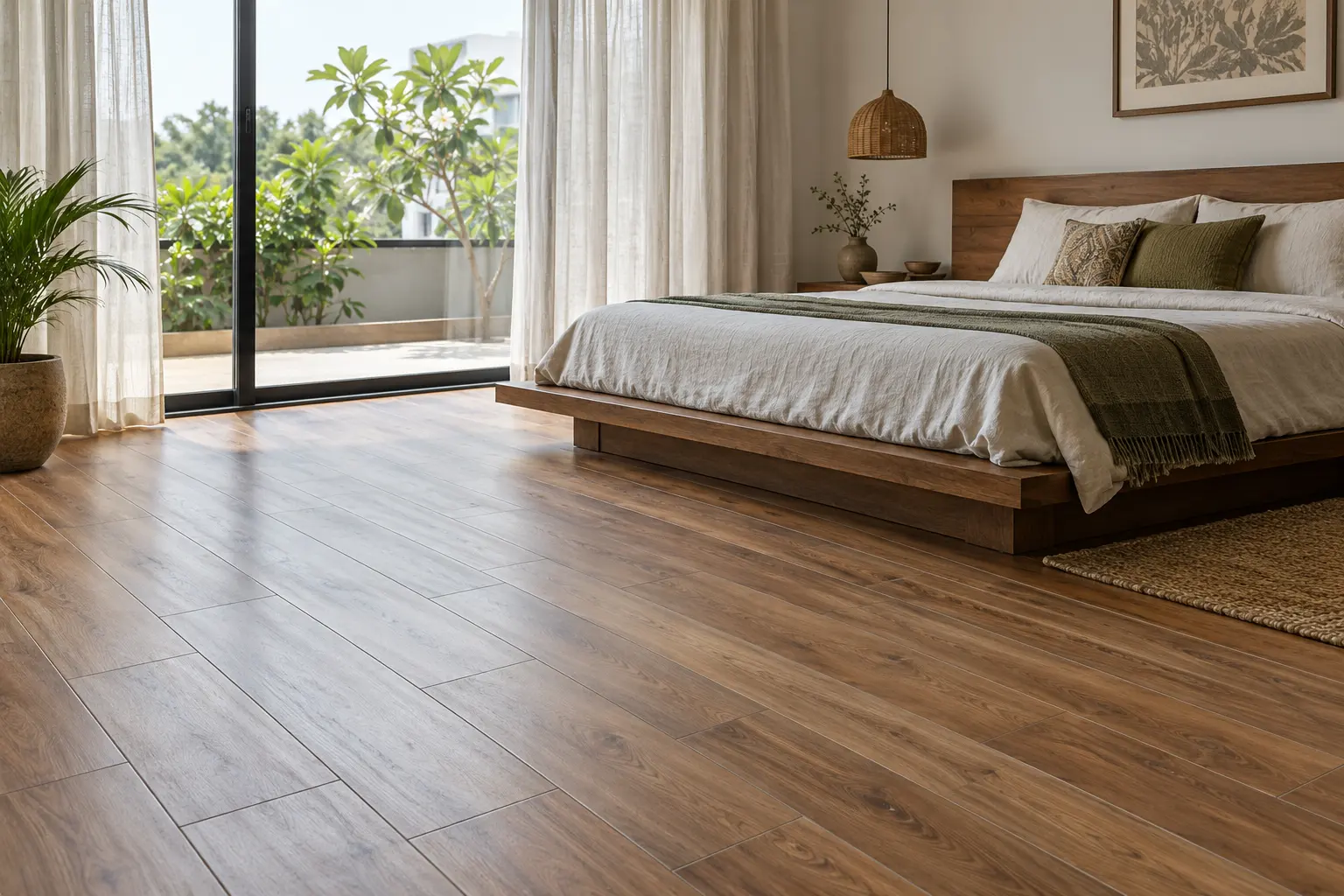
Bedroom
Bedroom floor tile ideas for Bengaluru homes: wooden finish, soft matt and satin surfaces, sensible sizes and calm colours that feel good underfoot.
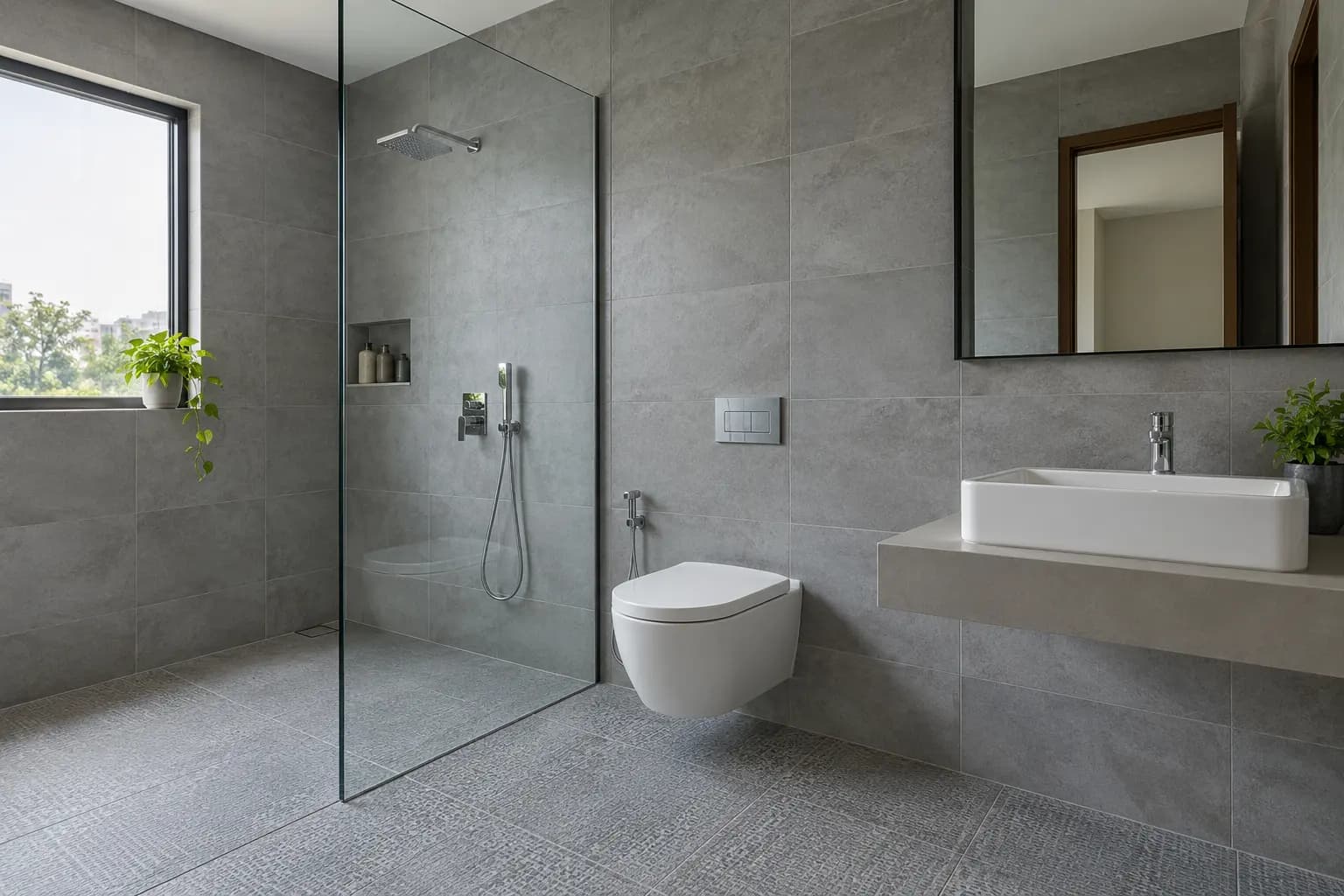
Bathroom
Choosing bathroom tiles in Bengaluru: anti-skid floors, wall tiles that wipe clean, sizes, slopes for drainage, and common mistakes to avoid.
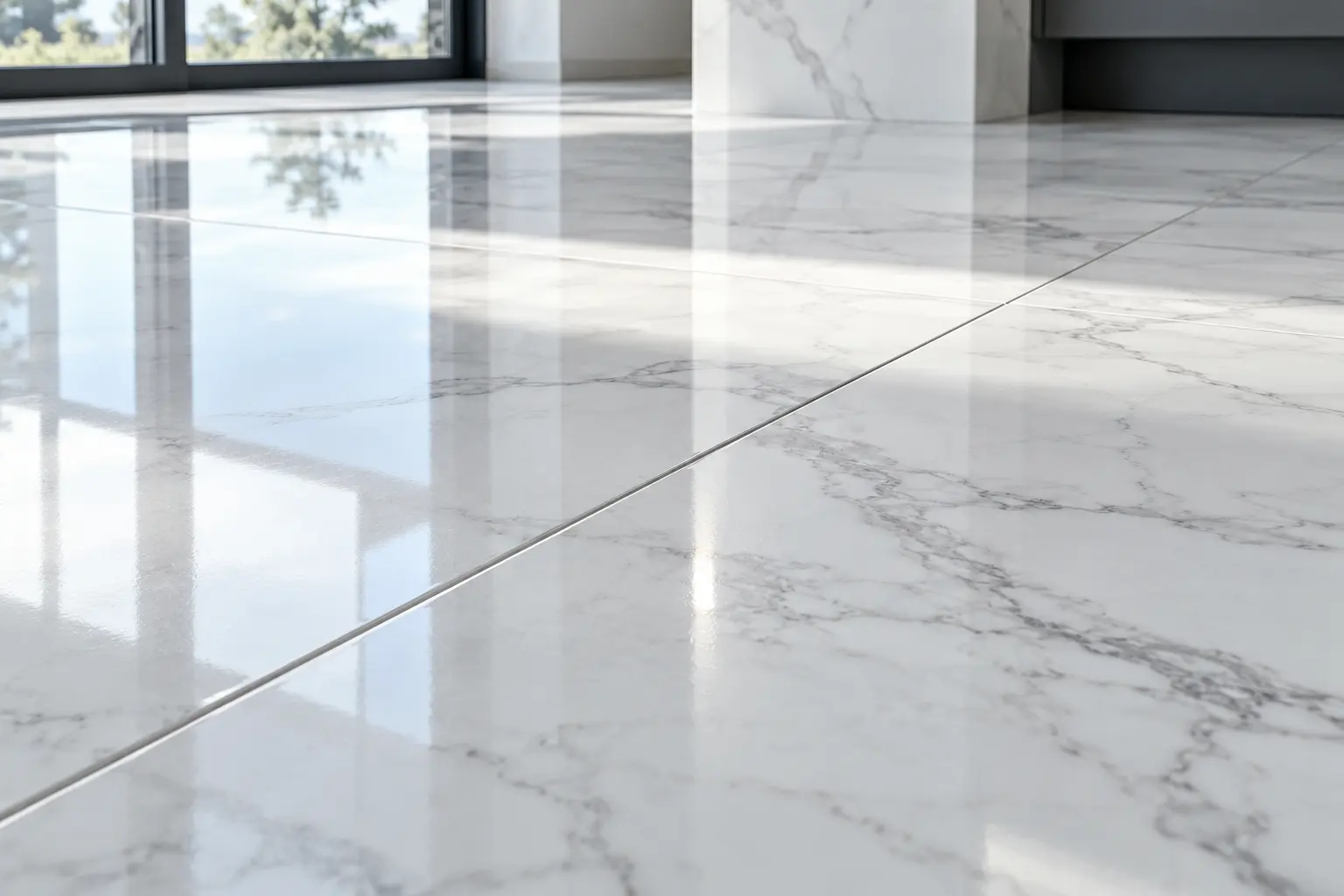
Matt vs Glossy Tiles: Which Finish Is Right for Each Room?
Glossy tiles look bright and are easy to wipe, matt tiles offer grip and hide marks. Compare both finishes room by room before you choose.
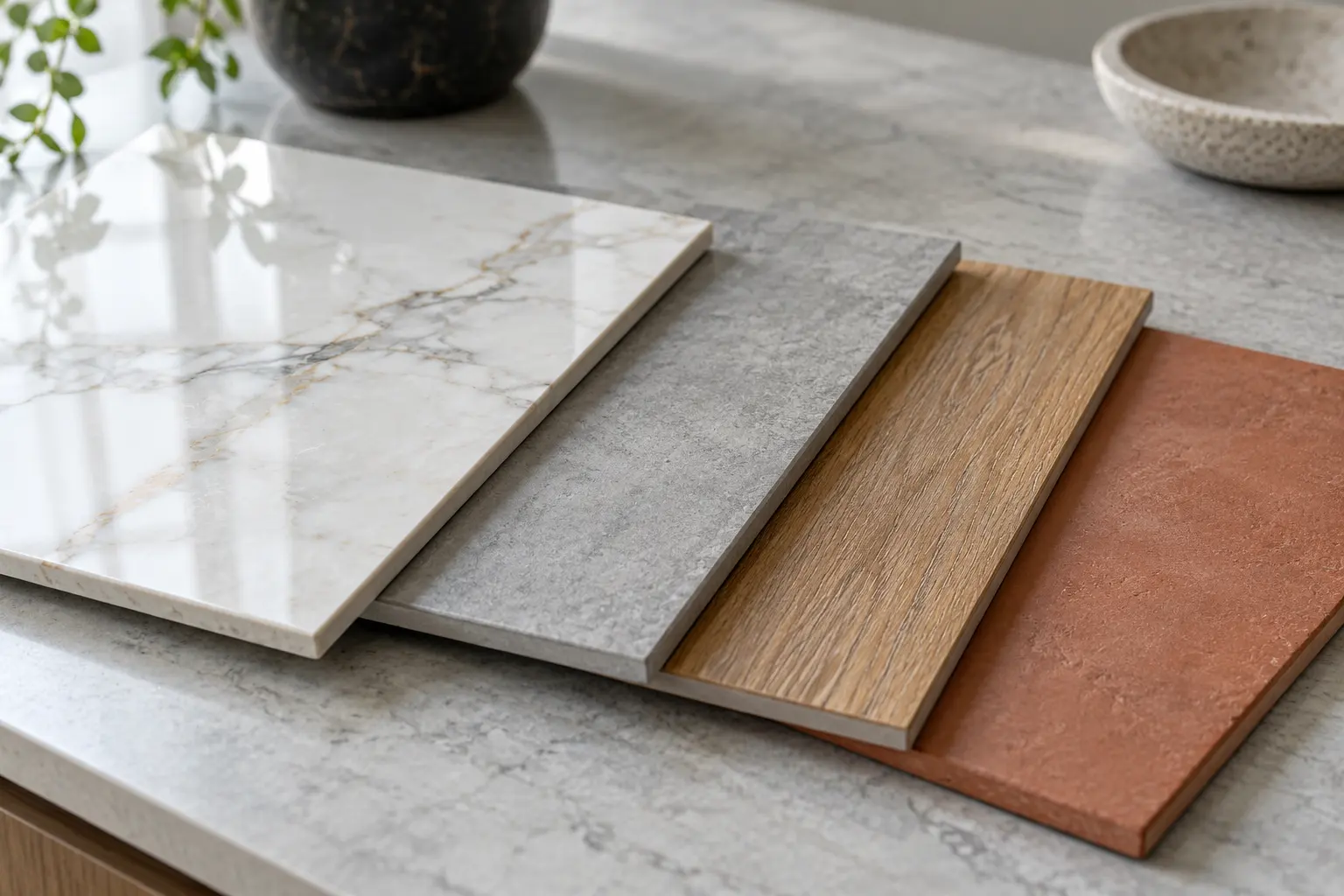
See the tiles in person before you decide
Photos never show a tile's true shade or texture. Get in touch to check what is in stock, then walk in and compare.