Carved Stone Murals for Walls: Designs, Sizes and Placement
Carved natural stone murals with leaves, flowers, Buddha, Ganesha and heritage designs. Sizes in feet, where to place them, fixing and lighting tips.
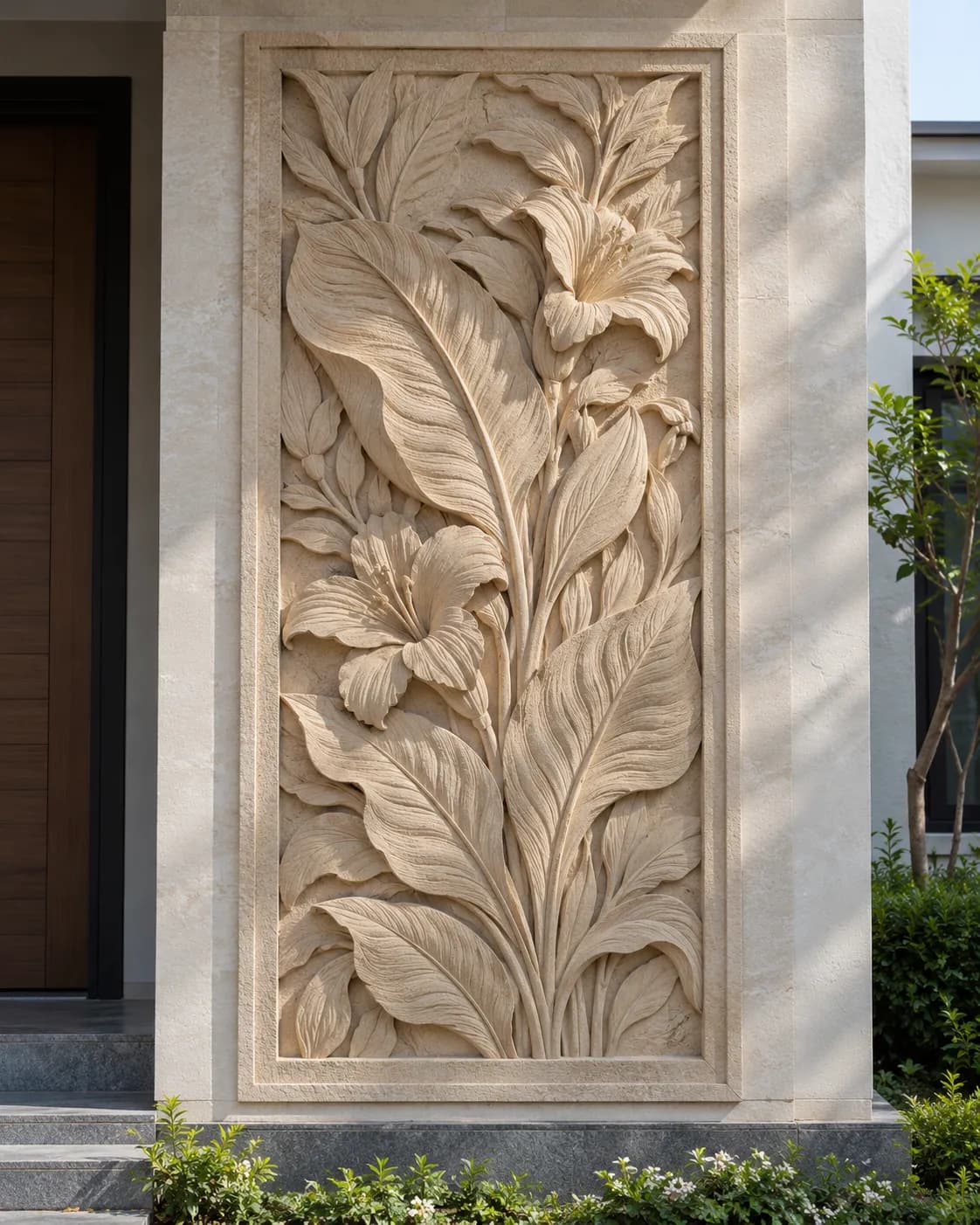
A stone mural is a panel of natural stone carved in relief, so the design stands out from the background and catches light and shadow. One mural can become the focus of an entrance, a garden wall or a pooja space in a way flat tiles cannot. Each piece is carved, so small differences in depth and detail are part of its character.
Designs and themes
Carved stone murals come in many themes. Common ones include:
- Leaves and creepers spreading across the panel
- Flowers and floral borders
- Lotus (kamal) leaves and blooms, popular for both pooja spaces and gardens
- Butterflies with plants, for a lighter, playful wall
- Buddha in meditation, often for gardens, living rooms and entrances
- Ganesha, usually at the entrance or in the pooja area
- Historical and heritage art inspired by temple and palace carvings
- Moroccan pattern panels with repeating geometric shapes
Leaf, flower and geometric murals suit almost any wall. Deity murals need more thought about placement, which we cover below.
Sizes
Murals are usually described in feet, because they are planned against the wall. Common sizes include 2x2, 2x3, 2x4, 4x6 and 6x6 ft. A mural may come as one panel or as several carved pieces that fit together on the wall. Ask the shop what designs and sizes are in stock, as carved pieces change often.
Sizing to the wall and viewing distance
A mural that is too small looks lost; one that is too large crowds the space. A few practical rules:
- Leave a margin. On a plain wall, keep clear wall space around the mural rather than running it edge to edge, unless it is designed as a full-wall panel.
- Think about where people stand. At a gate or compound wall seen from the road, a 4x6 or 6x6 ft mural reads clearly. In a narrow corridor or staircase, people stand close, so a 2x3 or 2x4 ft panel with fine detail works better.
- Centre on eye level for indoor murals, roughly at the height people look when standing.
- Mark it on the wall with tape or newspaper first. It is the quickest way to judge size.
Where to place a mural
- Entrance wall: a Ganesha, lotus or leaf mural beside the main door
- Compound wall: a large mural near the gate, framed by plain plaster or stone cladding
- Garden wall: leaves, butterflies and Buddha murals sit well with plants along garden and pathways
- Staircase wall: a tall panel on the landing wall, seen as you climb
- Living room: a heritage or floral mural as a feature in the living room
- Pooja area: deity and lotus murals behind or beside the mandir; see the pooja room page
Avoid placing deity murals in spots like bathroom walls, under staircases or where shoes are kept.
Weight and fixing
Carved stone is heavy, much heavier than a tile panel of the same size. Before buying, make sure the wall is solid masonry with sound plaster, not a thin partition or loose plaster. Larger murals usually need stone adhesive along with mechanical support such as anchors, pins or a supporting ledge at the base. Your mason or contractor will advise on the right method for your wall and the mural's weight. Plan the fixing before the mural arrives, not after.
Lighting the carving
Carving only shows when light falls across it. Light from the side, top or bottom, close to the wall, throws shadows into the cut areas and brings out the design. Flat light from straight ahead makes even deep carving look flat. Indoors, a recessed strip or spotlight just above the mural works well. Outdoors, a small up-light at the base turns a garden or gate mural into a night feature.
Outdoor care
Outdoors, sealing with a penetrating stone sealer helps prevent moss and black patches in the cut grooves during the monsoon. Clean with water and a soft brush. Avoid acid cleaners. Murals in sandstone especially benefit from sealing, as it is a porous stone.
Choose your mural
Bring a photo of the wall and its measurements. Contact the shop to ask which mural designs are in stock before you visit.
Common questions
How heavy is a stone mural?
Much heavier than a tile panel of the same size, because it is solid carved stone. Weight depends on the stone, thickness and size, so ask at the shop and plan the wall and fixing before buying.
Can a stone mural be fixed on a partition or block wall?
Only if the wall can carry the weight. Thin partitions and hollow block walls may not be suitable without extra support. Your mason or contractor will advise.
Do outdoor stone murals need sealing?
It is a good idea. A penetrating sealer helps the carving resist moss, black patches and dust buildup in the monsoon, and keeps the details readable for longer.
Which mural is right for a pooja room?
Deity murals such as Ganesha or Buddha are common, as are lotus and floral designs. Choose a size that suits the mandir and keep oil lamps a little away from the stone.
Keep reading
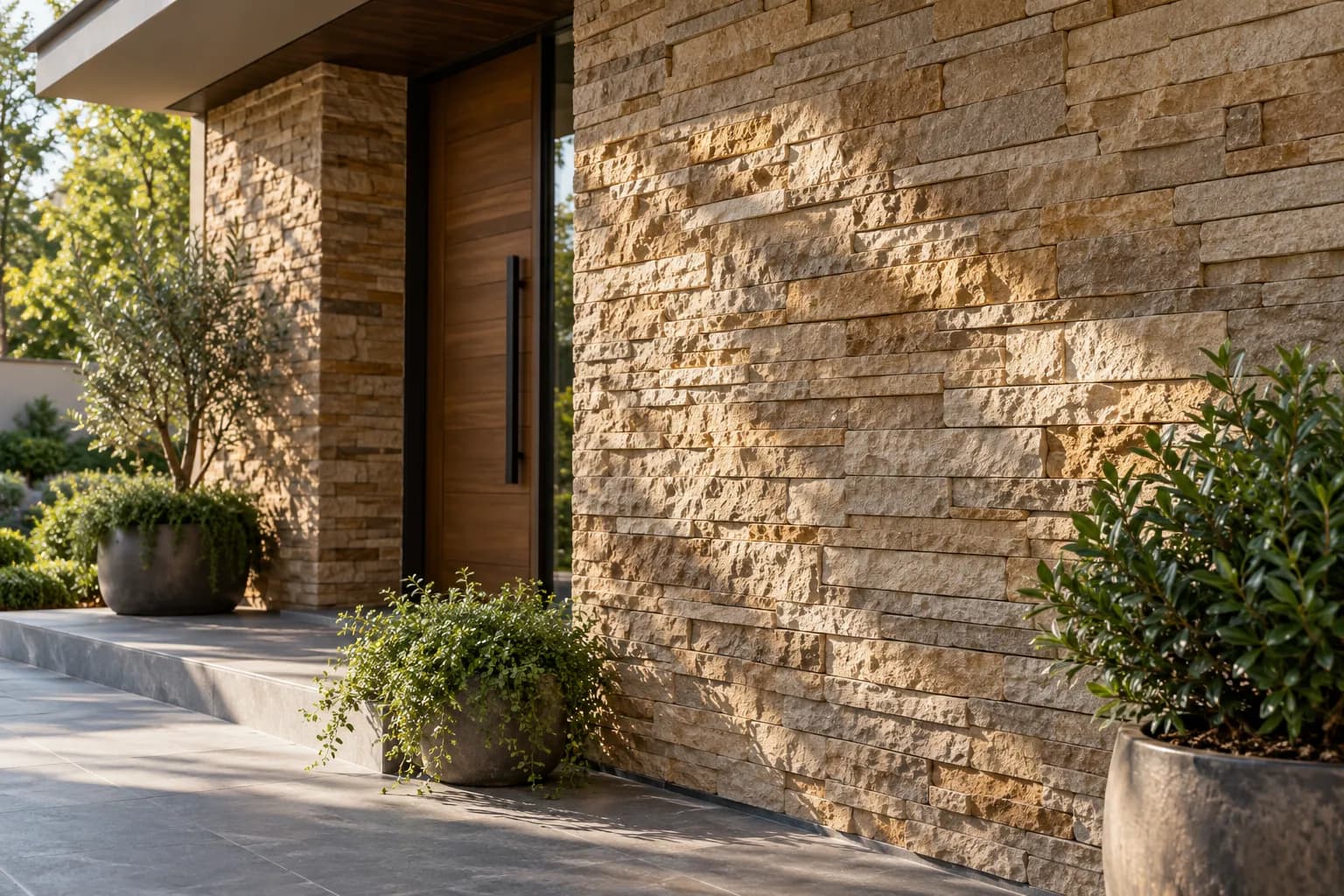
Stone cladding
Natural stone cladding in sandstone, slate and marble: how it differs from elevation tiles, strip and square sizes, where it works and how it is fixed.
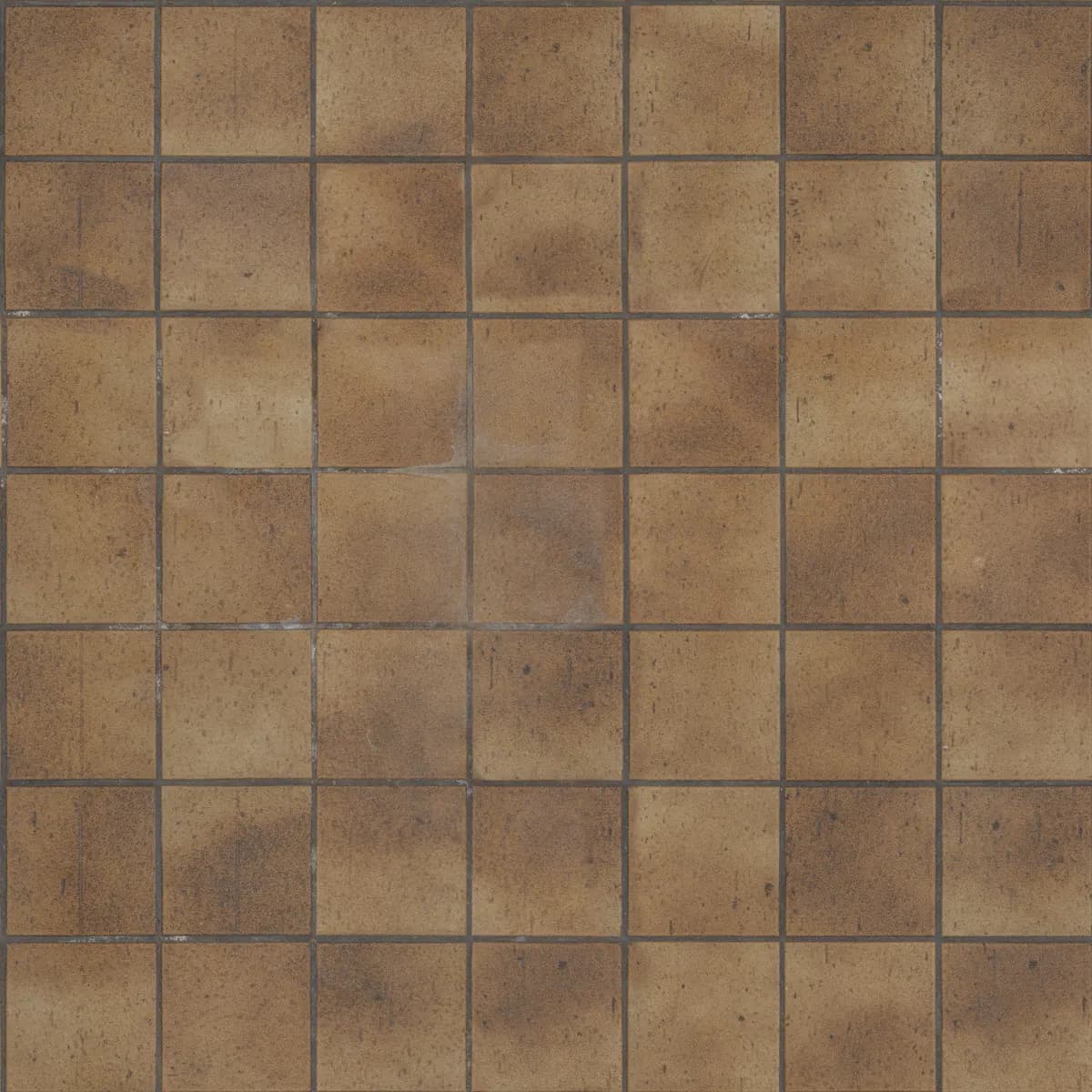
Sandstone cladding
Sandstone wall cladding in beige, golden, brown and layered tones. How it behaves in Bengaluru rain, why sealing matters and how to keep it clean.
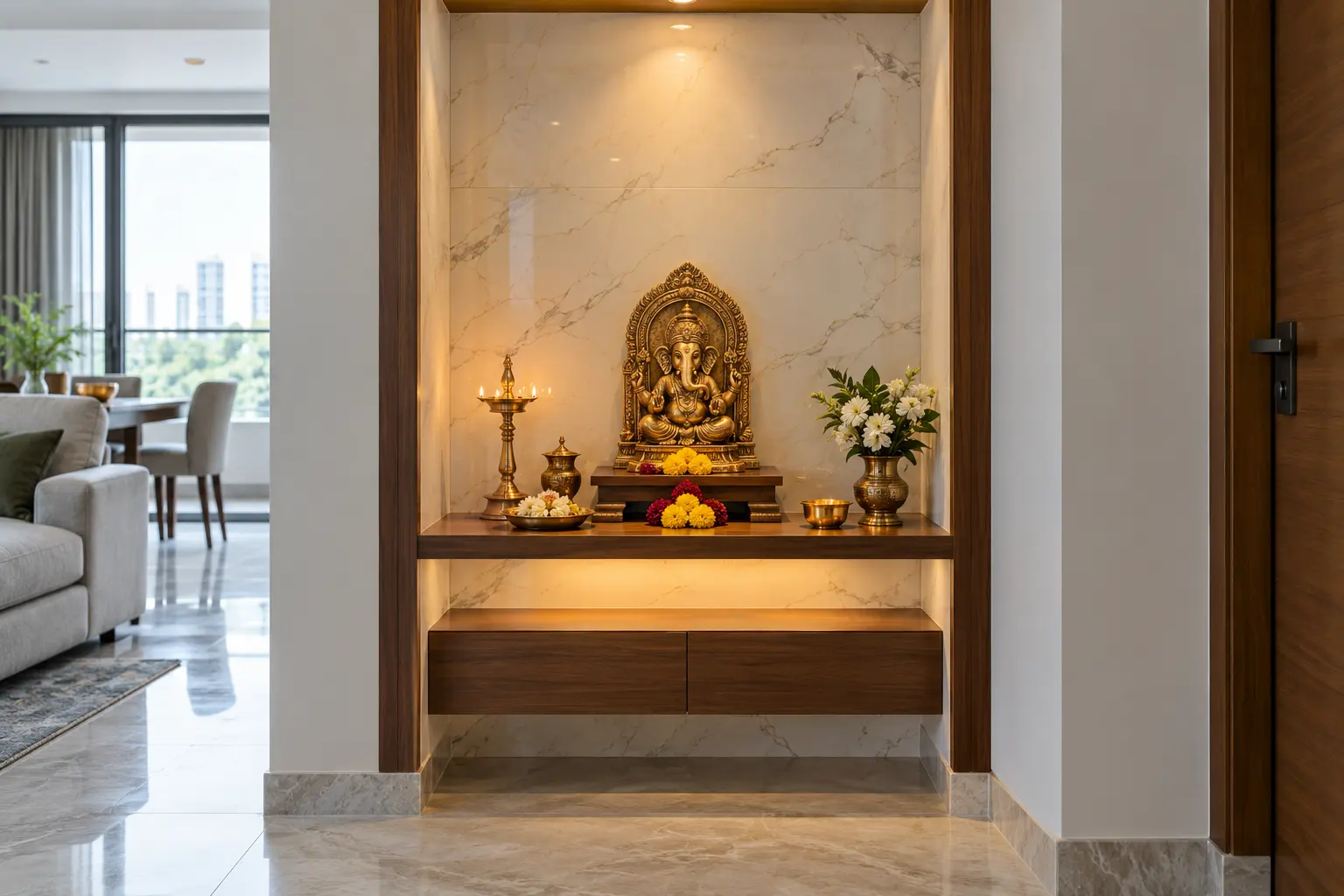
Pooja room
Pooja room tile ideas for Bengaluru homes: marble-look floors and walls, backdrops for the mandir, finishes that handle oil lamps, and practical tips.
See the tiles in person before you decide
Photos never show a tile's true shade or texture. Get in touch to check what is in stock, then walk in and compare.