Marble Stone Cladding: Split-Face Marble for Feature Walls
Split-face marble wall cladding in white, black, brown and green. Where it suits, why lime and acids etch it, and how sealing keeps it looking clean.
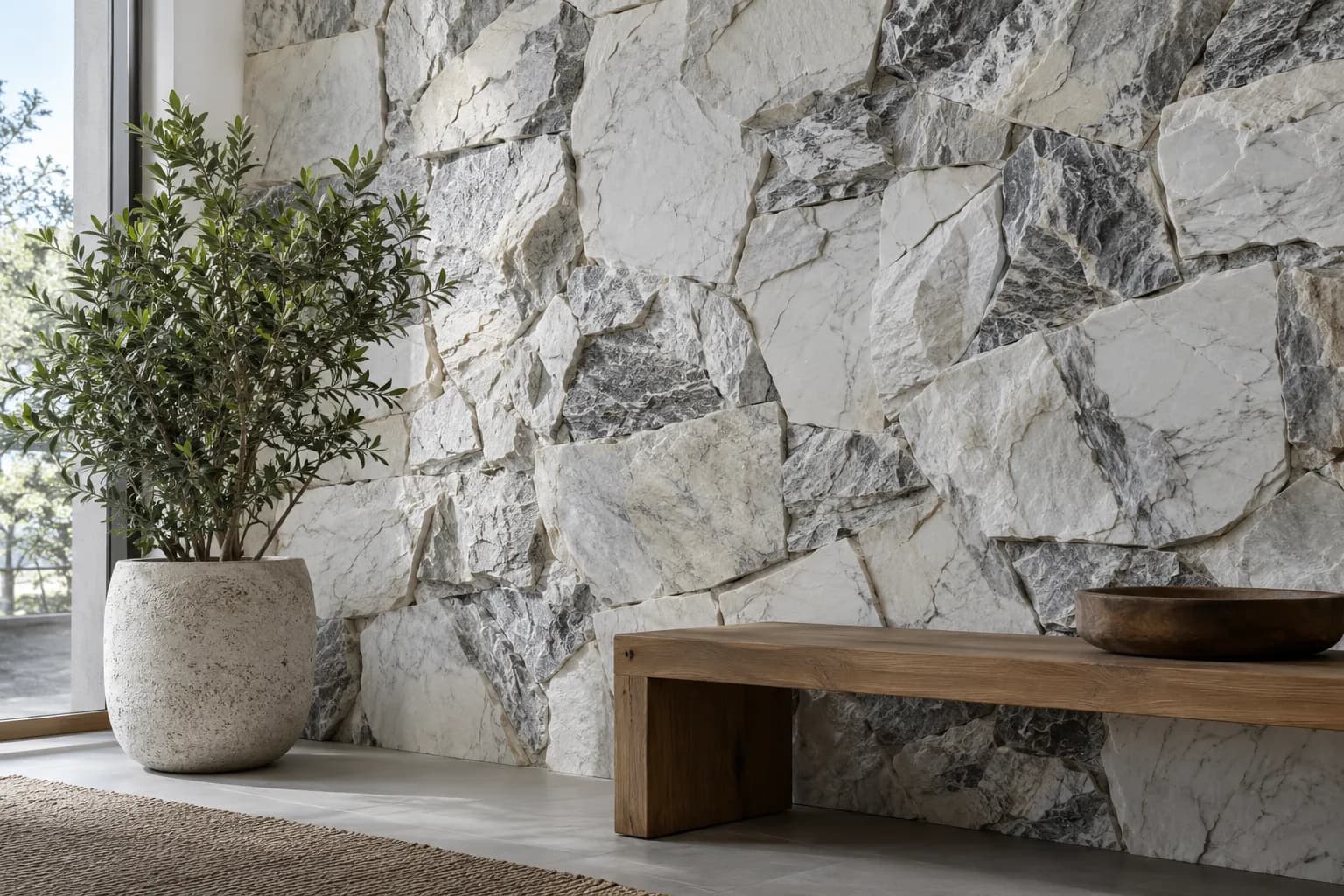
Marble cladding brings the brightness of marble to a wall, but with a rough, natural split face instead of a polished shine. The surface catches light in small crystals and ridges, so the wall looks lit up and textured at once. It is mostly an interior choice, with some sheltered outdoor uses.
Split-face marble, not polished slabs
When people hear "marble" they often think of a smooth, polished floor. Marble cladding is different. The stone is cut into strips or squares and its face is split or chiselled so it is matt and uneven. You get the colour and crystals of marble with the depth of a stone wall. It is meant for walls only, not floors.
Colours
- White is the most common. It looks clean and bright, and the crystals sparkle slightly under light.
- Black gives a sharp, formal contrast, often with fine white veins.
- Brown sits between warm and neutral and suits wooden furniture.
- Green has a cool, natural tone with darker patches and veins.
White marble cladding is rarely pure white. Expect grey veins, cream patches and small colour shifts between pieces. Ask the shop what is in stock and look at several pieces together.
Where marble cladding suits
Interior feature walls. A white or brown marble wall behind a sofa, at the end of a corridor or facing the main door gives a bright focus without making the room feel heavy. It suits living rooms that already have light floors.
Pooja areas. White marble has a long association with temples and mandirs. A cladded wall behind the deity, perhaps with a carved stone mural at the centre, makes a calm backdrop. See our pooja room page for layout ideas.
Balconies. On covered balcony walls, marble cladding brings brightness to a small outdoor space. Choose a brown or green if the balcony gets rain splash, since white shows marks faster.
Entrance lobbies. In independent houses, a marble-clad wall at the main door gives a clean first impression.
Staining and etching
Marble is a calcium carbonate stone. This makes it beautiful but sensitive.
- Etching: acids react with marble and leave dull, pale spots. Common culprits include lime and lemon juice, vinegar, tamarind, some fruit juices, and many tile, toilet and bathroom cleaners.
- Staining: oil from diyas, haldi, kumkum, tea and rust from iron fittings can soak in and leave coloured marks, especially on white stone.
Etching cannot be wiped off; it is a change in the surface itself. Staining can sometimes be drawn out but is better avoided. This is why marble cladding is usually not placed right behind a kitchen hob or wash area, and why care matters in a pooja space.
Sealing and cleaning
A penetrating stone sealer reduces staining by slowing how fast liquids soak in. It does not stop etching from acids, so wiping spills quickly still matters. Reapply sealer every few years, or sooner in busy areas.
For routine cleaning, dust with a soft brush or dry cloth. If you need to wash it, use plain water or a pH-neutral stone cleaner. Never use acid, lime-based or strong bleach cleaners on marble.
Marble or slate?
If you want brightness and a classic feel, marble works. If the wall faces heavy dust, rain or kitchen grease, slate is more forgiving. The natural stone cladding overview compares all three.
See the pieces
Marble shades shift between lots. Contact the shop to ask what is in stock before you visit.
Common questions
Is marble cladding the same as marble flooring?
No. Marble cladding is cut into small strips or squares with a rough split face for walls. Polished marble flooring is a smooth slab meant for floors. They are the same stone family but used very differently.
Why did lemon juice leave a mark on my marble wall?
Marble is a calcium-based stone and acids like lime, vinegar and many bathroom cleaners react with it. This leaves a dull or pale mark called etching. Wipe spills quickly and seal the stone.
Can white marble cladding be used outside?
It can be used on sheltered exterior walls such as balconies and covered entrances. On fully exposed walls in Bengaluru, rain and dust can dull white marble over time, so it needs regular cleaning and sealing.
Is marble cladding suitable for a pooja room?
Yes, white marble cladding is a popular choice behind a mandir. Keep oil, kumkum and haldi from sitting on the stone for long, as they can stain it.
Keep reading
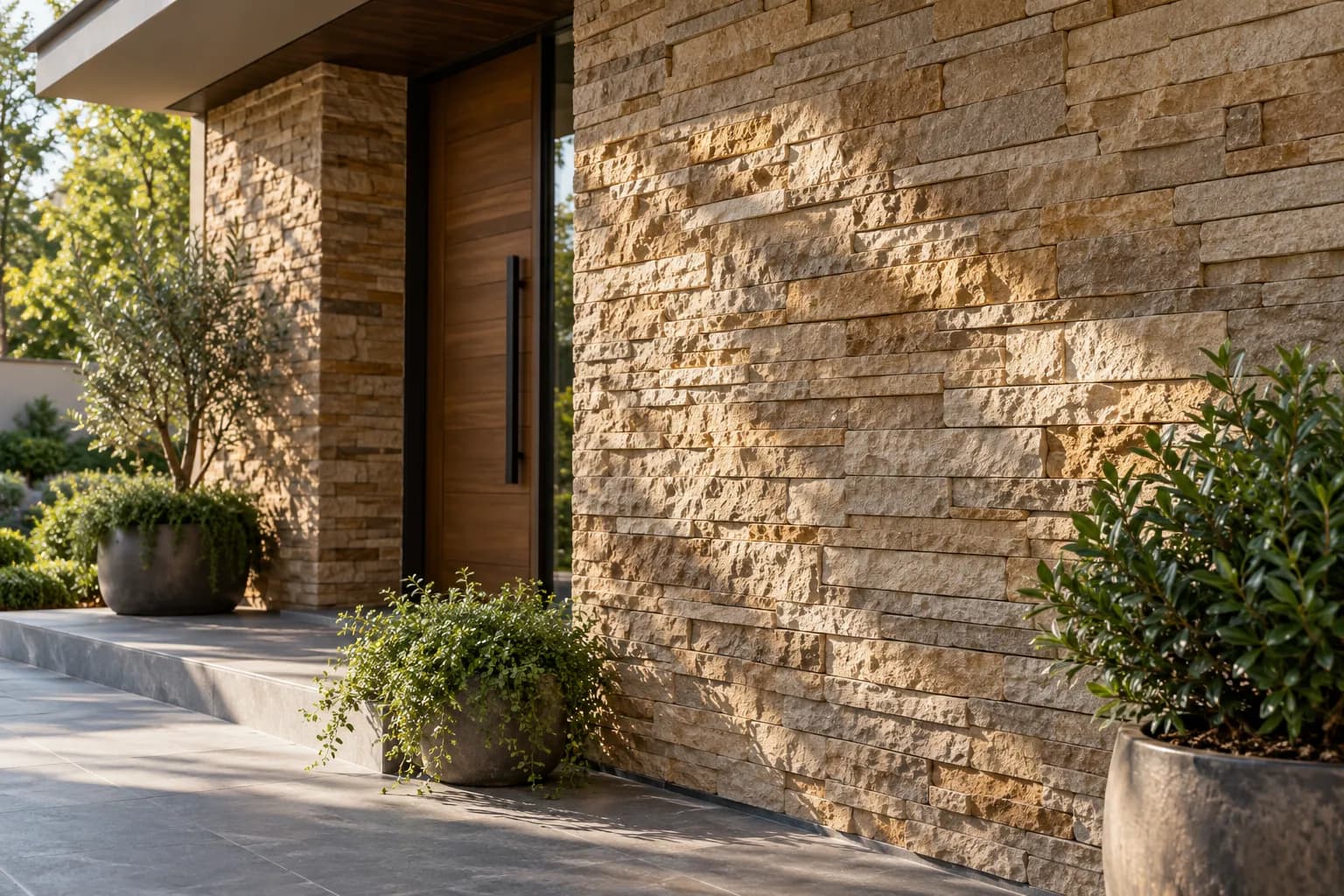
Stone cladding
Natural stone cladding in sandstone, slate and marble: how it differs from elevation tiles, strip and square sizes, where it works and how it is fixed.
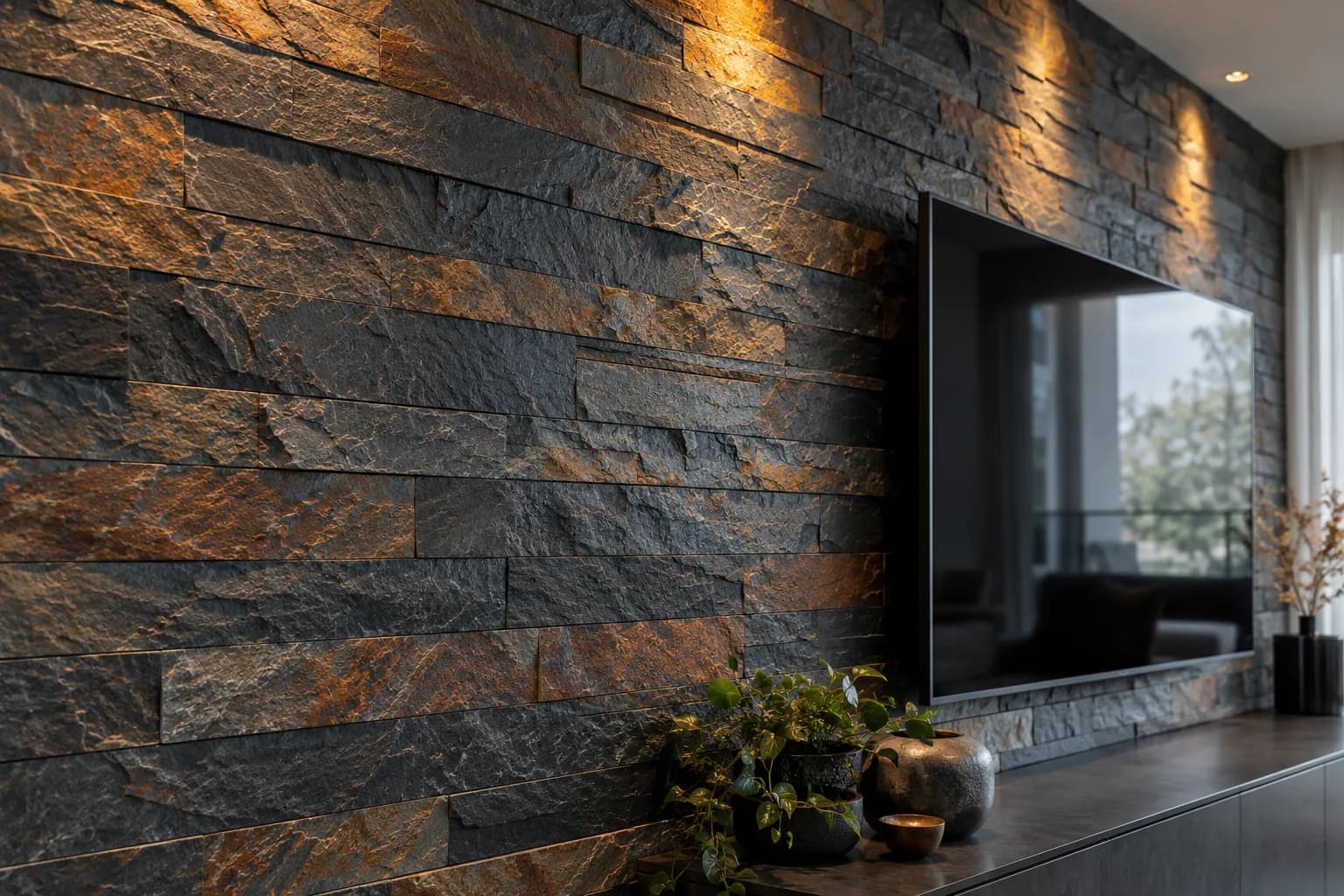
Slate cladding
Slate wall cladding in charcoal, black, grey, green and rust tones. Why it suits TV walls and modern fronts, what rust colour means and how to light it.
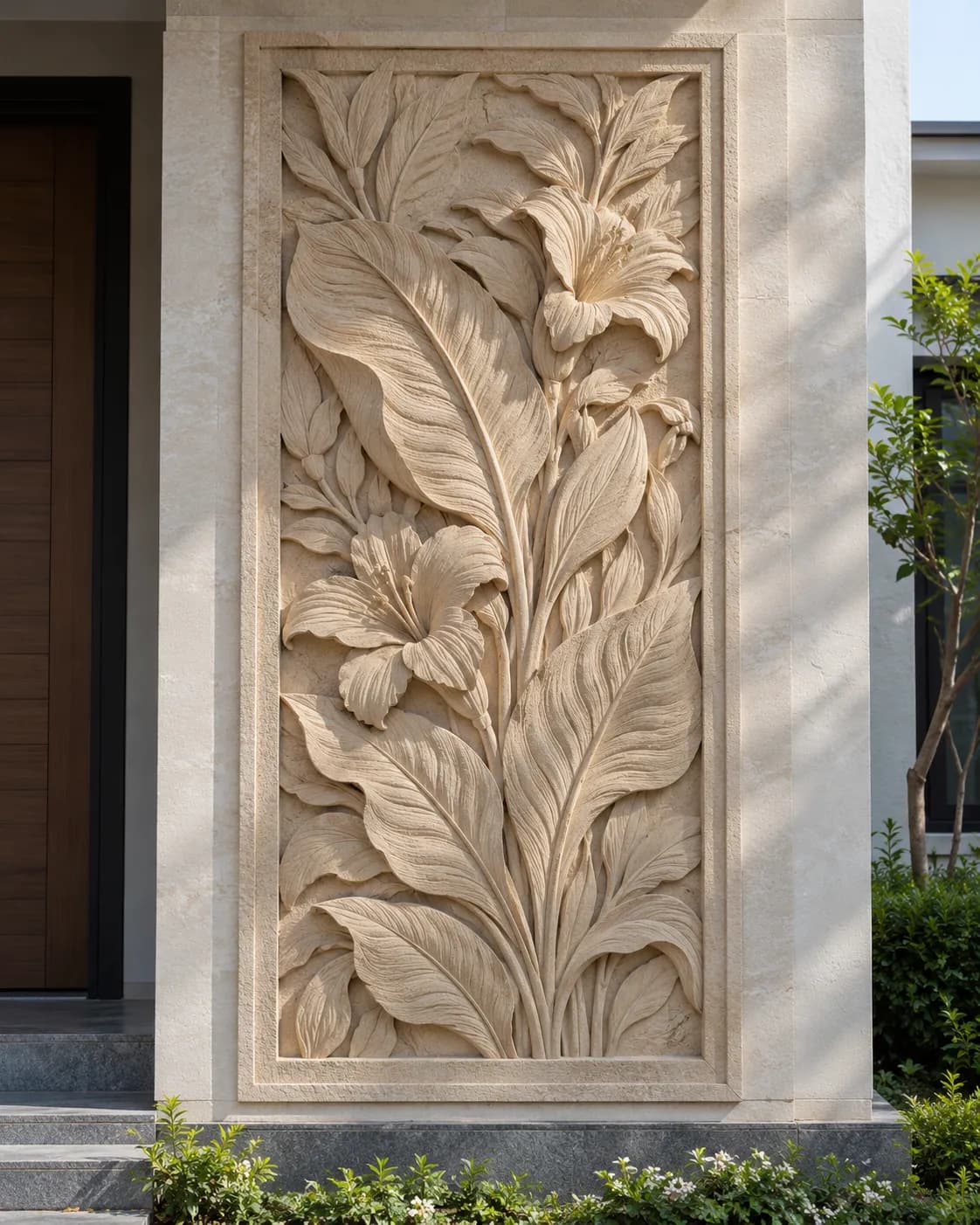
Stone murals
Carved natural stone murals with leaves, flowers, Buddha, Ganesha and heritage designs. Sizes in feet, where to place them, fixing and lighting tips.
See the tiles in person before you decide
Photos never show a tile's true shade or texture. Get in touch to check what is in stock, then walk in and compare.